The pitch fee is a real number attached to the wrong thing. It buys a marked rectangle of grass and, usually, two adults standing on it. It does not buy the child, the second car, the dog, the electricity, the shower, the four minutes the shower runs for, the bag of logs, or the third night you did not want but have to take because it is a bank holiday. None of that is hidden, exactly. It is simply priced somewhere you will not look until you have already decided to go.
The £45 in the title is nominal — a stand-in for a headline pitch rate, not a price quoted by anybody. The tariffs below are real, and all of them were checked on 4 August 2026. Prices move, sometimes within a season, so treat them as the shape of a bill rather than a quotation.
The rectangle, and who is standing on it
The thing to read on a tariff is not the number but the phrase after it, which will say per pitch for two people — and which is where the family booking quietly stops applying.
The Croft Campsite publishes its whole structure rather than a from-price, which makes it a good one to work with. On 4 August 2026 a grass pitch for two ran £29–£34 a night without electric and £36–£41 with it. Extra adults were £6.60, extra children aged 2 to 17 were £3.30, children under two were free, and dogs — maximum two — were £4.40 for the stay. Awnings, gazebos and pup tents are listed, in writing, as free.
So the family: two adults, two children aged seven and four, an electric pitch at the top of its band. £41, plus £3.30, plus £3.30. That is £47.60 a night before anybody has plugged anything in or showered, and the dog adds £4.40 to the stay.
Two rival conventions are in play, and neither is obviously the honest one. Most commercial sites price the pitch and add the people. The clubs do the same and then bundle: the Caravan and Motorhome Club's published price guide states that prices are per night for a pitch plus prices per adult and children aged 5 to 17, and that all prices include electricity unless otherwise stated, and VAT — with no charges for awnings, infants under five, dogs, or the use of hot water. That is four supplements abolished in a sentence.
The age thresholds are the biggest single swing on a family booking, and they move between sites. Under two at the Croft. Under five at the Club. At Troytown Farm on St Agnes, where the tariff is per person and there is no pitch fee at all, it was £12.75 a night for anyone aged five and over, £7 for children aged one to four, and babies under one free. A fifth birthday costs £5.75 a night.
The supplements, in the order they appear
Walk the invoice in the order the charges arrive. Electric hook-up first: at the Croft the difference between the non-electric and electric bands is £7 a night, which is the number the next section is about.
Awnings and second cars are the interesting pair, because operators take opposite positions and one of them commits to it in print. The Croft's "Awnings, Gazebos and pup tents — Free" is unambiguous, as is the Club's blanket no-charge-for-awnings line. The same Club price guide then charges, per night and again as at 4 August 2026, £15 for non-members, £2 for a second car, £2 for a boat, and between £1 and £8.90 for pitch grades from multi-surface up to premium. Nothing there is outrageous — but the second car is £2 a night for standing on ground you have already rented, and the non-member fee is £15 a night for not having joined.
Dogs are where the pricing gives itself away. Comrie Croft publishes three dog rates for three kinds of bed: £3 per dog per night camping, £5 in a Nordic Kata, £10 in the Eco-Lodge. The dog has not changed. What has changed is the soft furnishing it will sleep on and the cost of cleaning it — a defensible charge with an honest explanation attached, which puts it ahead of most of this list.
Then the fairest supplement in British camping, which almost nobody uses. Troytown adds a tent charge banded by footprint — under 6m² £2.50, over 6m² £5, over 15m² £7.50, over 25m² £10 — and applies it only between 14 July and 31 August. It is, when you think about it, the only supplement here that bills you for what you have actually taken: the ground.
The electricity argument, done properly
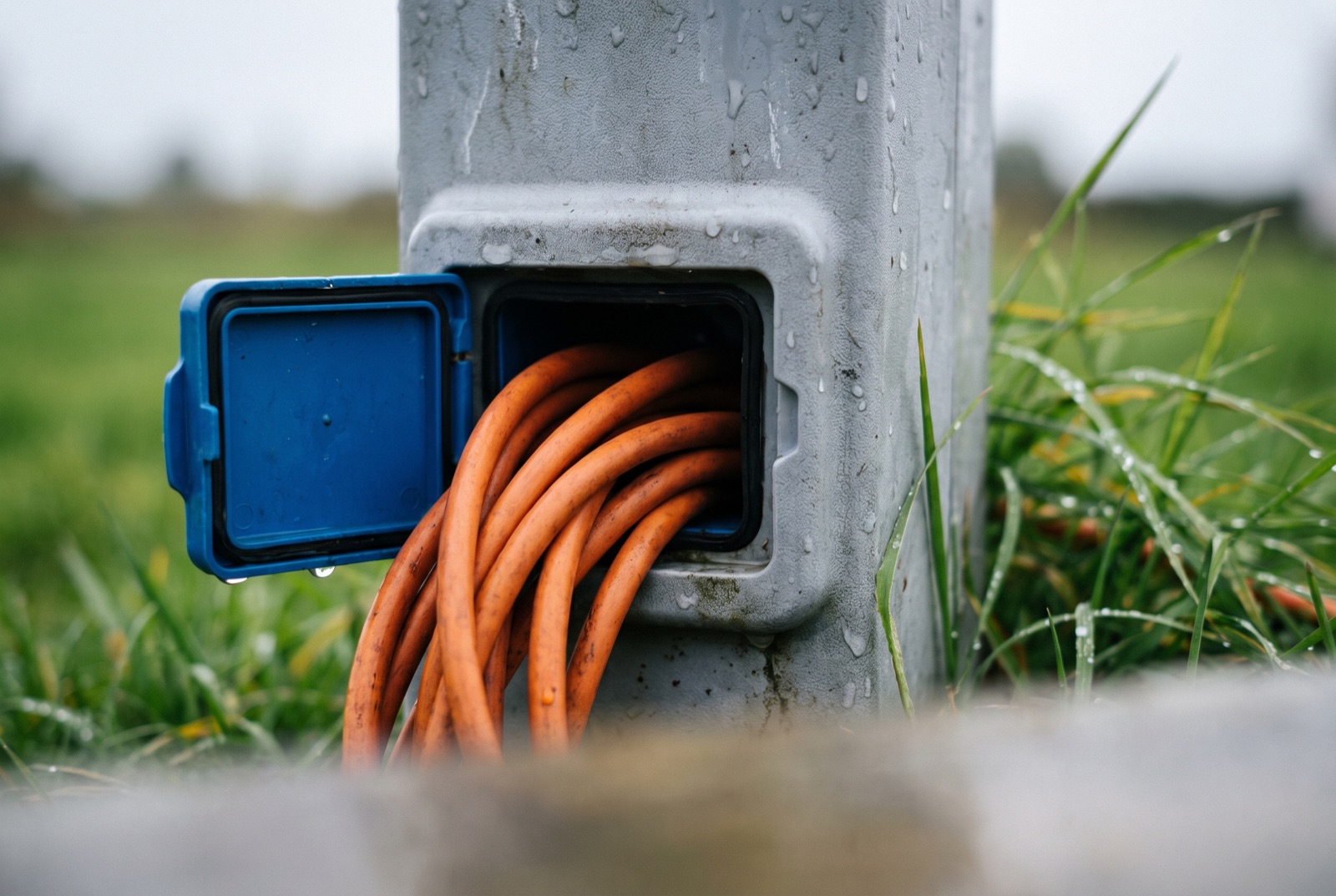
Take that £7 a night and convert it. Ofgem's price cap for 1 July to 30 September 2026 set electricity at 26.11p per kWh with a 57.19p daily standing charge, for direct debit customers in England, Scotland and Wales, VAT included. Seven pounds divided by 26.11p is about 27 kWh; allow a day's standing charge out of it and you are still buying a little under 25. A tent running a cool box and charging two phones does not come close to that, and never will.
Now the other side, fairly. The flat fee is not a unit price pretending to be one. It pays for the bollard, the RCD testing, the site's own standing charges, the cable somebody drove over, and the caravan next door running a fan heater through a cold April night. Pooled costs always subsidise the heavy user at the expense of the light one. The tent with the cool box is not being overcharged for electricity; it is being charged the average of a population it sits at the bottom of.
The continental comparison settles it. A trade survey of 824 conventional German campsites, with data current to Q2 and Q3 2026, found showers included at most of them and about a third charging electricity by consumption, at a median of €0.75 per kWh — a range of €0.50 to €1.00, and around €0.80 in Bayern and Baden-Württemberg. Flat rates are roughly as common, typically under €5 a night.
Set that metered rate against the household one. BDEW's electricity price analysis puts the average German household price at 37.0 cents per kWh in 2026, down from 39.3 in 2025. A metered campsite unit therefore costs roughly double what the same unit costs at home. Metering is fairer, and it is still marked up. Both are true, and metered power remains the only supplement in this article that is unambiguously honest — a charge that rises when you use more and falls when you use less.
The gate, the token and the deposit
The next set of charges arrive after you have parked, which is to say after your leverage has gone.
Woodyhyde in Dorset is plain about the one everybody remembers. As at 4 August 2026, each token costs 50p and provides approximately four minutes of shower time. Four people, three days, one shower each per day, two tokens a shower because four minutes is not a shower: that is twelve pounds. Small, not nothing, and landing on a family that has already paid for the field.

Refundable deposits belong in a different category and deserve defending. Woodyhyde hires ice packs rather than selling them: £3.50 deposit and 50p per freeze for a large one, £1.50 and 30p for a small, and it will not freeze your own. Many French campsites run a magnetic-card barrier with a refundable deposit of around £10 taken on arrival, gates locked overnight and opening around seven or eight. A deposit against a card or a cool box is a float, not a fee, and it exists because people drive home with them in the door pocket.
Firewood is the honest exception in reverse. Small retail bags of kiln-dried logs — the format sold at receptions, garden centres and petrol stations — typically run £6 to £10, with premium hardwood bags £8 to £15, on the log trade's own market figures rather than any campsite's tariff. The price per unit of heat is far above a bulk load, because you are paying for packaging, transport and a shelf. A site selling a net at that price is charging what everybody charges for that format, and where bringing your own is banned it is usually biosecurity rather than a sales tactic.
The minimum-night rule, which is the biggest number of all
The largest line on most bank holiday invoices is not a supplement. It is a night.
The Croft requires a minimum three-night booking over bank holidays. Run the family total through it: £47.60 a night becomes £142.80, plus £4.40 for the dog, and the weekend you costed at two nights is £147.20 before a single token. Nothing was added to the bill. A night was.
There are two versions of this rule and they are not the same animal. A minimum stay applied year-round reflects an operating reality: a changeover costs the site the same whether you stayed one night or three, and the cleaning and the admin do not scale with your holiday. A minimum applied only to weekends and bank holidays reflects demand. It is a price rise with a calendar attached, and the three-night rule is a calendar problem before it is a money problem, which is why the booking calendar is the other half of this piece.
Cancellation terms belong here too, because they set what the booking is worth to you once made. The Croft refunds in full to 30 days before arrival and 50% to 15 days. Comrie Croft refunds less the 20% deposit more than 14 days out, and nothing inside 14. The National Trust takes the total amount payable at the time of booking, cancels automatically if the balance is unpaid after 48 hours, and charges a £15 administration fee to cancel more than 30 days out, 50% between 14 and 30 days and 100% inside 14 — while noting in the same terms that its sites may charge for additional guests, parking, hook-ups, showers and laundry. A quarter down with a long window and payment in full with an admin fee are two different products sold under one word.
A charge that tracks what the site spends on you is a price. A charge that tracks what you cannot avoid paying is a toll.
The cabin, where the headline is honest and the block is not
The reader comparing a pitch against a cabin usually assumes the cabin is the one with the surprises. It is generally the opposite. A cabin's headline is close to the whole price: no per-person charge, no hook-up, no awning, frequently no dog fee, and hot water nobody is metering. The extras problem largely disappears — though Comrie Croft's £10-a-night lodge dog shows it can survive the move indoors, at more than triple the camping rate.
What replaces it is the block. Mallinson's Woodland Retreat changes over on Mondays, Wednesdays and Fridays only: a weeknight stay runs 4pm Monday to 10am Wednesday or 4pm Wednesday to 10am Friday, and a weekend runs 4pm Friday to 10am Monday. The advertised nightly rate is a rate you cannot buy one of.
On 4 August 2026, Pinwheel and Dazzle in low season were £590 for the two weeknights and £995 for the weekend — £295 and £332 a night for the same cabin, a difference of £37 that reflects nothing about the cabin and everything about which days people want. The Woodsman's Treehouse is more consistent: £990 for two weeknights and £1,485 for a weekend both work out at £495 a night, with seven nights at £3,119, a 10% discount on the same rate. The deposit is 25% more than 60 days ahead, or payment in full inside 60 days.
Be fair about this. For a self-contained building with a hot tub, a wood stove and a changeover that takes most of a day, a minimum block may be the only way the thing works at all. The version that is harder to defend is the block that appears only in the weeks people want to come.

Getting there, and what is actually fair
The line nobody budgets is the drive. The Department for Energy Security and Net Zero's weekly road fuel prices, for the week commencing 3 August 2026 and published on 4 August, put unleaded petrol at 159.89p a litre and diesel at 179.19p, with duty at 52.95p a litre and VAT at 20% on top. A 500-mile round trip at 40mpg is about 56.8 litres, or roughly £91 of petrol — more than two nights of the pitch it is taking you to, and the one number nobody puts in the spreadsheet.
Cross the Channel and one more line appears. The French tourist tax is a statutory band rather than a site's invention: the 2026 barème sets it between €0.20 and €0.60 per person per night for campsites and caravan sites classified 3, 4 and 5 star, and for aires de camping-cars per 24-hour period, with a flat €0.20 for 1- and 2-star sites. Under-18s are exempt, and the commune sets the figure within the band. Germany's Kurtaxe runs higher, at a median of €2.00 per person per night in that same trade survey. Whether it reaches your quoted price is a matter of the operator's terms: Huttopia's conditions of sale, in force from 14 April 2026, quote prices inclusive of tax but explicitly hors taxe de séjour, and list a booking fee as a separate component of the total. The balance falls due immediately on anything booked within 30 days, and the "No Flex" rate is 100% non-refundable.
So, the positions.
Fair. Metered electricity, a charge scaled to the ground you occupy or the people using the block, and any deposit you get back. All three track something real, and all three fall when you take less.
Defensible, but it belongs on the front page rather than page four. Dogs, hook-up, tourist tax, the non-member premium. Each has a reason behind it. None is a surprise worth springing on somebody at the barrier.
Yield management in a hi-vis jacket. Minimum stays applied only to weekends and bank holidays. A second-car fee for a car parked on ground you have already paid for. A non-refundable booking fee charged on the operator's own website.
None of that is the money that never reaches your invoice at all — the 10–22% the platforms take out of the owner's side is a separate argument, and we have made it here. Read the tariff before you read the headline. Where an owner publishes a full one rather than a from-price, we say so on the listing — the campsites are here.