The water below a great many cabins and campsites is flat, sheltered, and completely empty. A rigid kayak means a roof rack, somewhere to keep it, and a decision made in March about whether this is a thing you do. An inflatable means a bag in the boot on the off-chance — which is a different purchase altogether, and the one we went for.
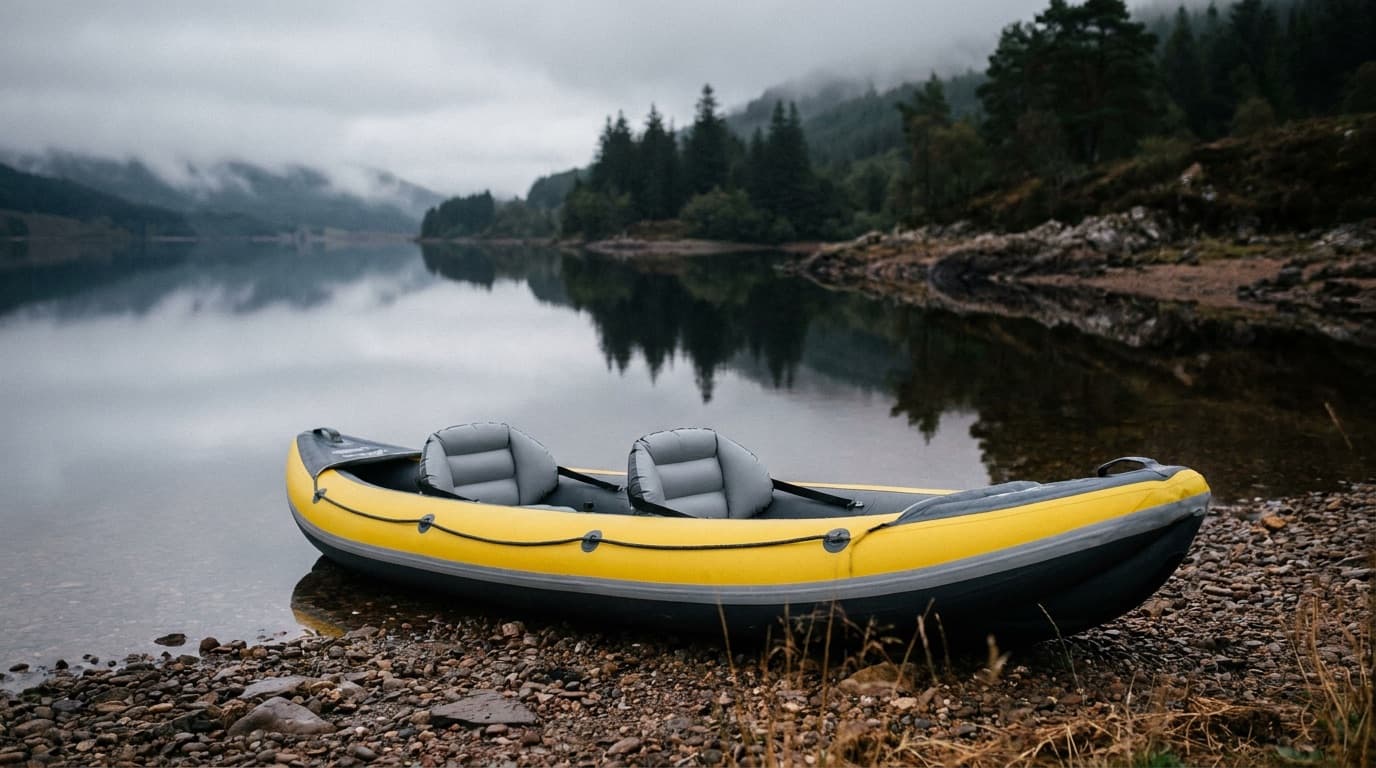
Ours is the Intex Explorer K2, the yellow-and-grey two-seater you see on lakes all over Europe. We like it a lot, with two caveats that are worth thirty seconds of your time before you buy.
What you get
Just over ten feet long and three feet wide, for two people. In the box: two aluminium oars, a hand pump, two inflatable seats with backrests, a removable skeg for tracking, and a repair kit.
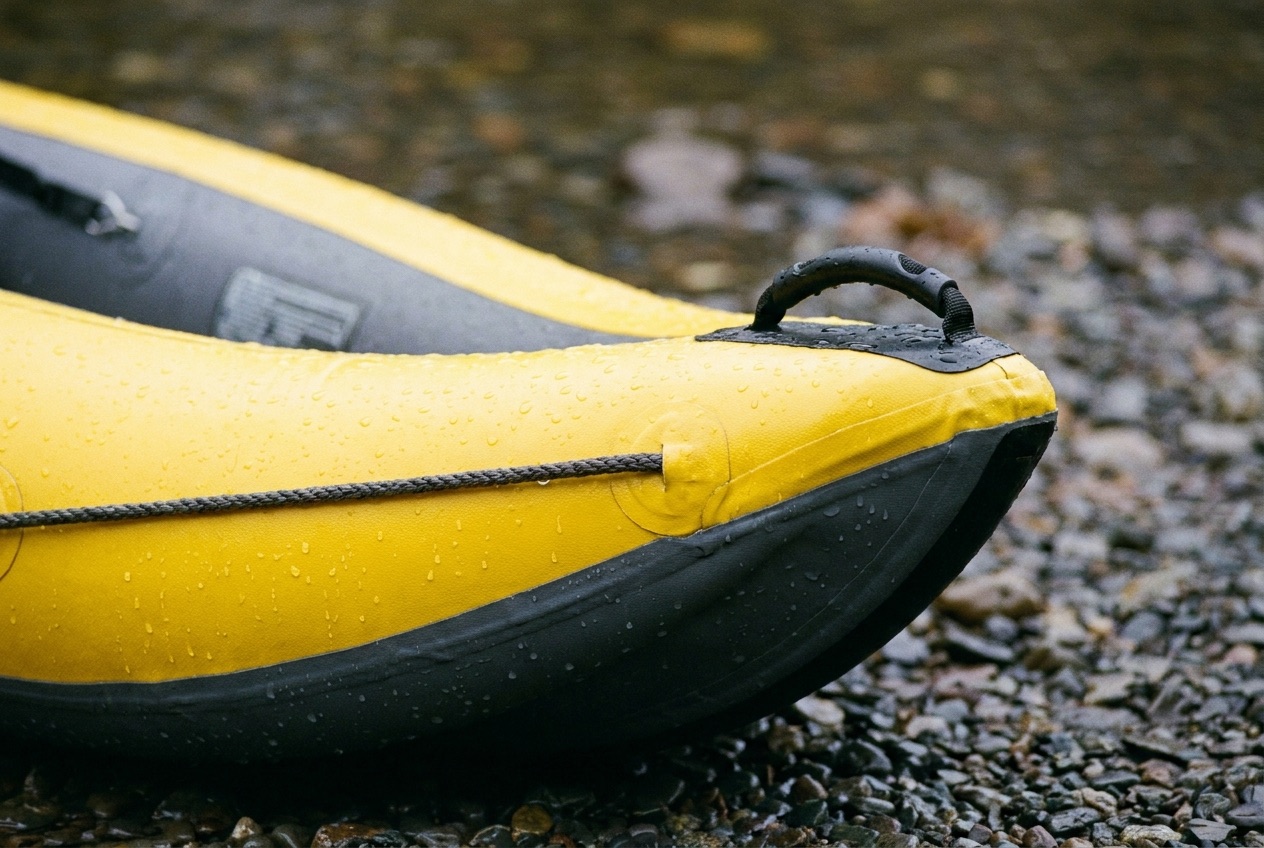
The specification we care most about is the three separate air chambers, one of which is the floor. It means a puncture degrades the boat rather than ending your afternoon. The grab lines run the length of both sides, and there are proper handles at each end, so getting it in and out of the water is a two-handed carry rather than a wrestle.
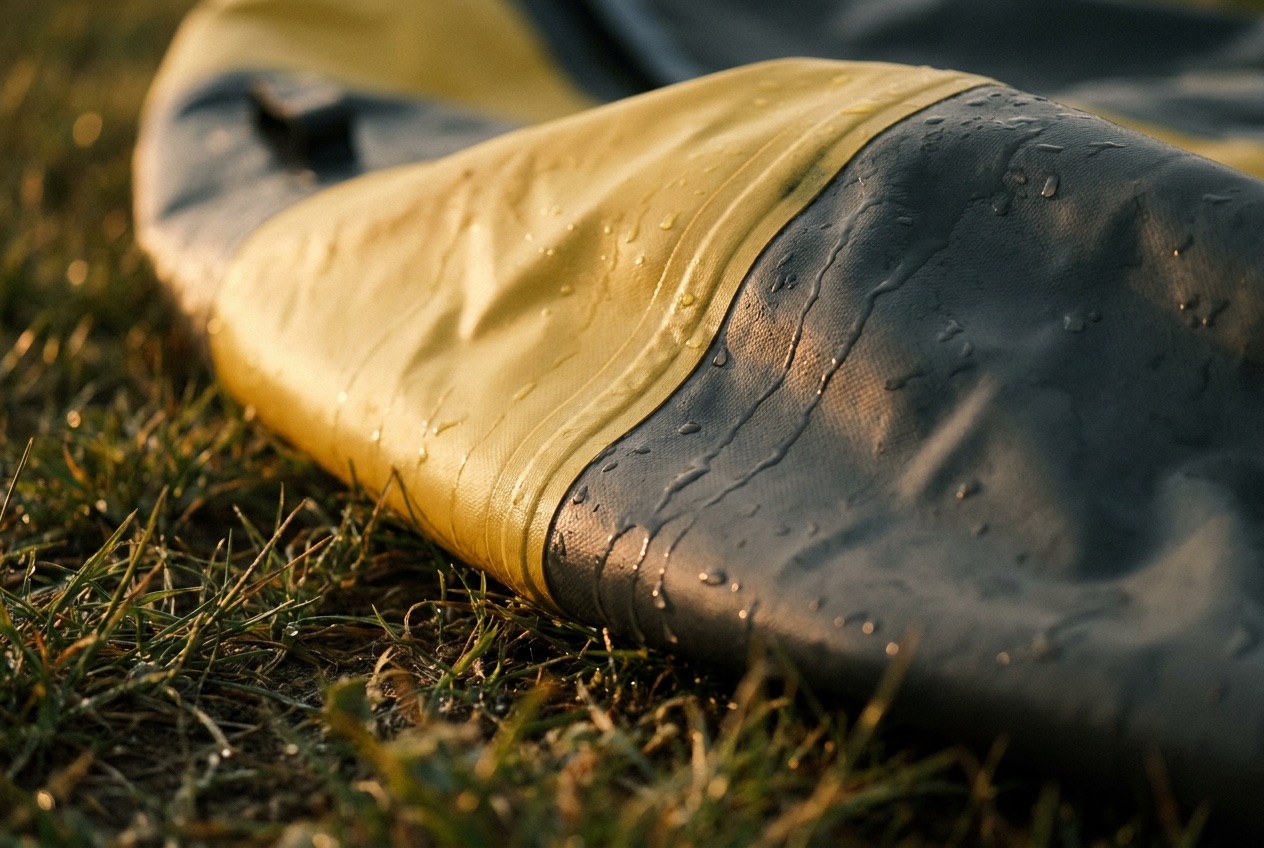
Fifteen minutes of pumping and you are on the water. Twenty minutes on the grass at the end and it goes back in the bag dry.
What it is lovely at
Pottering. That is the honest word for it. A sheltered loch you can see from the cabin, an estuary at slack water on a still morning, the slow brown middle stretch of an English river on a Sunday afternoon. It sits you low, close to the water, moving at the speed of someone in no hurry, and for that it is close to perfect.
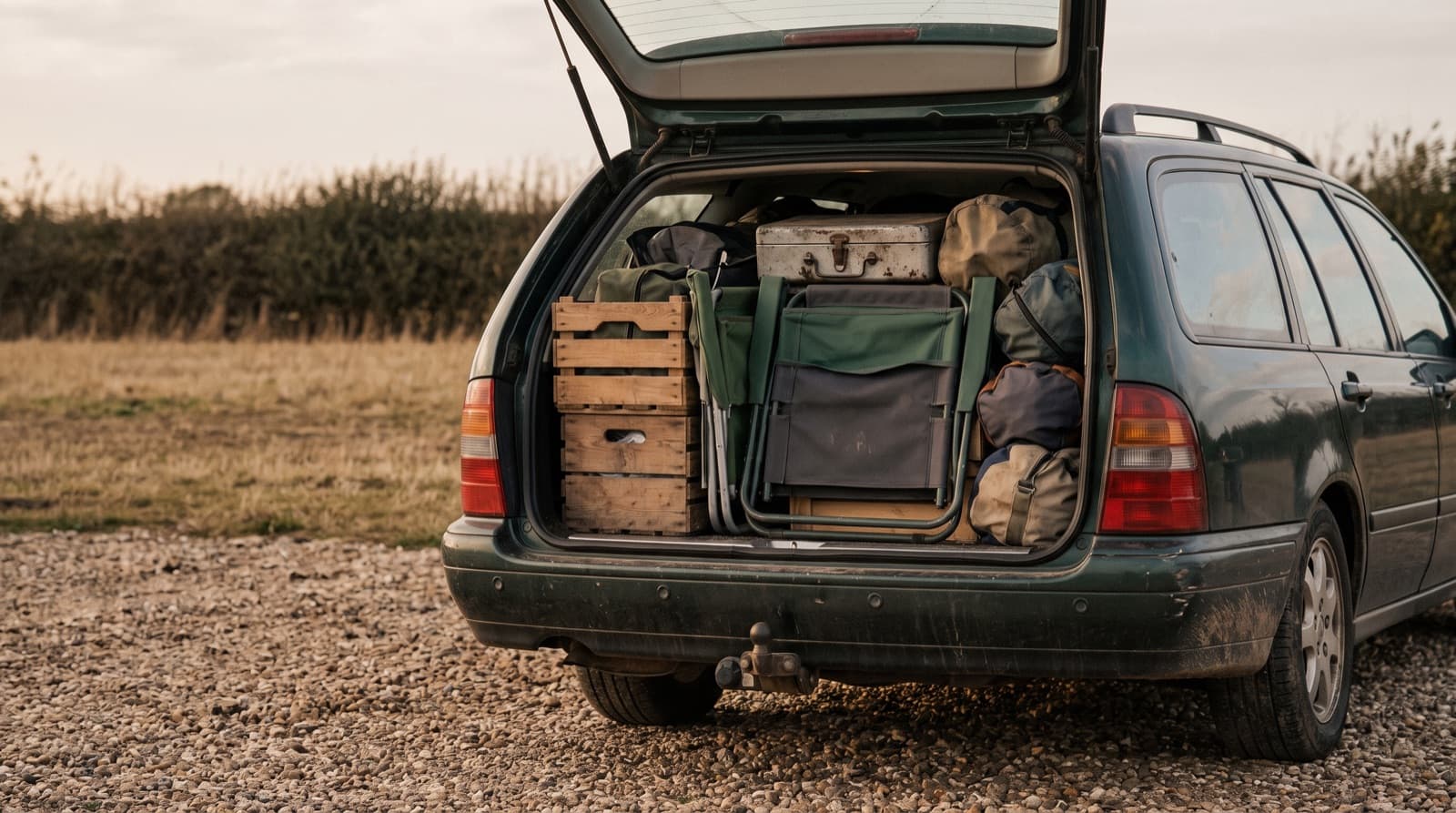
It is not really a compromised kayak. It is a different object that happens to be kayak-shaped, and it is very good at the one thing a proper kayak is bad at — being in the boot when nobody planned to go paddling.
It is not fast, and two adults sit it fairly low. If you want to cover distance, this is the wrong boat and you already know what the right one costs. Nobody who buys one to potter has ever been disappointed by it.
The two things to know first
It is for lakes and mild rivers, not the sea. That is Intex's own rating, and it is not small print. An inflatable sits high and light with very little underwater, which makes it a sail. The RNLI repeat the same warning every summer: never use an inflatable at sea when there is an offshore wind, because it will move away from the shore faster than you can paddle back. On enclosed water with the wind blowing onto the shore, none of that applies and you can relax completely.
Nothing in the box is a buoyancy aid, either. Budget for those separately — the RNLI's position is that everyone aboard should be wearing one.
You probably need a licence. This is the one that catches people out. To paddle most canals and rivers in England and Wales you need a waterways licence — the usual route is Paddle UK's On The Water membership, around £65 a year, or a short-term licence from the Canal & River Trust for a few pounds a day. Paddling licensable water without one risks a fine of up to £1,000. Scotland is the happy exception: statutory access rights cover inland water and no licence is needed.
Worth it?
For us, easily. Judged as a kayak it is mediocre and the reviews will tell you so. Judged as the difference between getting on the water at the places on this list and not getting on the water, it is one of the better things you can put in a car boot — somewhere near a decent chair and a proper torch, and a long way above most of the kit that never comes out of the bag.
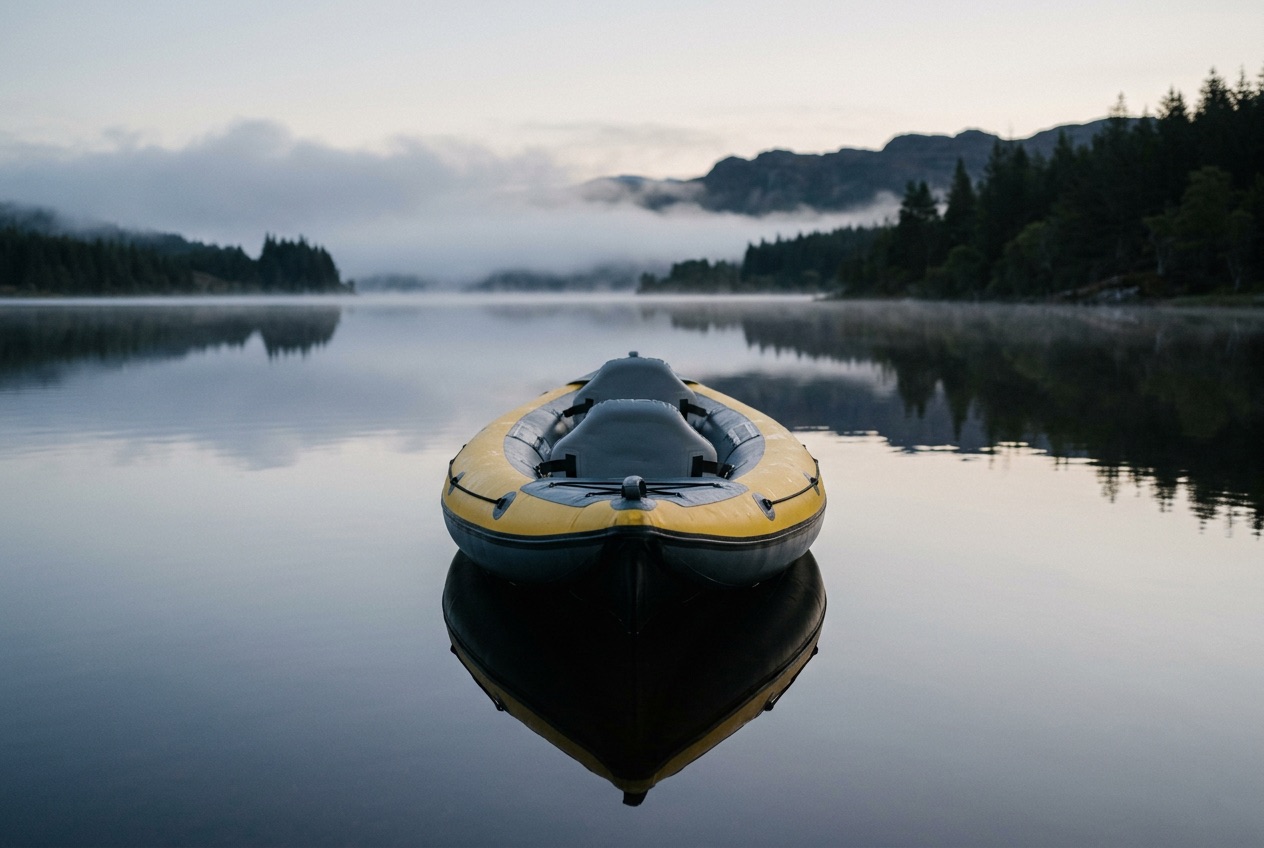
Several of the places in this collection have water like that twenty metres from where you sleep. If yours does, this is the thing to have in the boot.
You can get one here if you fancy it.
This article contains an affiliate link. If you buy through it, this site earns a small commission from Amazon at no extra cost to you.
As an Amazon Associate, cabinsandcamping.com earns from qualifying purchases.