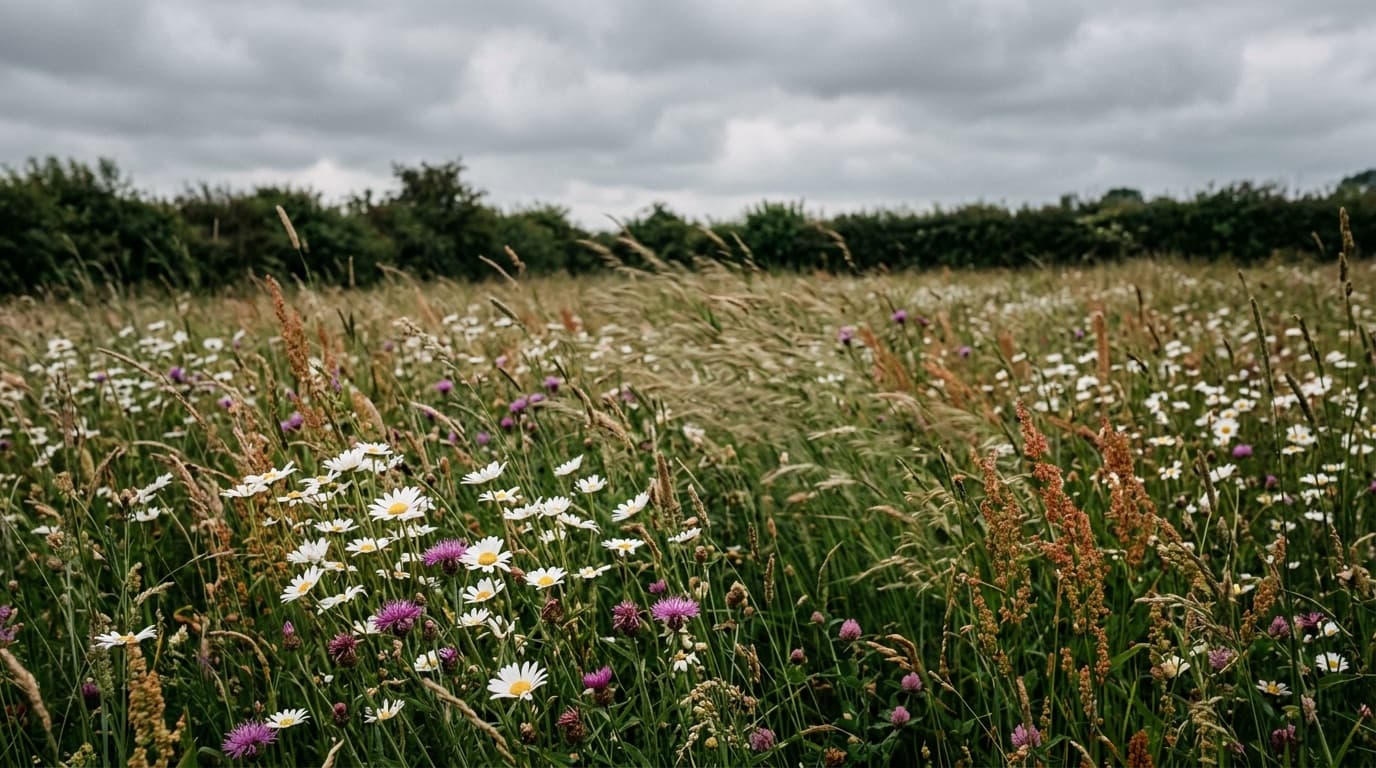
The reason a cabin in a hay meadow in July stays with you is not the cabin. It is standing in something waist-high and moving, with more going on in one square metre than in an entire suburban lawn. Wanting that at home is a reasonable thing to want, and there is a well-worn route to it: buy a tin of wildflower seed, shake it over the lawn or a patch of bare soil, wait.
That route mostly fails, and it fails for a reason that has nothing to do with the seed. Understanding the reason is most of the work.
The grass wins, and that is the whole problem
A lawn is a monoculture that has spent years being fed, watered and cut in a way that suits grass and nothing else. Scatter wildflower seed into it and the seed germinates into deep shade at ground level, in soil that is far richer than any of those species evolved for, competing with a plant that is already established and already winning. Almost everything you sowed dies by June.
Meadows are not rich places. They are the opposite — they exist on thin, hungry soil, which is precisely why so many different things can hold on in them. Nothing dominates because nothing can afford to. A well-fed British lawn is closer to an arable field than to a meadow, and the first job is not planting anything. It is making the ground worse.
There are two honest ways to do that, and one shortcut.
Strip the turf and the top few centimetres of topsoil with it, exposing the poorer subsoil beneath. Brutal, effective, and a weekend's work with a spade. Or stop feeding, cut the grass and take the clippings away every single time, for several years, slowly exporting fertility. Or use the shortcut, which is a plant.
Yellow rattle, before anything else
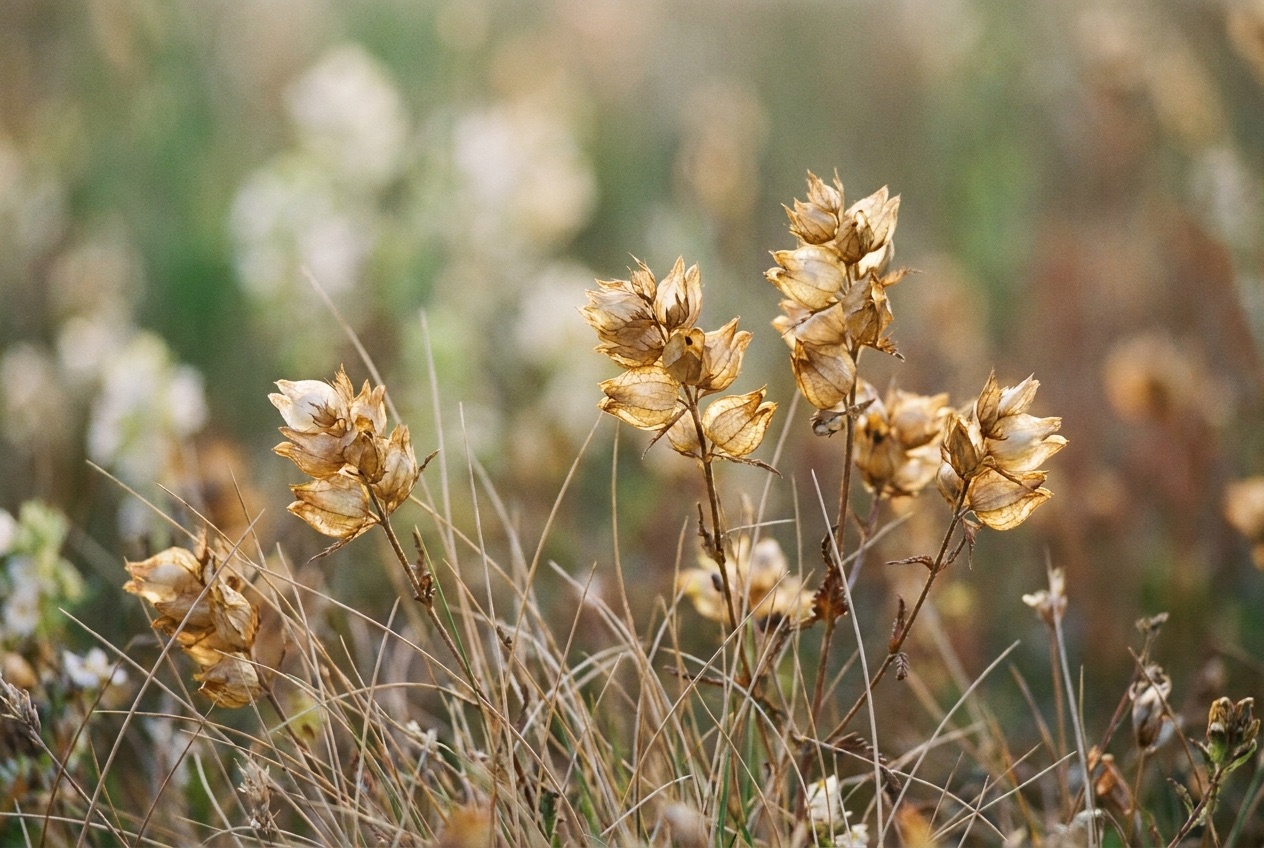
Yellow rattle, Rhinanthus minor, is an annual that is semi-parasitic on grass. It attaches to grass roots and draws water and nutrients out of them, and the effect on a sward is dramatic — the grass thins, shortens and loosens, and gaps open up that other species can get into. Meadow restoration people call it the meadow maker, and no other single decision moves a wildflower patch forward as much.
It comes with conditions, and they are the conditions people ignore.
The seed needs a long cold period before it will germinate — vernalisation — so it must go down between late summer and early winter. Sow it in spring and nothing happens at all. Before Christmas is the usual advice, and earlier is better than later.
It must go into grass, because grass is what it eats. Do not start it in a seed tray. Scarify or rake the sward hard first, cut it as short as you can bear, sow onto the opened ground, then walk over it or roll it — the seed needs genuine contact with soil, not a resting place on top of thatch.
Then keep the grass under about two centimetres through the winter, and stop cutting in March when the seedlings start moving. The following summer, let it flower and set seed before you cut. Rattle is an annual: if you mow it before the capsules dry, you have no rattle the year after and you are back where you started.
Then name what you plant
Here is the argument this piece exists to make. Buy species you can name, not a mix you cannot.
An anonymous tin of "wildflowers" tells you nothing about what is in it, where it came from, or whether it belongs in British ground. Plenty of mixes lean heavily on cornfield annuals — corn poppy, cornflower, corn marigold — which give a spectacular first summer and then largely vanish, because they are annuals of disturbed arable ground and need bare soil every year to come back. People conclude their meadow failed. It did not; it did exactly what those species do.
A handful worth knowing by name, all British natives, all straightforward:
Oxeye daisy is the backbone of a young meadow, tough, obliging, and one of the first things to establish. Common knapweed flowers late when little else does and is heavily worked by bees. Birdsfoot trefoil is a food plant for the common blue butterfly's caterpillars, which is a specific ecological job rather than a general one. Red clover fixes nitrogen and is a bumblebee staple. Cowslip is a spring plant, slower to get going, and worth the wait. Field scabious is tall, long-flowering and holds hoverflies all afternoon.
Six named species will give you a better patch than sixteen anonymous ones, and you will be able to tell whether it worked.
The provenance question, which is also a legal one
For a garden border, this is a matter of taste. Once seed goes anywhere that could be described as the wild, it stops being a matter of taste.
Under section 14 of the Wildlife and Countryside Act 1981 it is an offence to plant, or cause to grow in the wild, any plant listed in Schedule 9 of that Act. Scotland goes considerably further: there, it is an offence to plant any non-native plant in the wild at all, not merely a scheduled one. That is a real difference, and it catches the well-meaning person emptying a leftover packet over a verge on the way home far more often than it catches anyone malicious.
Sowing your own garden is not planting in the wild, and nothing here suggests otherwise. But seed does not respect a fence line, gardens back onto things, and the honest position is that provenance matters more the closer you are to anything wild. If you are anywhere near a hedgerow, a watercourse or open ground, buy seed sold as British native origin and check the species list before it leaves the bag.
Six species you can name will teach you more than sixteen you cannot, because when something fails you will know which thing failed.
What the numbers actually are
Sowing rates are lower than instinct suggests, and over-sowing is the second most common mistake after sowing into fed grass.
The RHS put a pure wildflower mix at roughly 3–5 g per square metre; some suppliers go as low as 1.5–3 g. A mix cut with grass seed goes down heavier, around 5 g. These are small quantities, and they look wrong in the hand — a level tablespoon covers a surprising amount of ground.
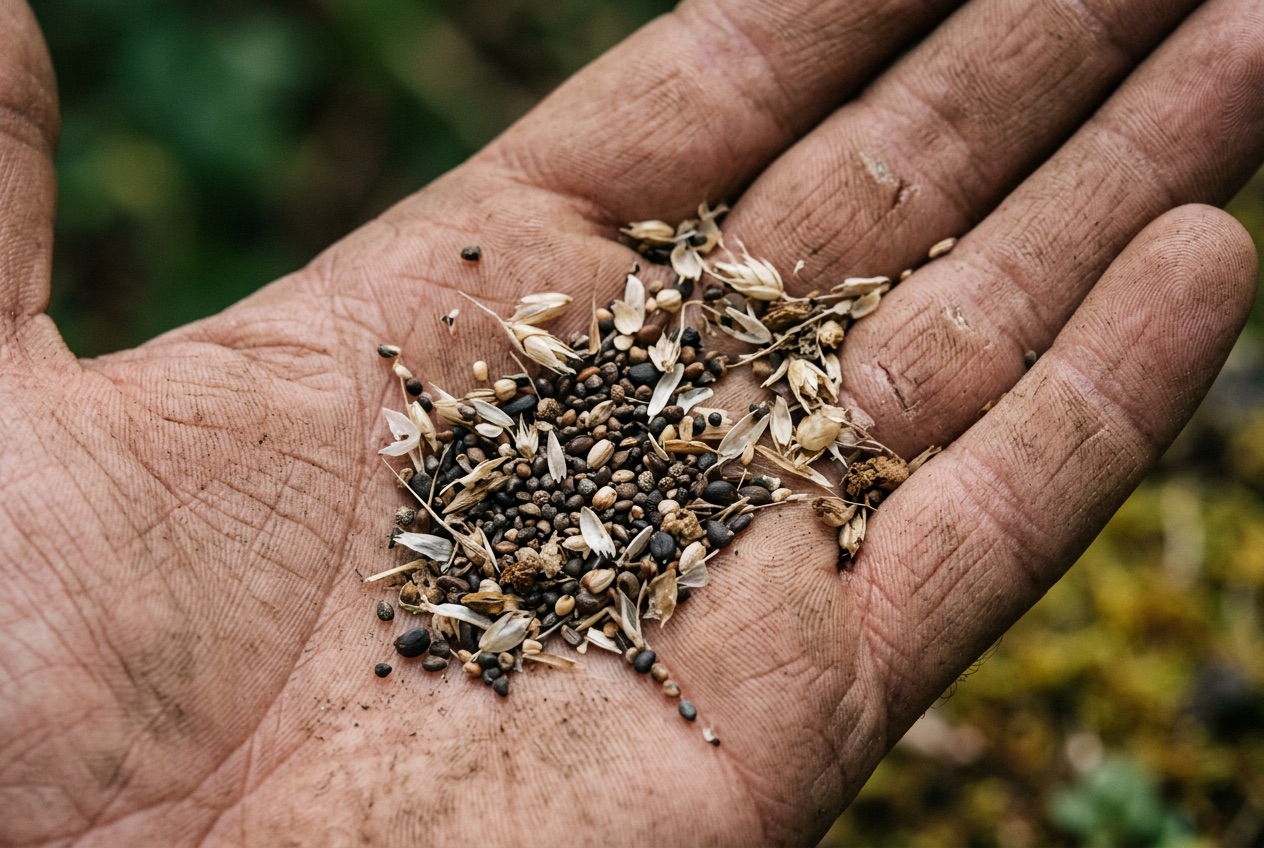
That arithmetic is worth doing before you buy. A 10 g packet, at the RHS rate, covers somewhere between two and three square metres — a border, not a lawn. Packets are routinely bought on the assumption they will do a garden, and they will not.
On timing, there are two windows: autumn, roughly September to October, and spring, roughly March to April. Autumn is the better of the two for most species, because the seed gets a natural cold winter and germination is stronger for it. Yellow rattle is not merely better in autumn, it is autumn-only.
If you are buying a general mixed packet for a garden border rather than a restoration project — and for most people, a border is the honest scope of what they are doing — a bag like this one does the job it needs to do. It is sold as a sixteen-species mix with no grass in it, which is the right shape for a border. It does not publish its species list, so treat it as a garden planting rather than something to put anywhere near wild ground, and do the coverage arithmetic above before you decide how many you need.
The part that costs nothing
Before any of this, there is an intervention with better evidence behind it than anything you can buy.
Plantlife's No Mow May asks people to leave the mower in the shed for a month. Their reported figures are strong: unmown lawns can hold up to ten times more flowering plants than regularly cut grass, and produce up to ten times more nectar for the 270-odd bee species in Britain. Participants have recorded close to a hundred pollinator species on ordinary lawns, including twenty-five moths and butterflies and twenty-four bees. Roughly six dandelions will support a single bumblebee — which reframes the dandelion from a failure of lawn care into early-season food at the point in the year when there is very little else.
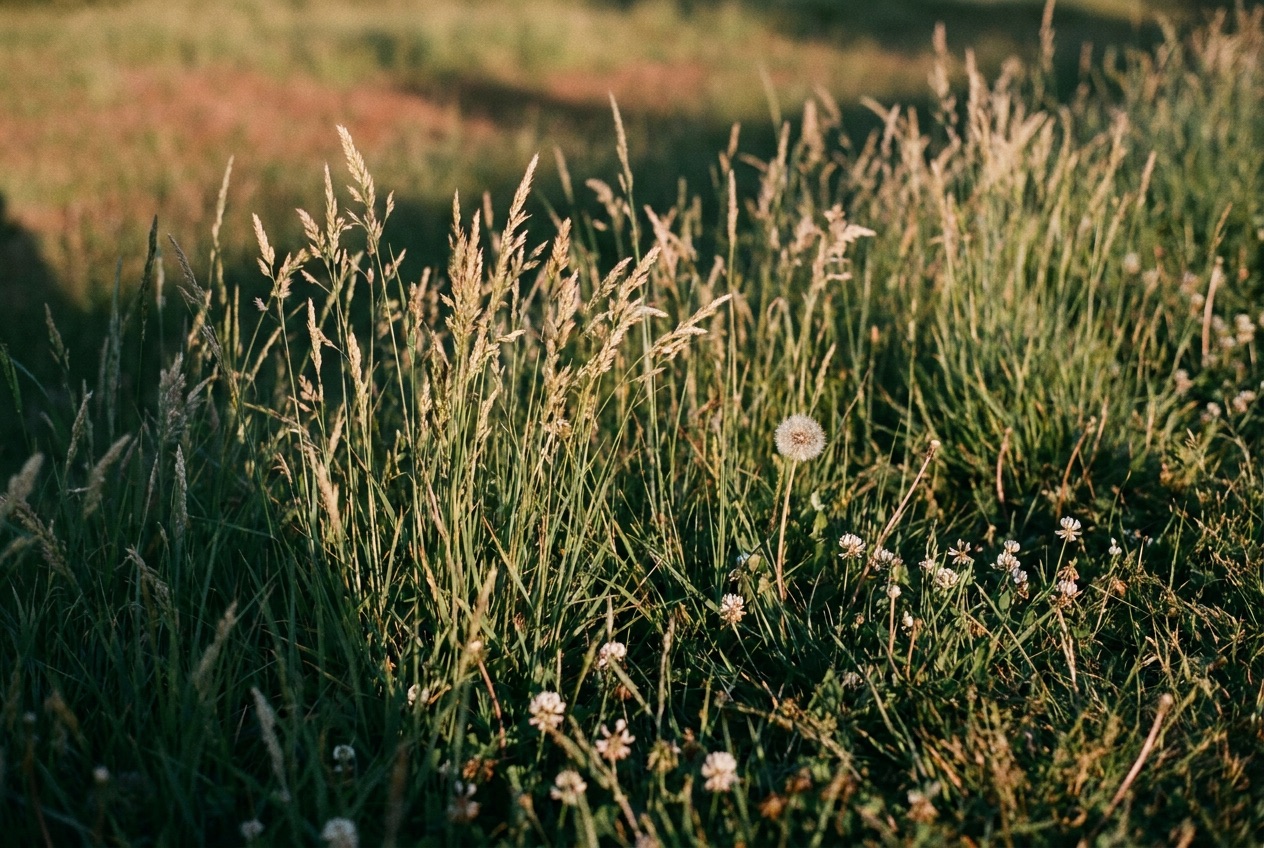
Where a lawn has nothing much in it to begin with, the standard advice is to introduce oxeye daisy, birdsfoot trefoil and red clover — the same named natives, doing the same job, in an existing sward rather than a cleared bed.
And the edges matter as much as the middle. The strip along a fence or wall, left alone, does more for hedgehogs, ground beetles and solitary bees than the same area of mown grass ever will. This is the domestic version of the thing good campsites already understand about leaving the margins alone — that the unmanaged edge is usually where the wildlife is, and that choosing where not to intervene is a real decision rather than laziness.
None of this arrives in one season. Yellow rattle takes a year before it does anything visible, perennials take two before they flower properly, and a patch that looks like the meadow outside the cabin takes three or four. That is the honest timescale, and it is the reason the tin-shaken-over-soil approach persists — it promises a summer, and a meadow is not a summer.
This article contains an affiliate link. If you buy through it, this site earns a small commission from Amazon at no extra cost to you. It does not affect what gets written — the caveats above are the reason the piece exists.
As an Amazon Associate, cabinsandcamping.com earns from qualifying purchases.