Nobody polices the word. A site can call itself eco because it has a recycling bin and a wildflower border, and legally that is fine. So the label on its own tells you almost nothing, and the interesting question is what a place had to give up to earn it.
Four things are worth looking for. None of them are hard to check before you book.
Where the power comes from
Off-grid is the strongest version, because it forces every other decision. Hinterlandes in the Lorton Valley runs entirely off-grid, and the cabin periodically moves location so no single patch of ground takes the wear. The Living Room Treehouses near Machynlleth are off-grid with no wifi — a constraint they treat as the product rather than an apology.
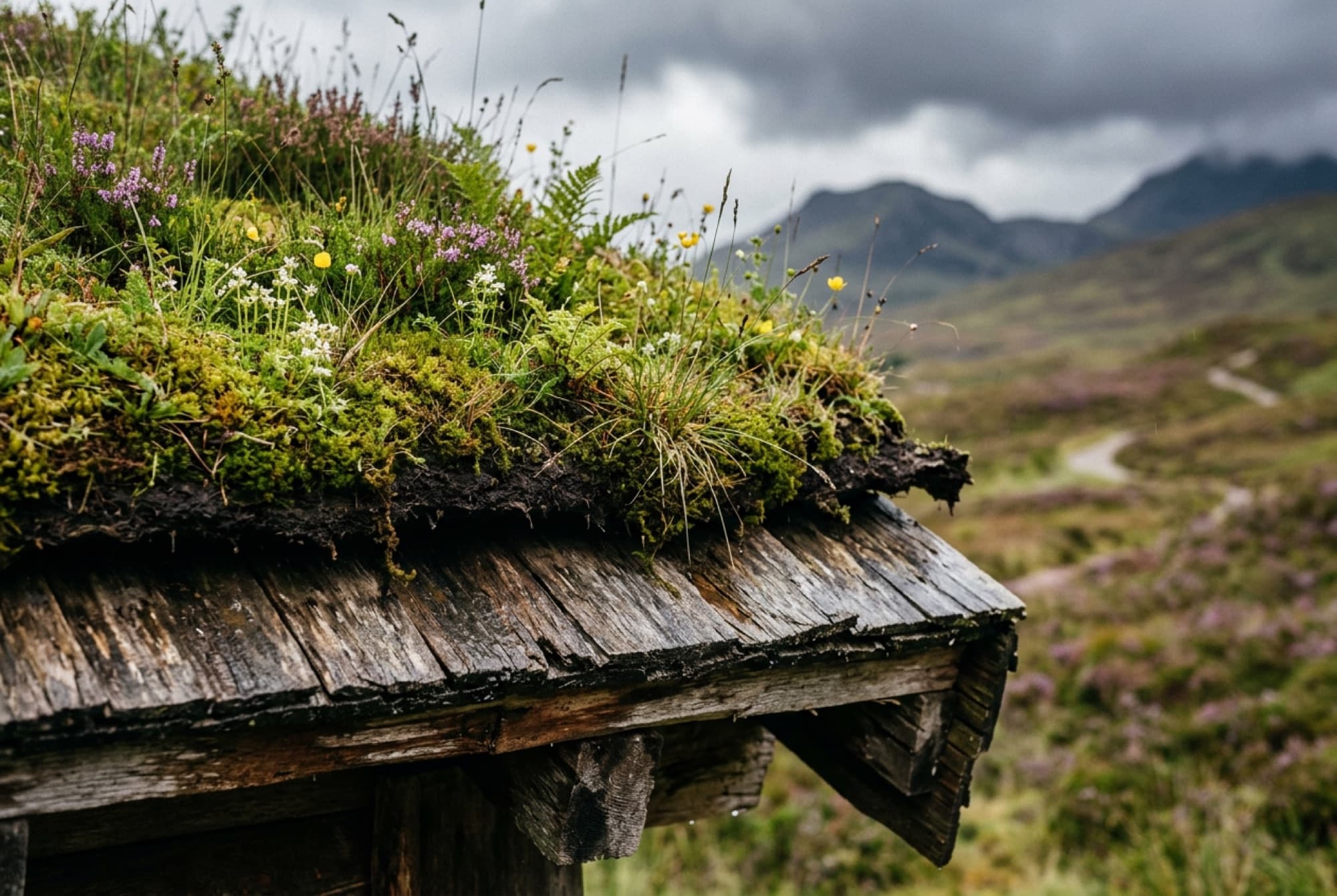
Eagle Brae in the Highlands is the larger-scale version: a hillside village of hand-carved cedar cabins with turf roofs, where the electricity comes from micro-hydro and solar and the heating from a central biomass system.
Whether cars come with you
This is the quiet one, and it changes a site more than any amount of solar. Comrie Croft makes you leave the car and wheelbarrow your kit into the woods. The result is not just lower emissions — it is a campsite you cannot hear, because there is no engine noise and no arriving-at-nine headlights sweeping your tent.
Ask what the site stopped doing, not what it added.
Whether anyone independent has checked
Graig Wen holds Green Snowdonia's Most Sustainable Campsite award, which at least means someone outside the business looked. Award schemes are imperfect and some are effectively paid listings, so the useful test is whether the assessor visited and whether the criteria are published.
What it's built from, and how far it travelled
Kudhva sits in a disused slate quarry above the Atlantic — a reclaimed industrial site rather than a converted field, which is a genuinely different proposition from building something new on farmland.
The honest caveat
None of this makes a holiday carbon-neutral, and a site that says it does is telling you something about its marketing. The realistic version is smaller: stay longer, drive less, book direct so the money stays local, and prefer places that made a hard choice over places that bought a label.