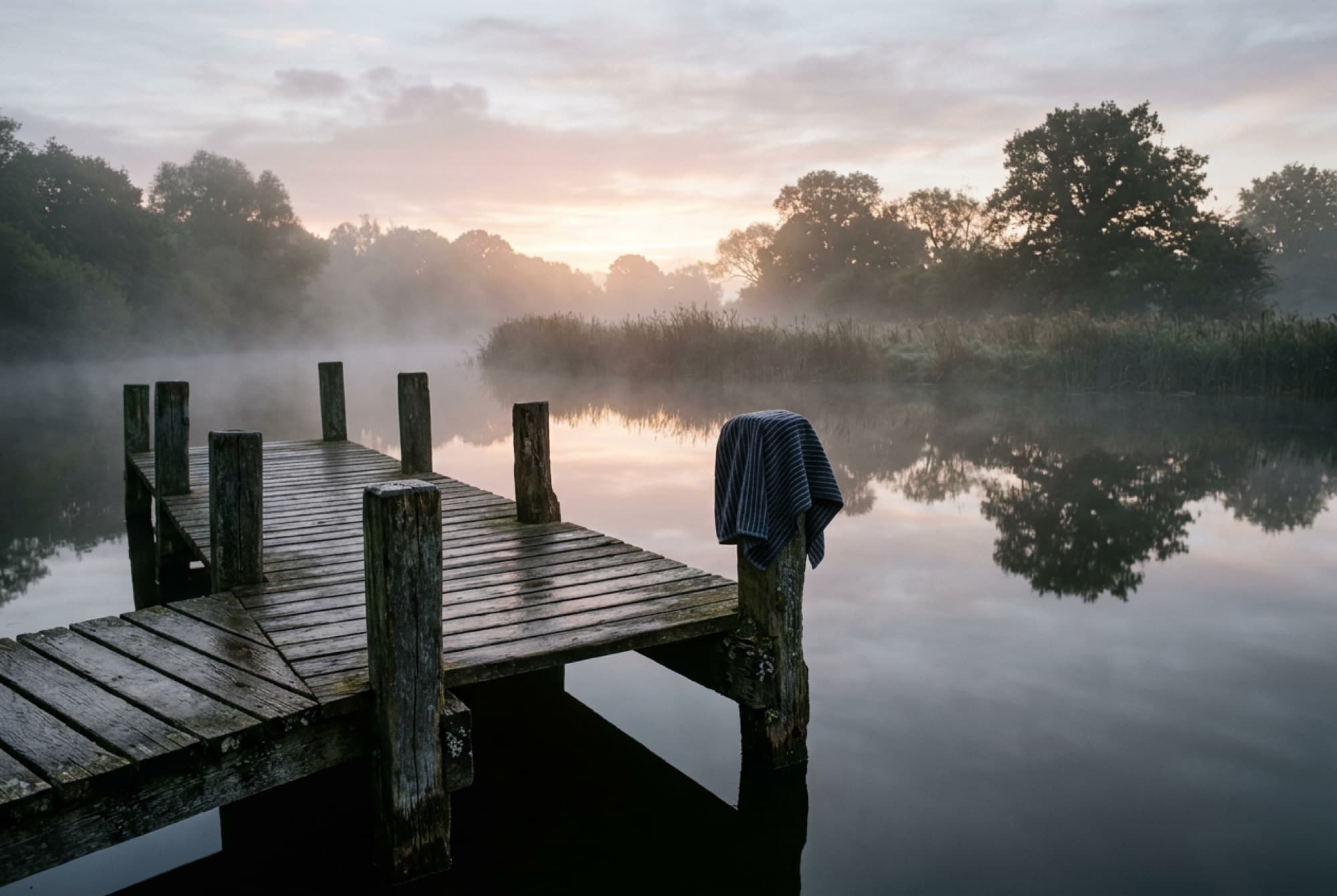
There is a meaningful gap between a place near water and a place on it. The first involves a drive, a car park and a decision. The second involves getting out of bed. Only the second one turns into a habit, and the habit is the entire point.
Freshwater, and the easiest version
Log House Holidays in the Cotswold Water Park is the gentlest introduction: eight log cabins around a private 130-acre lake with jetties, and no public access. Still water, no tide to read, and you can be back inside within a minute. If you have never swum outdoors and are quietly nervous about it, start here rather than in the sea.
Estuary, which is neither
Graig Wen sits above the Mawddach, and an estuary behaves like nothing else — the water moves, the depth changes by the hour, and the sandbanks that were there yesterday may not be. It is beautiful and it demands more respect than a lake. Go at slack water, go with someone, and take local advice seriously rather than as small talk.
Cold water is not dangerous because it is cold. It is dangerous because the first thirty seconds make you breathe wrong.
The Atlantic
Kudhva above Trebarwith Strand is the serious end. The hideouts are on stilts in an old slate quarry, there is a sauna, and the beach below is proper north Cornish coast — which means surf, rips and a tide that covers the sand entirely. Swim at low water, swim between the flags in season, and treat the sauna as the reward rather than the safety net.
Highland river
Glen Nevis has the Water of Nevis running through the estate below Ben Nevis. Snowmelt keeps it genuinely cold well into summer, which is either the appeal or the deterrent. Pools change with the rain — what was a wading depth in June can be moving fast in August after a wet week.
What actually matters
Acclimatise before you go deep: stand in it, get your breathing under control, then swim. Get out earlier than you want to — the cold catches up several minutes after you leave the water, not while you are in it. Have dry clothes at the water's edge and not back at the cabin.
And know the difference between the three types. Lake water is predictable, estuary water is not, and the sea is a different sport. The nice thing about all five of these is that you can walk back and get warm, which is the part most people underestimate.