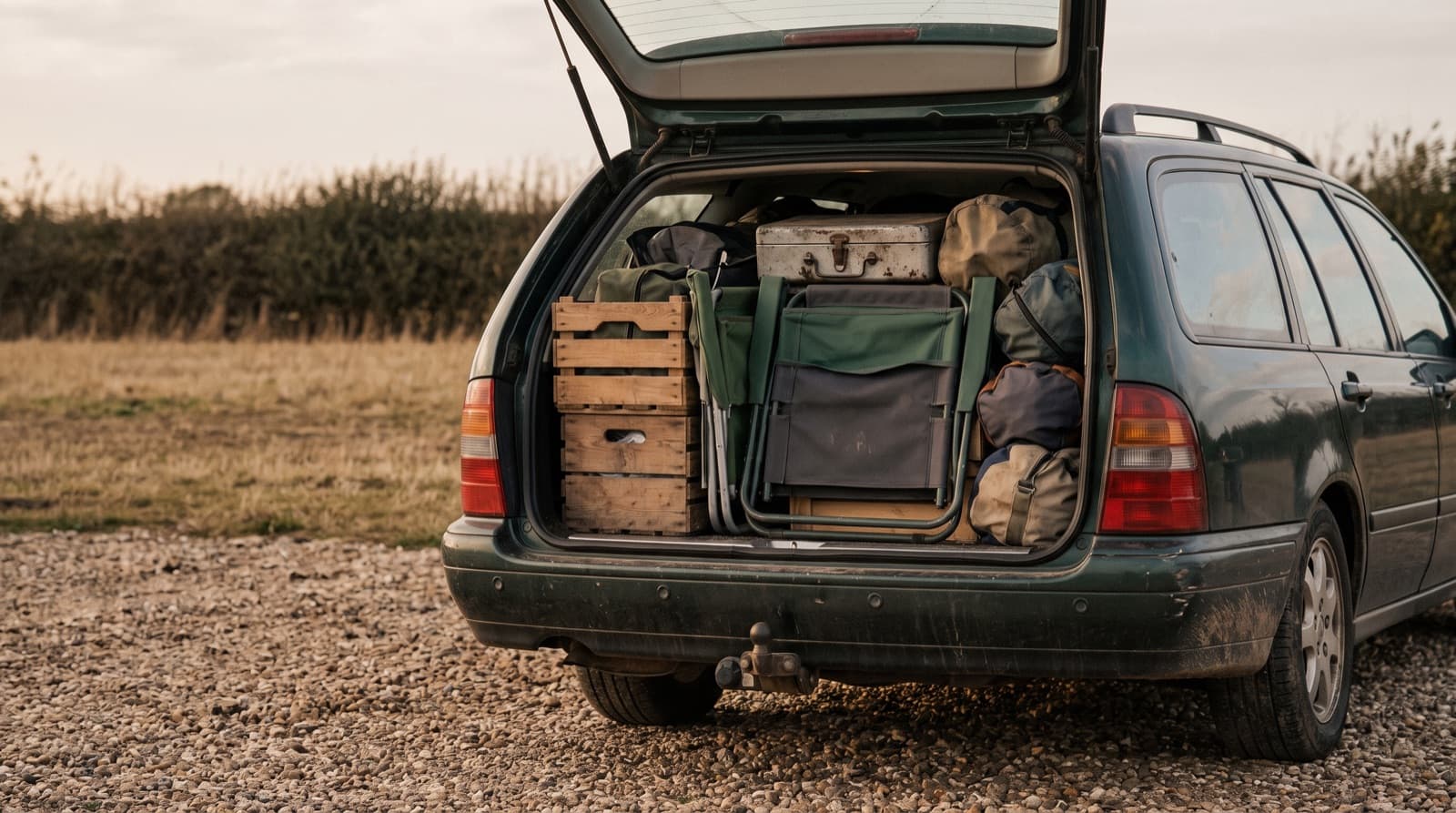
Nobody packs a hatchet because they intend to chop anything. They pack it because a hatchet is what a person who has thought about it would own, and because the alternative is standing in a field at dusk having failed to anticipate something. That is the whole mechanism. An over-full boot is not a planning document, it is an anxiety one, and anxiety has no weight, so nothing ever comes out of it again.
Why the boot is full
Packing is risk management done by feel, and feel is a poor actuary. It over-weights the vivid and the rare — the storm, the injury, the tree across the track — and discounts the boring and the certain: the ground harder than the pegs would like, the torch dropped in long grass at eleven at night. The axe is for a fantasy. The mallet is for Friday.
Backpackers have one defence car campers do not, and it is a number. Base weight — the pack without food, water and fuel — sorts walkers into recognised bands: under 10lb, about 4.5kg, is ultralight; 10 to 20lb is lightweight; 20lb and above is conventional. The averages sit inside those bands: around 9lb for an ultralight walker and 15lb for a lightweight one, with beginners commonly starting between 20 and 25lb. REI's guideline is blunter: a loaded backpacking pack should not exceed about 20 per cent of body weight and a day pack about 10 per cent, which for a 150lb walker means 30lb and 15lb. REI adds that the percentages do not work in every situation.
The number is not magic and makes nobody's decisions for them. It makes the trade-off visible, in the same units, before you leave the house: adding something means subtracting something. A car boot has no equivalent. It closes or it does not, and the thing sacrificed is whichever object was nearest the door.
The closest car-camping equivalent is the tailgate test. Everything comes out onto the drive before any of it goes in, and anything you cannot say a use for — not a scenario, a use — goes back in the house. It is uncomfortable in a way that reading a packing list is not, because the objects are in your hands.
The kitchen, and the second kitchen
The recurring offender is the two-burner stove, bought for the trip and used for the kettle. A Coleman Classic two-burner is 11.5lb — about 5.2kg — before any gas goes near it: more than five litres of the water it spends the weekend boiling. It puts out 20,000 BTU across both burners and will run for roughly an hour on both burners high from a single 16.4oz cylinder.
The second stove is worse, because it exists purely as insurance against the first. If the first is unreliable, replace it. Carrying two is not redundancy but an admission you have not dealt with the problem.
Then the rest of the kitchen: the cast-iron pan nobody is willing to lift onto the stove, the second kettle, the chopping board, the full crockery set for people who will eat two meals a day off their laps. One pot and a frying pan cover most of a weekend.
What gets left behind, and is worth several times its weight: a lighter that works in wind, one genuinely sharp knife, and a plastic washing-up bowl — the single most useful object on a campsite and the one nobody photographs.
Light, and the collection of lanterns
The pattern is always the same. One lantern per adult, plus a string of festoon lights, plus the head torches, plus the torch that lives in the glovebox and has been flat since March.
A head torch does nine-tenths of the work of all of it, because the problem is almost never ambient light. It is finding something in a bag in the dark, and a head torch is the only light that points where you are already looking. One lantern for the table is defensible. Four is a scene from somebody else's Instagram. Festoon lights are a decision you are making on behalf of the pitch next door, which puts them in a different argument entirely.
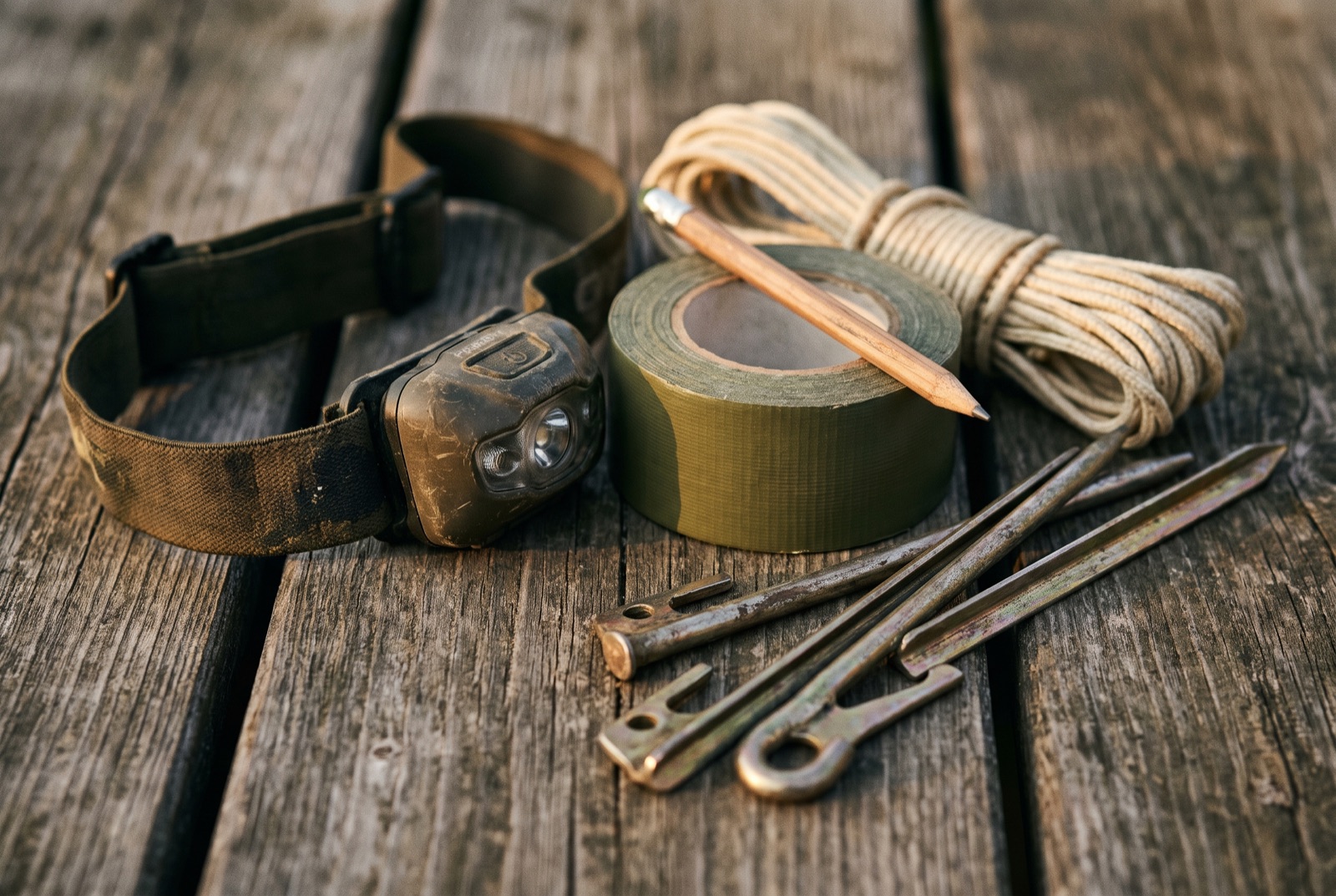
The omission, and a cheap one: a head torch each, including for the children, so the nightly hunt for the one working torch stops happening.
Sharp things, and the axe in particular
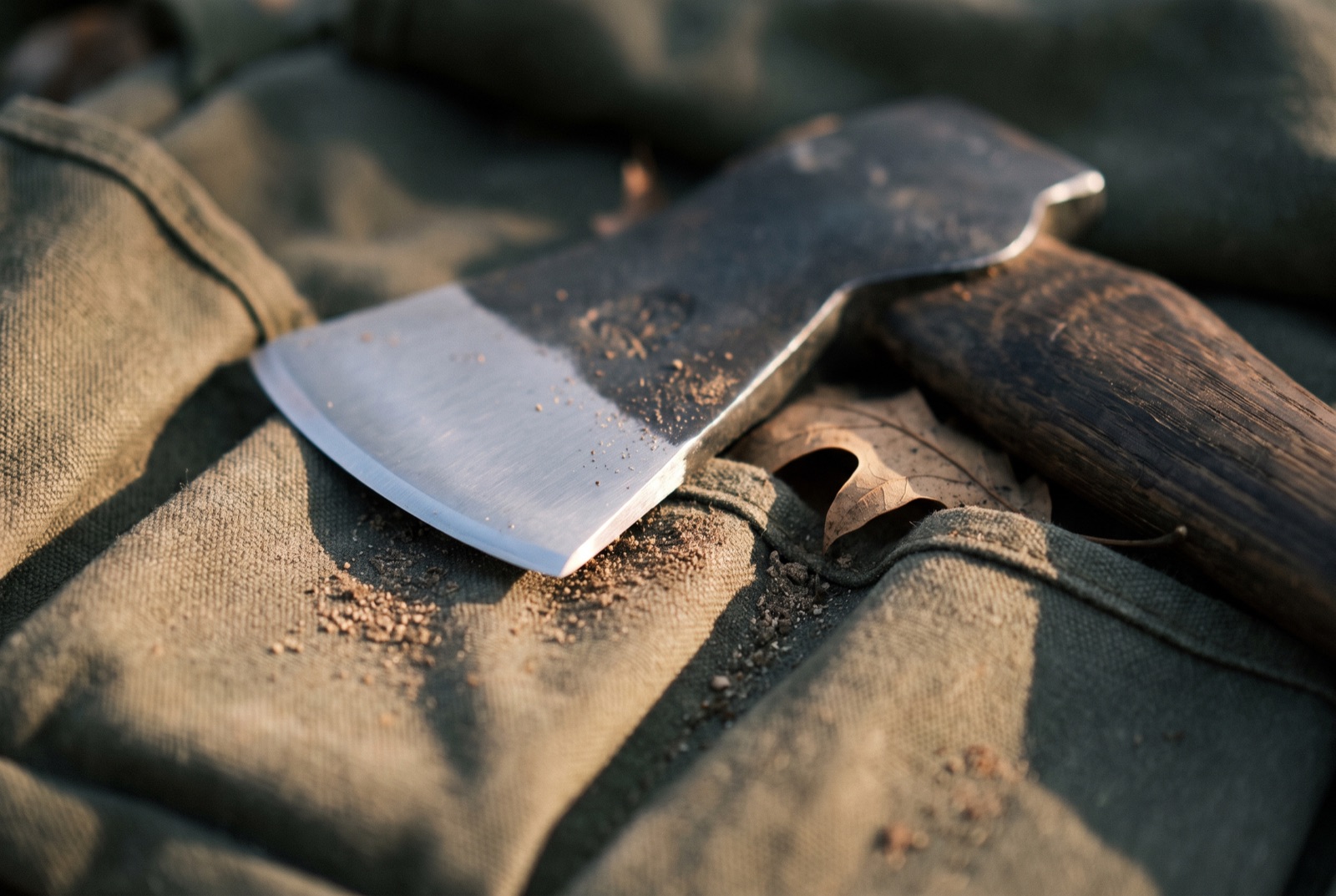
The axe. A Fiskars X7 is 645g of very good tool — 470g of it in the head, on a 14in handle — and it will not be used. Campsite firewood arrives pre-split in a net, and fires away from a campsite are mostly illegal or unwise. There is a genuine exception: a woodland pitch with standing deadwood and permission. It is rare, and if you have one you already know.
The multi-tool nobody opens is the same error in miniature. A Leatherman Wave+ is 241g and eighteen tools, of which most people use two: the pliers and the knife. That is a pair of pliers and a knife, which weigh less separately and work better.
The folding saw is the quiet exception, because when wood needs to be shorter a saw does it and a hatchet largely does not. Gossamer Gear, who sell packs rather than listicles, put backup knives, spare lights and redundant tools in the same regret column — kit packed for scenarios that almost never happen.
Multi-purpose beats redundant, but a tool that does eight things you never do is not multi-purpose. It is decoration with a warranty.
Nobody packs a hatchet because they intend to chop anything. They pack it because a hatchet is what a person who has thought about it would own.
Clothes, chairs and tins
Clothes are the largest single volume in most boots: a week's wardrobe packed for three nights. What happens is that people wear the same trousers for four days and change one layer. Gossamer Gear again, on the full set of camp clothes: "You think you'll want options. You won't." Two changes and a sleeping set that has never been outside is the entire list, and the line between the two is the whole of the rain article. The same goes for the spare pair of boots, which rides around all summer and comes home clean — what footwear earns its place is argued properly elsewhere.
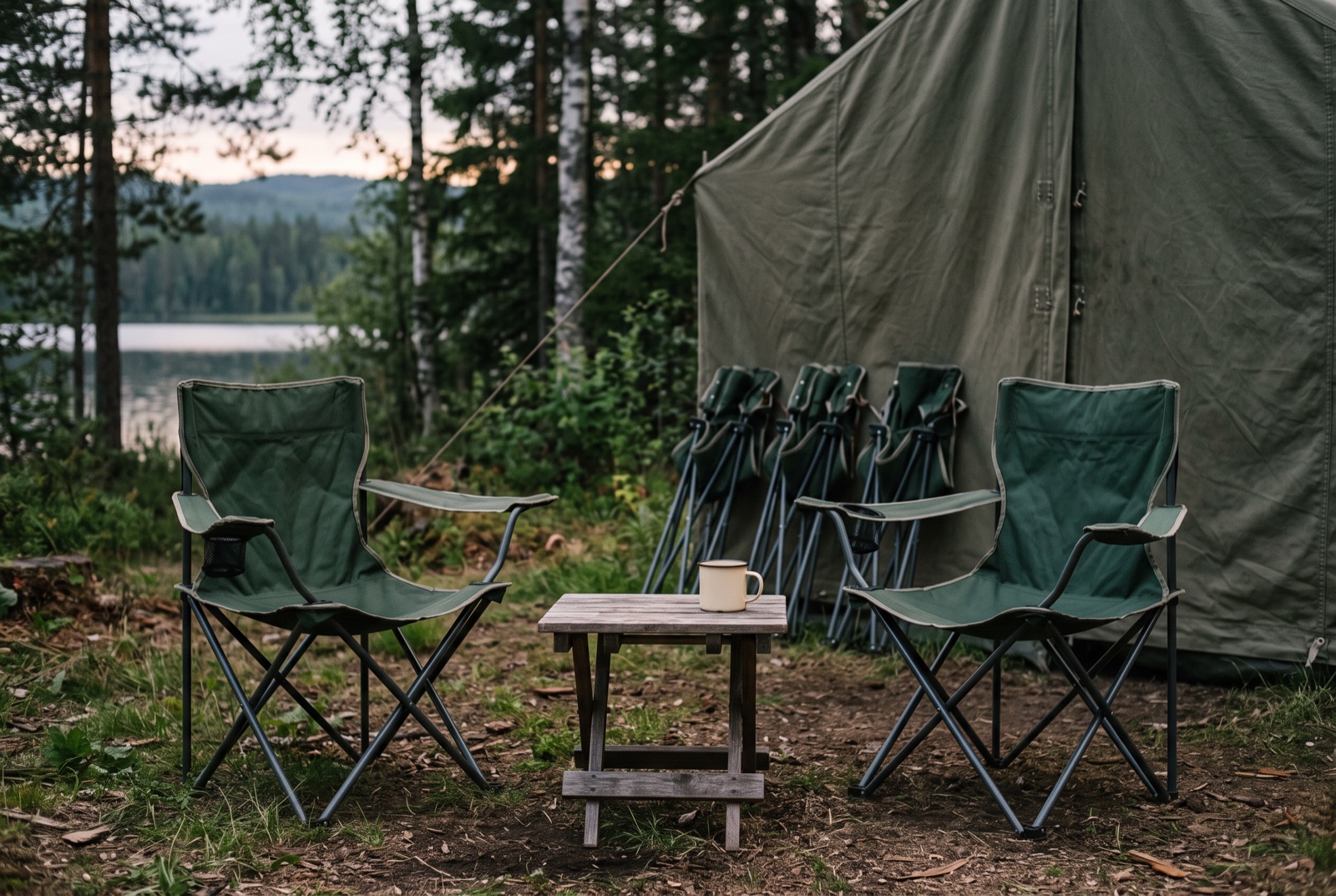
Chairs multiply because they are bought in pairs, and six chairs for four people happens every summer. A Coleman Quad is 2.6kg; a Helinox Chair One is 893g assembled and 0.96kg packed. Two spare chairs is five kilos of boot that carried nobody.
Tinned food is where the arithmetic is honest. Ready-to-eat canned meals run about 1.3 kcal per gram; freeze-dried and dehydrated meals give 3.5 to 5. The gap is water — protein and carbohydrate give roughly 4 kcal per gram and fat about 9, and water none at all. In a boot, tins are fine and cheap. On a back they are close to three times the weight for the same dinner, which is why the same object can be sensible in a car and absurd in a rucksack.
The principle is worth stating once: weight only matters when you carry it, but volume always matters, and volume is what fills a boot. Four Vango Comfort 7.5 self-inflating mats are 2.5kg each — ten kilos before anyone has packed a bag — and a Coleman Comfort double airbed is 3.6kg, packing to 8 by 36 by 28cm. Neither is an extravagance. The one purchase that reliably earns its space is the one under you, for reasons we have set out at length.
The "just in case" kit that is neither
The first aid kit is the purest form of anxiety packing: bought once, never opened, containing plasters, a foil blanket and almost nothing that treats anything. It is carried for years and thrown away when the adhesive fails.
St John Ambulance's own list starts with a first aid leaflet, sterile plasters, disposable gloves, wound dressings, bandages, safety pins and sterile eye pads, and a fuller kit adds scissors, tweezers, antiseptic wipes, adhesive tape, a face shield and pain relief. There is no legally required contents list for a personal first aid kit in the UK, so all of that is best practice rather than a rule, and none of it is medical advice.
The part people miss is that the kit should contain the medication your own household actually takes: prescription medicines in their original packaging, antihistamines, rehydration sachets, blister plasters, and tick tweezers if there will be long grass. That is the half of "just in case" worth carrying, and the half that gets left on the bathroom shelf.
What to bring instead
A proper rubber mallet, because a rock is not a mallet and nor is the flat of a boot. Spare pegs, more than feels reasonable, of a type that suits the ground you are going to; the Met Office's own camping advice notes that ground softens during and after rain, that pegs work loose, and that they are worth checking before turning in — which makes spares kit rather than fussiness. Spare guy line and a peg puller. Gaffer tape wound round a pencil — the whole roll's usefulness at a fraction of its volume. A head torch each. A groundsheet doormat, which keeps more mud out of a tent than any amount of shouting. The washing-up bowl. And a carbon monoxide alarm if you are sleeping anywhere with a fixed combustion appliance — required by law in any room of a rented home in England containing one, other than a gas cooker, since 1 October 2022, and an obviously sensible idea in a campervan. Around 200 people a year are hospitalised in the UK for carbon monoxide poisoning, roughly 40 of those cases fatal, and the Gas Safe Register reports that one in five people in the UK do not know the danger of taking a barbecue into a tent.
The whole list weighs a fraction of the axe and second stove it replaces, and every item addresses something that reliably happens rather than something that might.
That is the test, in the end. It is not "might I need this", to which the answer is always yes. It is "what happens if I do not have it, and how likely is that" — the same question, asked in a form that can be answered. A missing mallet is a certainty with a cheap fix. A missing hatchet is a scenario.
And most of the excess was bought for a specific weekend, which is a cost that never appears in what a pitch actually costs. The boot is not only heavy. It is itemised.