A four-person tent sleeps four people the way a lift holds eight people: only if none of them has brought anything, and only if nobody minds. The number on the box is not a promise about comfort or even really about sleep. It is the answer to a geometry question — how many two-metre-by-sixty-centimetre rectangles will fit on this floor — and the standard that defines it says so in as many words.
What follows is the conversion, done with a tape measure rather than a rule of thumb. The usual advice is to buy one size up, which is roughly right and completely useless, because the correct answer is not a rule of thumb at all. It is a subtraction, and the inputs are on the box your airbed came in.
Where the number comes from
ISO 5912:2020, "Camping tents — Requirements and test methods", is the standard that governs the things. It establishes sleeping capacity by fitting a test area onto the inner floor: 200cm by 60cm per person for category B tents, assessed at a measurement height of 5cm so that the floor material itself is discounted. Separate test areas apply to category A and category B. That is the whole of the definition.
What the rectangle does not include is everything that makes a tent liveable. No bedding thickness. No rucksack, no boots, no dry bag of clothes, no child who sleeps diagonally, and — this is the part that surprises people — no space whatsoever between one sleeper and the next. Sixty centimetres is a shoulder allowance. It is not personal space, and it works out at roughly 13.1 square feet per person of bare floor.
None of which is a manufacturer being sly. Vango publishes "60cm of sleeping space per person" as a stated feature of its Beta range and describes the bedrooms as queen size; the number is printed rather than hidden. The dishonesty, such as it is, lives entirely in the word "person", which the reader hears as an adult with belongings and the standard means as a rectangle.
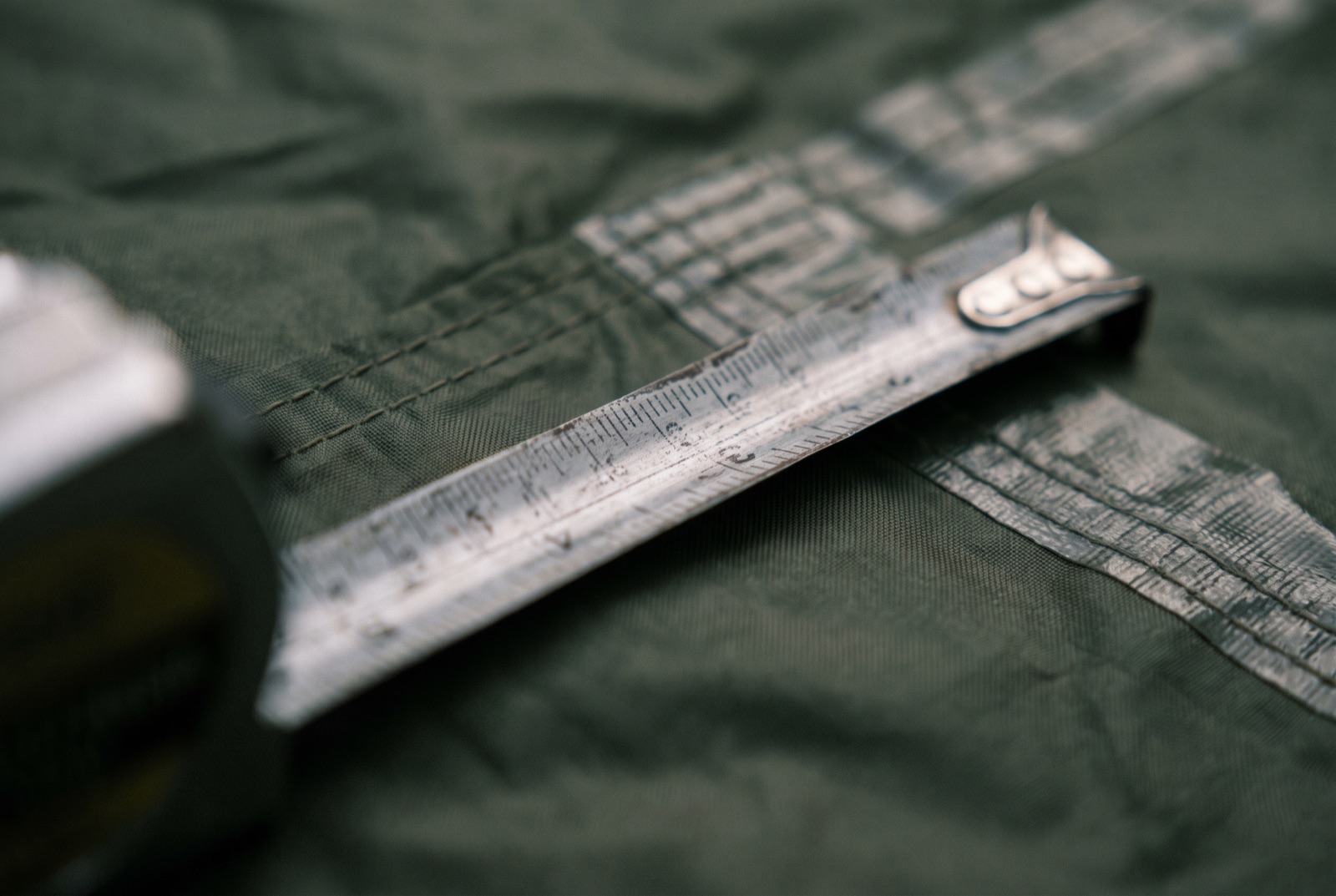
So the frame for everything below: berth ratings are floor-plan arithmetic. Arithmetic can be redone with better inputs.
What you actually sleep on
Start with the standard British family self-inflating mat. The Vango Comfort 7.5 Single measures 200 by 60 by 7.5cm expanded, and weighs 2.5kg. That is the ISO test rectangle to the centimetre. Buy one and you have consumed your entire allocation with nothing left over — not for a bag, not for a jumper, not for the gap you would like between yourself and your brother.
The real disruptor is the double airbed. A Coleman Comfort double is 188 by 137 by 22cm. Note both numbers against the standard: it is seventeen centimetres wider than two berths, and twelve centimetres shorter than the length the standard assumes. A couple who buy the comfortable bed have quietly bought two and a bit berths for two people, and lost a foot of length in the trade.
The 22cm of height matters more than the specification sheet suggests, particularly in a tunnel tent where the inner walls slope away above the floor. Usable width at airbed height is not usable width at floor height, and the tape measure that tells you the truth is the one held at the height your shoulders will be. The 22cm also buys you width you did not want and insulation you do not have, which is a separate and colder problem.
The rule, stated once: measure what you sleep on, not how many of you there are. The tent does not know how many people you are.
The conversion, done properly
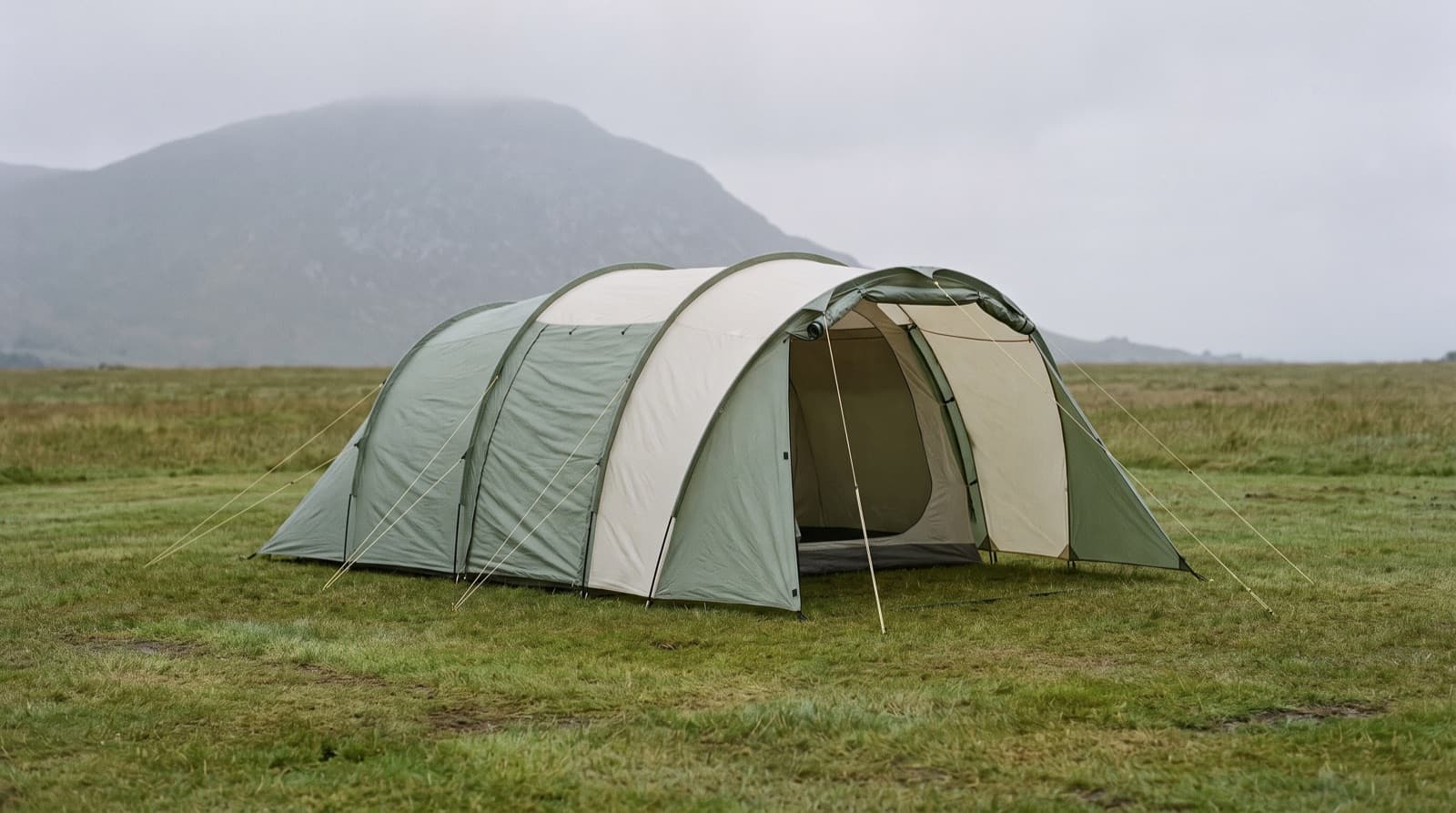
Work an actual example rather than asserting a ratio. The Vango Beta 450XL is a four-person, three-pole tunnel tent, pitched at 475 by 270 by 155cm and weighing 9.3kg. Vango does not publish an inner width, and guessing one from the pitched figure would be dishonest, because pitched width is the outer and includes the porch. What Vango does publish is the 60cm-per-person allocation, and four times sixty is 240cm of bedroom.
Two double airbeds side by side need 274cm. A family of four with two doubles therefore does not fit in a four-berth. Not "is a bit cramped in". Does not fit — you are thirty-four centimetres short before anybody brings a bag in.

Step up to the Beta 550XL — five person, 475 by 320 by 195cm, 12.2kg — and the same sum gives 300cm of bedroom. Two doubles fit with 26cm spare, which is where a torch, a water bottle and a child's shoes live. So the honest version of "buy one size up" is this: a family of four wants a five- or six-berth, and the reason is airbed width. Not comfort, not luxury, not softness.
Run the sum for singles and it inverts. Four Comfort 7.5 mats at 60cm come to 240cm and fit a four-berth exactly, with nothing spare and nothing needed. This is why one tent can be entirely adequate for four scouts and impossible for a family of four. The variable is the bed, not the body.
Which produces the measurement to demand from a retailer, and which most do not publish: inner-tent width. If it is not on the page, ask, and treat a refusal as information.
Standing up, and the height they quote
Published height is the apex of the outer at its single tallest point. It is not the height inside the bedroom, and on a tunnel tent it is not the height anywhere except one line across the middle. The Beta 350XL is a three-person tent pitched at 430 by 225 by 145cm. The 450XL is 155cm. The 550XL is 195cm. An Outwell Utah 6 reaches 215cm at maximum, with an inner tent 400cm wide by 215cm long.
Only the last two of those are standing height for an adult, and the jump happens between three and five berths — which is to say that the extra berth you were told to buy for space turns out to also be the one that buys headroom.
The consequence is a wet-day one. A tent you cannot stand up in is a tent you cannot get dressed in, and you are in it most on exactly the days that are worst. Backpacking tents make no pretence about this and are the better for it: the MSR Hubba Hubba 2 has a 102cm interior peak, and nobody has ever bought one expecting to stand.
Tunnel, dome, geodesic: where the space goes
A tunnel tent's near-vertical sidewalls hold their height along the length of the tent, so measured floor area and usable floor area are close to the same number. That is why family tents are tunnels. The cost is that a tunnel is directional by design, and the direction is not a matter of taste — pegs, guys and orientation are dealt with properly here, and a tunnel needs a pitch that lets you point it the right way, which is one of the things the ten-minute survey is looking for.
A dome's stated peak height applies at a single point in the centre, and the walls curve away from it in every direction. Its usable floor is meaningfully smaller than its measured floor, and the difference is largest exactly where you want to sit up. In exchange it is freestanding, which is worth something on hardstanding and worth a great deal on rock.
A geodesic uses three or more poles crossing at multiple points, distributing load across the structure rather than concentrating it in two arches. You are buying stability, and you pay for it in weight, complexity and usable volume per kilogram.
A berth rating is not a lie. It is an honest answer to a question about rectangles, given to somebody who was asking about people.
The comparison that makes the point is the MSR again: the Hubba Hubba 2 gives 29 square feet of floor to two people, which is more per head than most family tents manage, and nobody would call it roomy. Floor area is not the thing you experience.
The porch, and the room you actually live in
Porch and vestibule area is excluded from the berth rating entirely, and on a wet trip it is the most valuable square metre you own. The Coleman Coastline 3 Plus pairs a sleeping area of 220 by 190cm — 4.2m² — with a vestibule 210cm long. The porch is very nearly half the tent, and none of it counts towards the three on the label.
What the porch is for: boots, waterproofs, wet dogs, the bags that do not come inside, and somewhere to sit at nine in the morning when it is raining and nobody wants to lie down any longer. It also fills with things nobody uses faster than any other part of the tent, which is an inventory problem before it is a space one.
One safety line, stated once and firmly: a porch is not a kitchen. Stoves and barbecues stay outside the fabric, and the reasoning belongs to the wind article rather than this one.
Backpacking tents publish the ratio and it is worth reading. The Hubba Hubba 2's two vestibules total 15 square feet against 29 of floor. A tent with a mean porch is a tent with nowhere to put anything, and the number is usually there if you look.
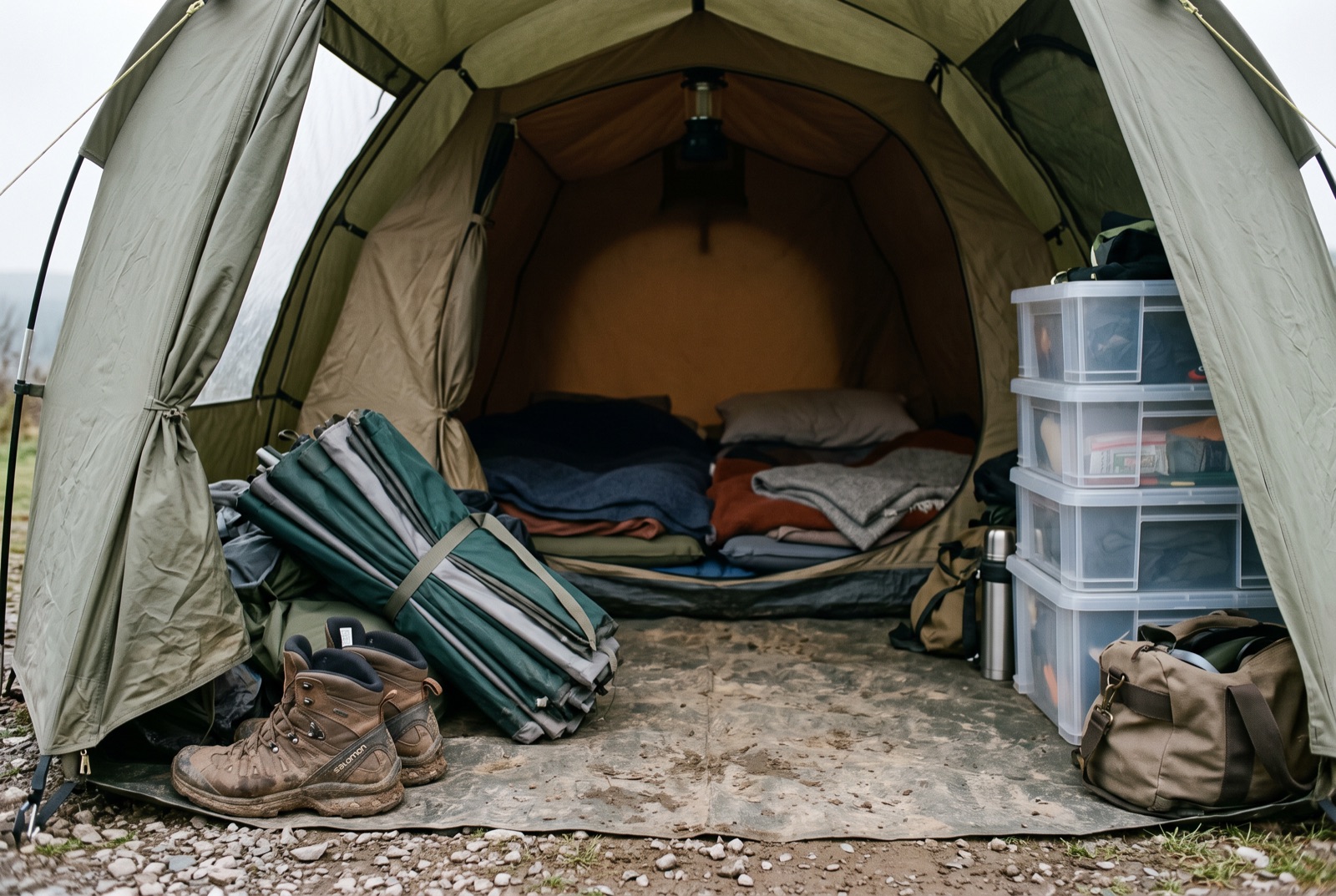
Before you buy: the floor of your living room
The instruction that replaces the whole article takes ten minutes and costs nothing. Put masking tape on the floor at the tent's inner dimensions, lay out the beds you actually own rather than the ones in the photograph, and walk around it. You will know within a minute, in a way no comparison table has ever delivered.
Then three questions for the retailer, none of which the marketing copy answers. What is the inner width, in centimetres. What is the height inside the bedroom, rather than at the apex. How deep is the porch.
If you buy the smaller tent anyway — and there are decent reasons to, weight and pack size among them, since the Beta 350XL packs to 65 by 22 by 22cm — spend the difference on the ground rather than the walls. But be honest about the arithmetic: the extra berth is almost always cheaper than the extra bedroom you end up buying separately in August.
And a good many people finish this sum and quietly start looking at cabins instead, which is a reasonable place to end up rather than a defeat. The conversion does not care which way you go. It only insists you do it before the money leaves, rather than at half past nine on a wet Friday with the beds already inflated and thirty-four centimetres missing.