A hydrostatic head figure is the height of a column of water a fabric will hold before it lets water through. Twenty thousand millimetres is twenty metres of water. Nobody has ever stood under twenty metres of water in Snowdonia, and the jackets that claim it still send people home damp, which should tell you something about what the number is for.
What hydrostatic head actually measures
A sample is clamped under a sealed column of water, the pressure is raised at a controlled rate, and the figure recorded is the pressure at which water comes through — expressed, by convention, as the height in millimetres of water column that would produce it. The method is ISO 811, identical to EN 20811. SATRA's description of it is worth reading if you want the detail: the standard looks for penetration at three separate points on the sample, not the first bead.
What is measured is pressure, not volume, and that changes what the number is good for. Rain falling on a shoulder exerts very little pressure. A rucksack strap does more. A knee on wet ground, an elbow on a stile, sitting down on a soaked rock — those are where a fabric is asked to hold back a real head of water, and where jackets and tents actually leak. None of which is the same question as how to pack for rain, though the two get confused constantly.
Then the awkward part. There is no single legal threshold in the UK for calling something waterproof, and the commonly quoted minimums disagree. Advnture's survey puts the figure usually cited in the UK at 800 mm, the German convention at 1,500 mm, and the Swiss EMPA benchmark at 4,000 mm — a fivefold spread on the same word. Anyone who gives you a settled number is repeating one country's convention as if it were physics.
The standard almost nobody quotes
There is a European standard for clothing that protects against rain: EN 343. It does not work in millimetres. It works in pascals, and it sorts garments into classes.
Per SATRA, the water-penetration classes run: Class 1 requires at least 8,000 Pa measured on the material before pre-treatment; Class 2 at least 8,000 Pa after pre-treatment; Class 3 at least 13,000 Pa after pre-treatment; Class 4 at least 20,000 Pa after pre-treatment and seam cleaning. Now convert. A thousand pascals is about 102 mm of water column, so the top class in the European standard for rain protection — the highest grade the standard recognises — is about 2,040 mm.
Sit that next to a jacket advertising 20,000 mm and the marketing figure is ten times the standard's ceiling. The standard is not being modest. It has concluded that above a certain pressure the measurement stops distinguishing between garments that keep you dry and garments that do not.
The interesting word in those definitions is "pre-treatment". EN 343 does not much care what a fabric does new. It washes it and abrades it first, because everything leaks eventually and the standard is interested in what survives. Class 1 is the only class measured on virgin material, which is why it is the lowest.
EN 343 also has an optional whole-garment test, EN 14360:2004 — a rain tower firing high-energy droplets at a garment on a manikin. It is not looking for fabric failure. It looks for water wicking in at the cuffs and travelling up the sleeves, and for pockets that fill. That is where garments fail, and no millimetre figure will tell you about it.
Breathability, and the two different numbers for it
Two numbers are used for breathability and only one is disciplined.
RET is the one EN 343 mandates, measured to ISO 11092 on a sweating guarded hot plate, expressed in m²·Pa/W. Lower is better: it is a measure of resistance. The EN 343 classes run Class 1 above RET 40, Class 2 from 20 to 40, Class 3 from 10 to 20, and Class 4 at 10 or below. The practical scale used across the industry is finer — below 6 is very breathable, 6 to 13 good to very good, 13 to 20 acceptable, and above 30 poor. GORE-TEX Pro is quoted below RET 6, GORE-TEX Active below RET 3.
MVTR is the other, in grams per square metre per 24 hours, where higher is better. Industry ranges put 5,000 to 10,000 at low-output use, 10,000 to 15,000 at hiking and ski touring, and 20,000-plus at high aerobic output. No single test method is mandated behind it, so two brands' figures are not reliably comparable, and an MVTR quoted without a method is a marketing claim in a lab coat.
The arithmetic that matters is the one nobody prints. Endurance exercise typically produces half a litre to a litre and a half of sweat an hour. A 20,000 g/m²/24h rating works out at about 833 g per square metre per hour, and a jacket presents roughly one and a half to two square metres of fabric — call it 1,250 to 1,650 g an hour, in the laboratory. Those two figures are the same order of magnitude. That is the entire point. The lab number is a best case, measured across a vapour-pressure gradient that does not exist inside a soaked shell on a cold, humid hillside, and the moment the outside of your jacket is as wet as the inside, the gradient driving vapour outwards collapses. This is why you can be wet inside a jacket that has not leaked.
DWR: the bit that fails first, and isn't on the label
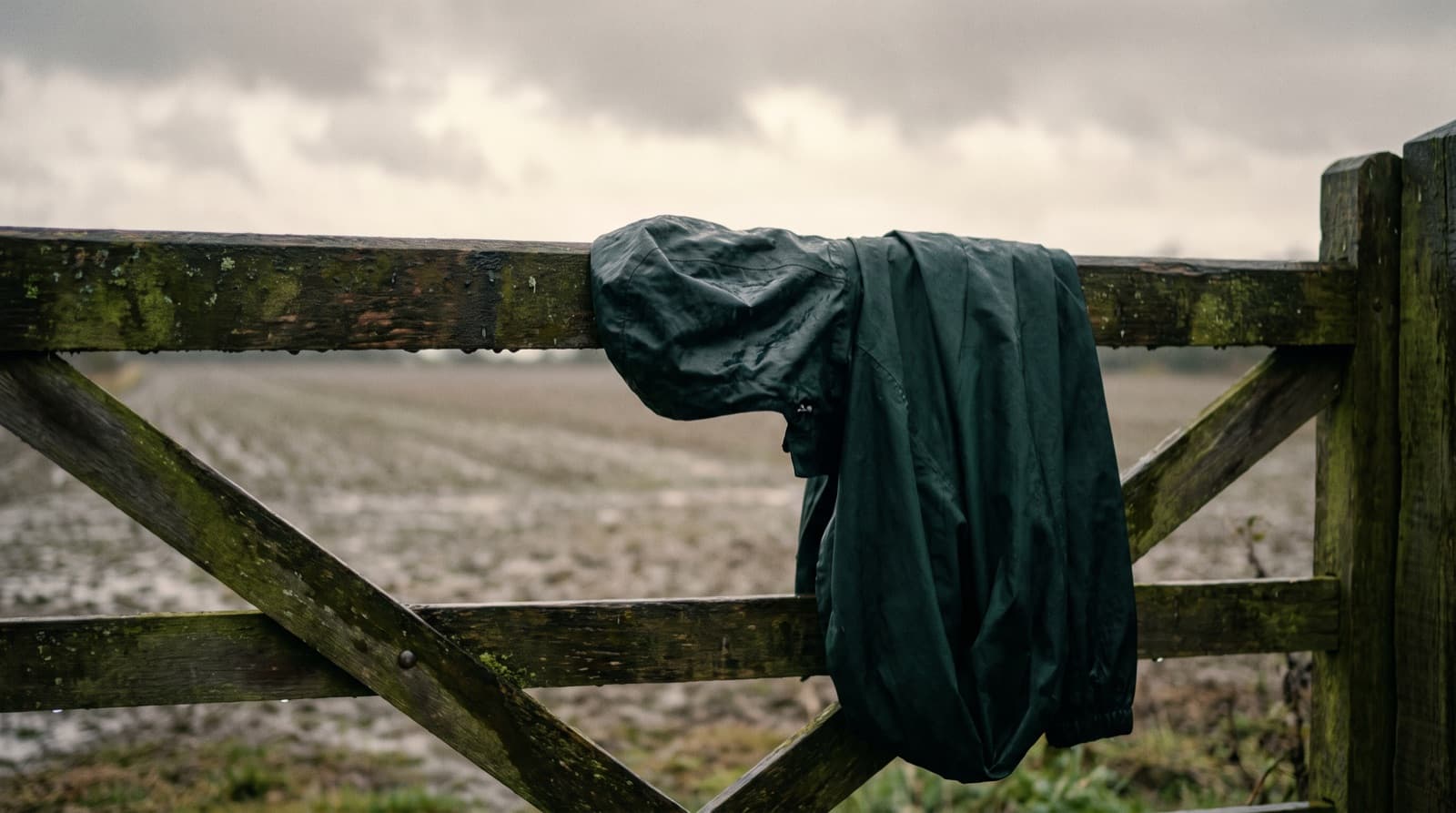
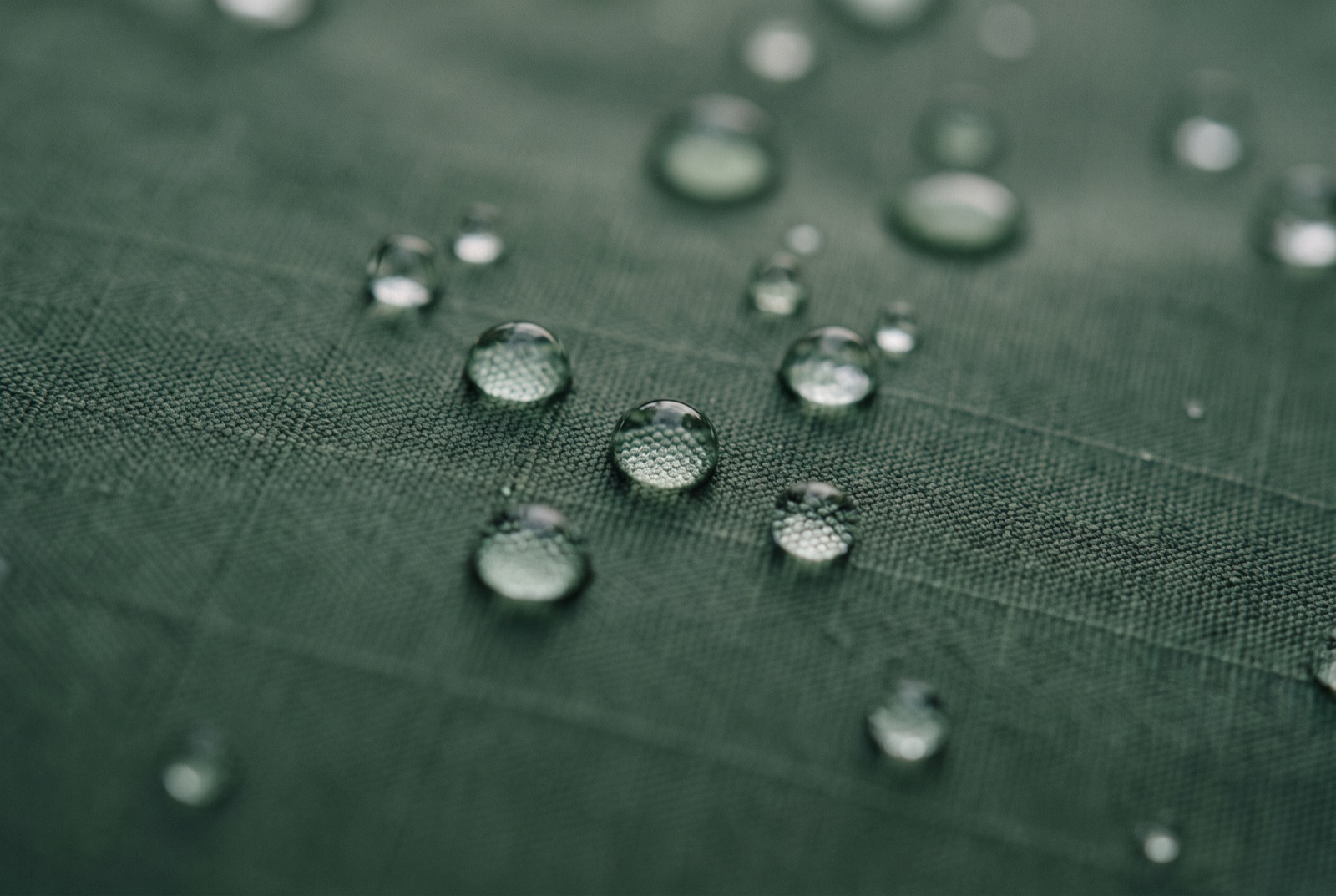
Durable water repellent is a surface treatment on the face fabric, and it is not what makes a jacket waterproof — the membrane does that. DWR makes water bead and roll off, which sounds cosmetic and is not, because of what happens when it stops.
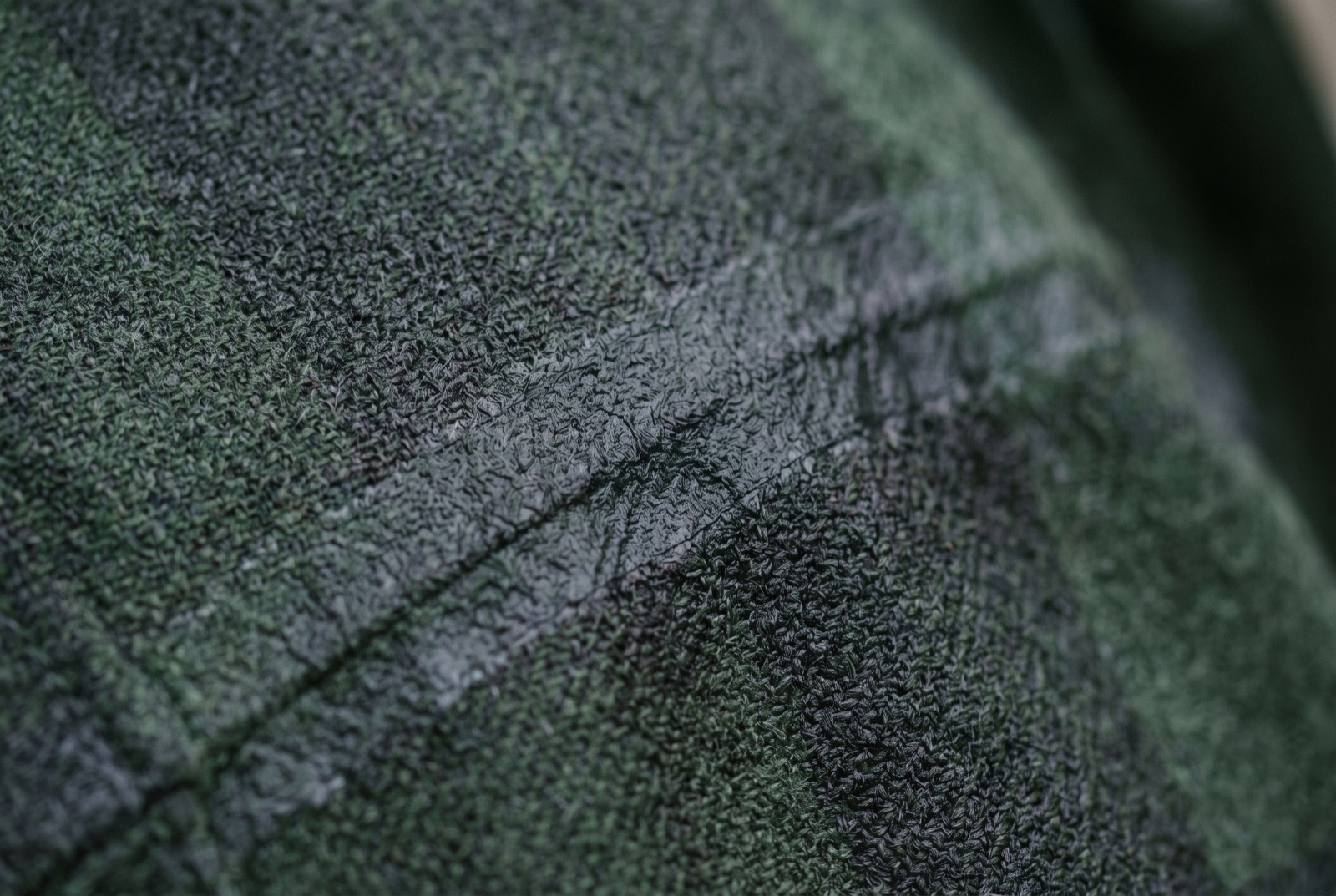
When the face fabric wets out, it saturates and goes cold and dark. No water passes the membrane — the jacket has not leaked — but the vapour gradient the membrane needs in order to move your sweat outwards has been killed by a film of water sitting on the outside of it. Your sweat condenses on the inside instead, and you conclude the jacket has failed. Nikwax claim that a garment whose outer fabric absorbs water can lose up to 70% of its breathability; it is a manufacturer's figure rather than an independent measurement, worth treating as directional rather than precise, though the mechanism is not in dispute.
Two things have made this worse since 2022. The first is that ordinary laundry detergent leaves a hydrophilic residue that masks DWR — the jacket is washed and comes out wetting out faster than before, which teaches people not to wash it. The second is the chemistry. GORE-TEX's ePE membrane first shipped in 2022 and GORE-TEX Pro with ePE completed the range in 2025, and the PFAS-free finishes that came with the change are no longer oleophobic. They do not shed oils, so sunscreen, sweat salts, insect repellent and detergent residue defeat them far sooner. The modern jacket needs washing and reproofing more often than the old one, not less, which is the opposite of what almost everyone believes. The same finish, and the same failure, is what is on your boots.
The fix is unglamorous. Wash it, in a technical wash rather than detergent. Reproof it. Tumble or warm-iron it if the maker says so. A three-year-old jacket washed properly outperforms a new one that has been through the family wash twice.
The European standard for rain protection tops out at about two thousand millimetres. Your jacket claims twenty thousand. Only one of those numbers had to prove anything.
Tents: two different numbers, two different jobs
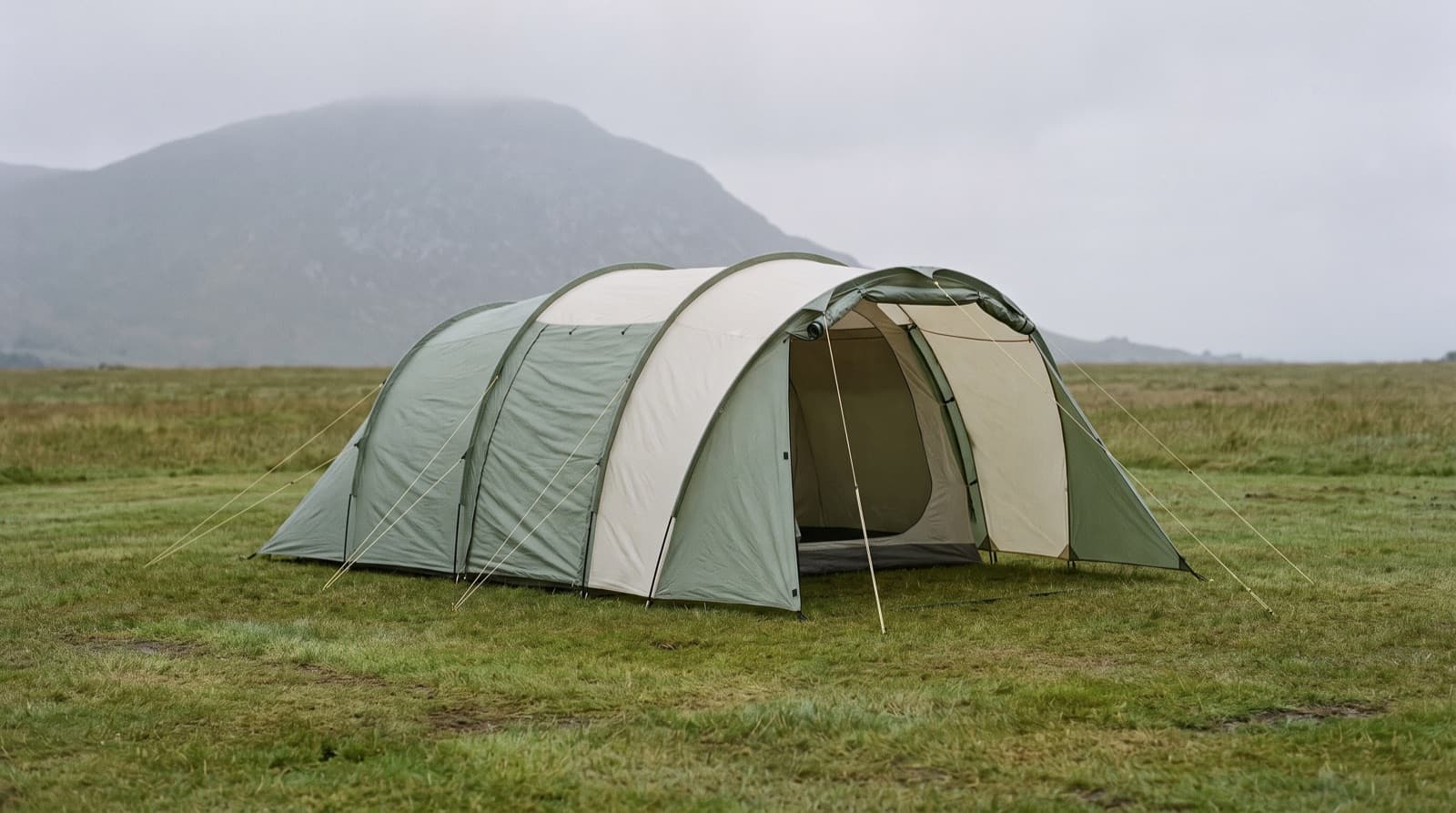
Tent flysheets are rated on the same scale and read very differently. Below about 1,200 mm is showers only. The 1,200 to 2,000 mm band covers most three-season rainflies. Between 2,000 and 2,500 mm handles heavy rain with wind behind it, and above 2,500 mm is for severe conditions. UK retail convention has settled on 3,000 mm as the standard family-tent figure, which is why so many tents quote exactly that: the Vango Sorrento 600XL with its Sentinel Essential flysheet, and the Coleman Coastline 3 Plus in polyurethane-coated polyester with taped seams, both at 3,000 mm. It is a convention, not a physical threshold, and the millimetre figure is not the only number on a tent's spec sheet doing less work than it appears to.
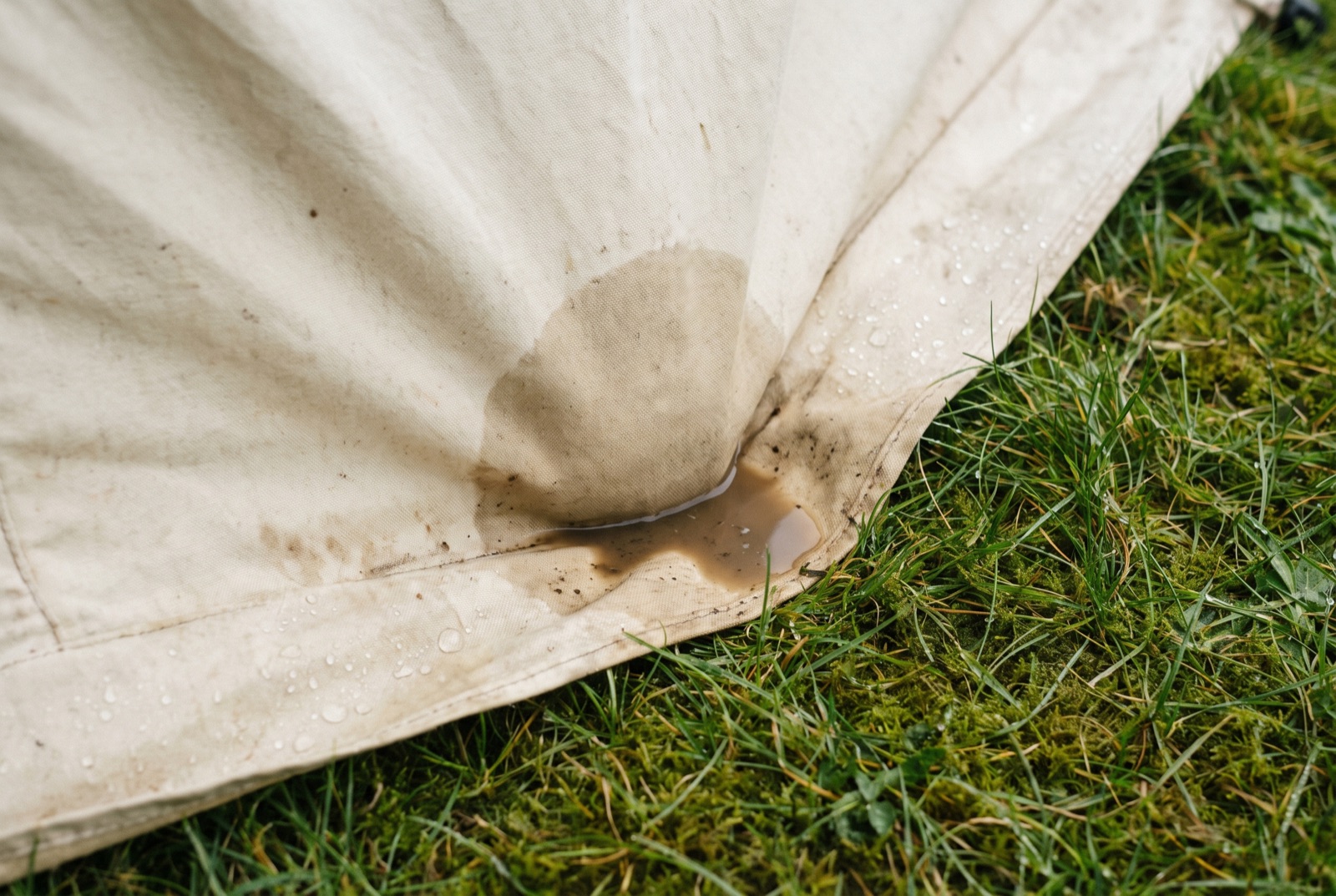
Groundsheets are a different problem with the same units. The minimum usually recommended is 3,000 mm, and UK guidance commonly says 5,000 mm or more — not because more rain falls under a tent, but because the load is mechanical. A knee, an elbow or a heel concentrates body weight onto a few square centimetres of fabric pressed into wet ground, which generates pressures rain never approaches.
And the groundsheet number is not the one that decides whether you are comfortable on it. That is an argument about thermal resistance, measured to a different standard entirely, and a 5,000 mm groundsheet will keep you dry and cold with total impartiality.
What actually leaks on a tent is seams and pole sleeves. Every stitch is a hole; taping closes it, and pole sleeves and guy points are the stress concentrations where taping is hardest to do well. A well-finished 2,000 mm flysheet beats a badly finished 5,000 mm one, and wind-driven rain finds faults that vertical rain never touches — a packing problem of its own.
What to buy, given all that
For campsite weeks and coast paths, anything reputable at the lower end will do, and the money is better spent on a technical wash and a bottle of proofer. For hill days, buy for RET rather than millimetres and buy pit zips. For winter and for genuinely sustained wet, the higher classes start to earn their money, mostly through construction rather than fabric. For children, buy the one that is easy to get on and off, because a coat left in the tent has a hydrostatic head of zero.
The extra money goes into things no number captures: a hood that turns with your head and has a wired peak, a cut that does not ride up when you reach, pit zips, the width and quality of the seam taping, a hem that seals over a rucksack belt. None of it appears on the swing tag.
A jacket that breathes and vents will keep you drier over a long wet day than a jacket that scores higher on a column of water, and the best waterproof you own is the one you do not take off at the first stile because you are cooking inside it.