Every outdoor publication reruns the same article each spring, and every year it is their most-read page. The 2026 round is unusually consistent. OutdoorGearLab put 37 boots through thousands of collective miles and over 500 hours of field time, updated 3 June, and made the Merrell Moab 3 Mid Waterproof their value pick. GearJunkie, from thirty-plus pairs tested over five years and updated 15 May, made the Salomon Quest 5 GORE-TEX best overall.
Both are good boots, honestly tested. For most of the trips this site is about, both are the wrong shape of answer.
What the 2026 testing actually said
OutdoorGearLab's men's review names the Hoka Kaha 3 GTX best overall at $240 and 3 lb a pair, the Merrell Moab 3 Mid Waterproof best value at $170 and 2.81 lb, the Salomon Quest 5 Gore-Tex best for support at $240, and the La Sportiva Ultra Raptor 3 Mid GTX most versatile at $219 and 2.33 lb. On the women's side the Ultra Raptor 3 Mid takes best overall at 1.56 lb, the Columbia Crestwood Mid the value pick at $100 and 1.8 lb. GearJunkie runs parallel: Quest 5 GORE-TEX best overall at $240 and 2 lb 9.3 oz, Moab 3 Mid Waterproof best budget at $170, X Ultra 5 Mid GTX best lightweight at $190 and 1 lb 15.5 oz, Speedgoat 6 Mid GTX the crossover at $180 and 1 lb 6.8 oz.
The prices are American and UK shelves will not match them; the weights, measured rather than quoted, travel better. The tests disagree at the top — OutdoorGearLab's overall winner is a Hoka, GearJunkie's a Salomon — which is healthy rather than a problem.
What neither says out loud: look down either list and almost every winner is a waterproof, mid-cut boot. Not because waterproof mids are the best footwear for walking, but because that is the category the tests were built to compare.
The question the tests are answering
Boot reviews optimise, quite properly, for carrying a load over rough ground for a long way. Multi-day packs, scree, talus, river crossings, a fortnight in the Sierra. Under that brief a stiff sole and a supportive cuff earn their weight, and so does a sealed upper.
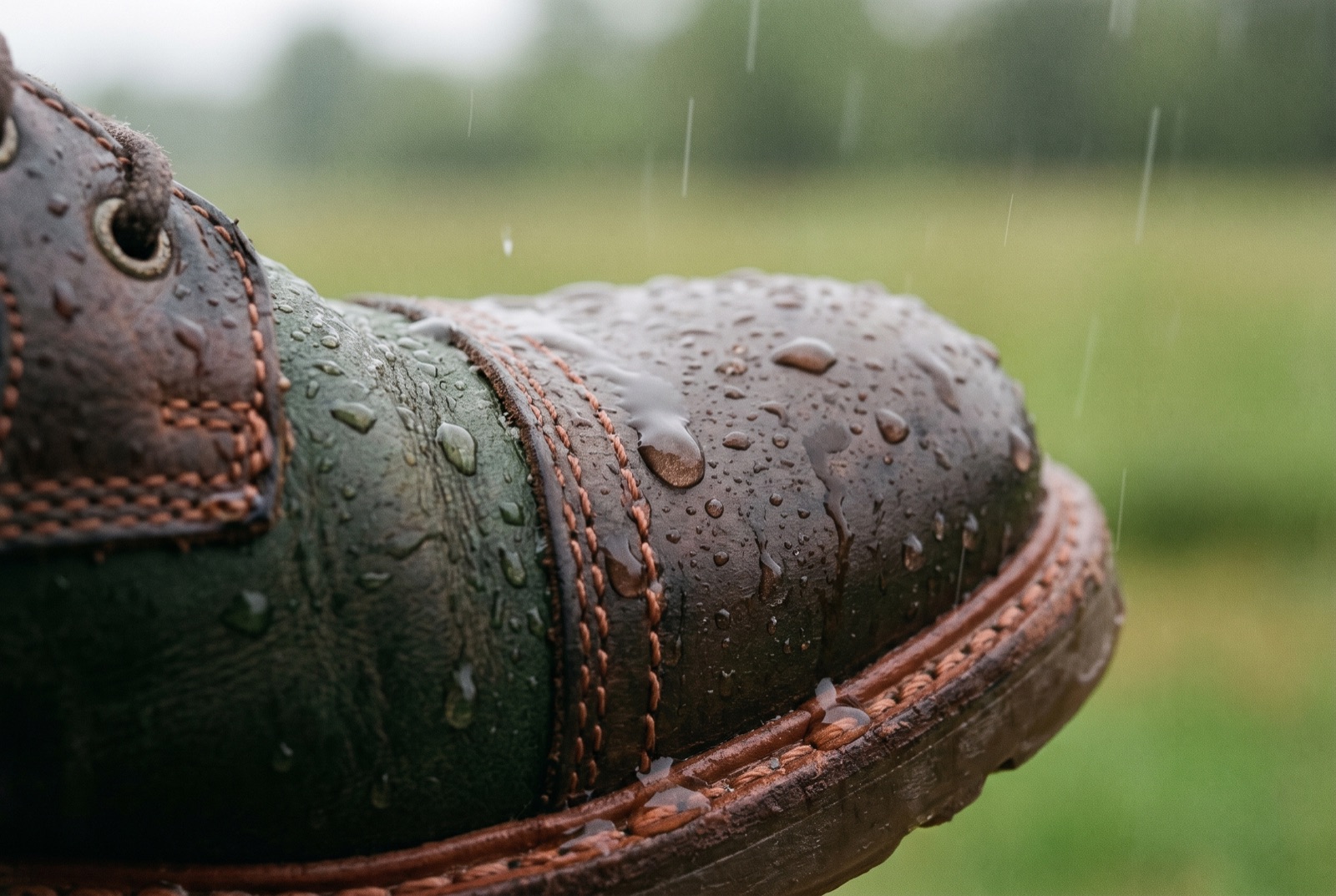
Now describe the trip you are actually about to take. A wet field crossed four times a day. A coast path. A two-hour hill with nothing on your back but a jacket and a sandwich. A pub. The same shoes for four days running, wet at ten in the morning and expected to be dry by nine the next. None of that is the activity the boots won their awards in.
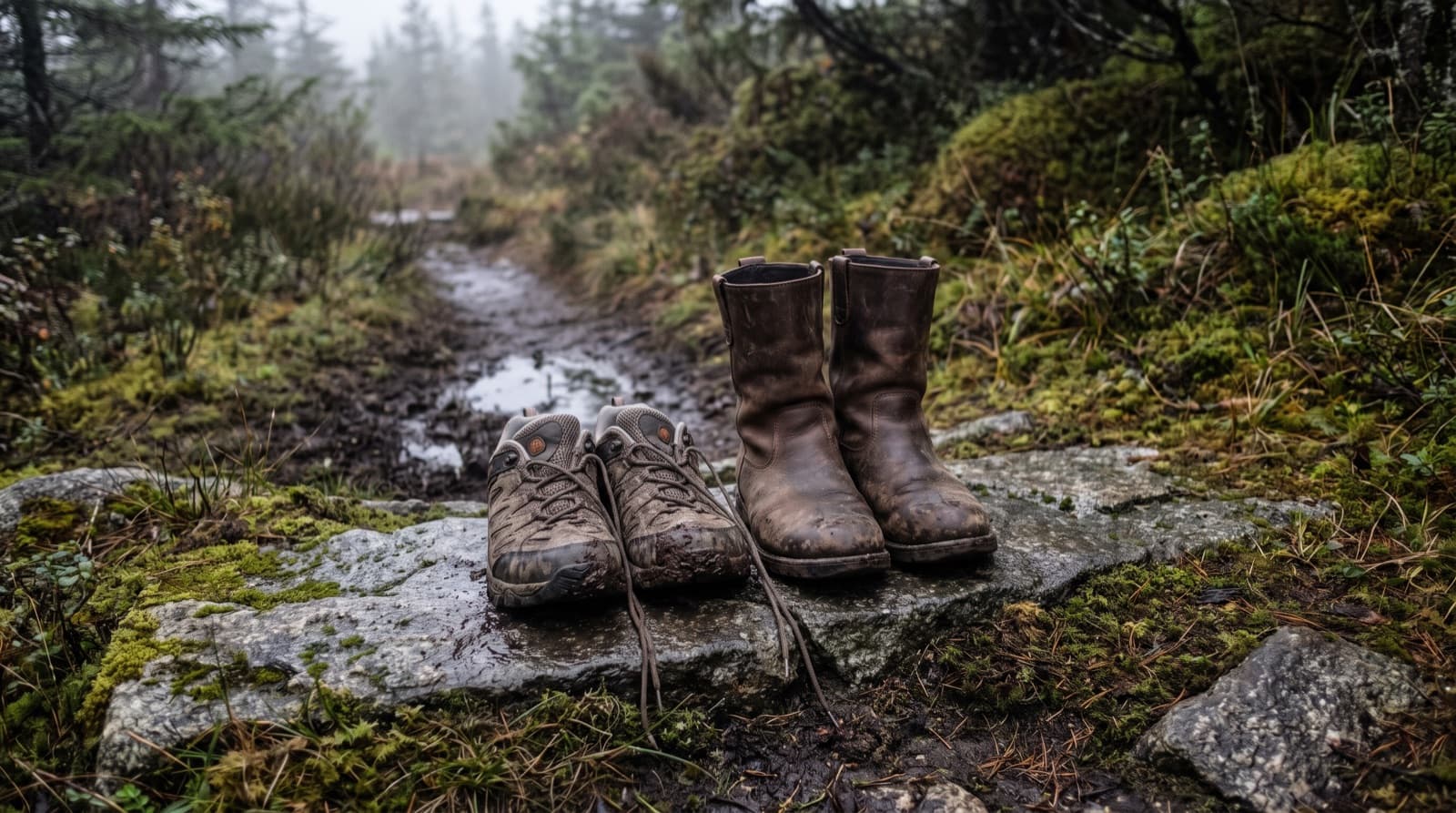
Category matters more than model, and almost everybody picks their category before comparing a single specification — by walking into a shop and asking for hiking boots. GearJunkie say it themselves inside their own test: hikers with strong ankles carrying light loads should consider hiking shoes instead of boots. It is one line buried in a piece whose entire structure argues the other way.
What a mid boot costs you
Weight on the feet is not weight in the pack. Soule and Goldman established the multiplier in the Journal of Applied Physiology in 1969: carrying a given weight on the feet costs roughly 4.7 to 6.3 times the metabolic energy of carrying the same weight on the torso, the figure varying with walking speed. The folk version — a pound on the feet is five on the back — is tidier than the research it came from.
The arithmetic is then unkind. OutdoorGearLab weighed the men's Moab 3 Mid Waterproof at 2.81 lb a pair; in their separate hiking-shoe review, updated 6 May 2026 across another 37 pairs, the women's Moab 3 low came in at 1.70 lb at $140. Different reviews and different sizes, so treat it as an approximation — but the shape is right. Roughly a pound a pair is what the mid costs you, on the part of the body where a pound counts for five.
Ankle support is where the mid is supposed to earn that back, and the evidence is thinner than the marketing. Fu and colleagues, in the Journal of Foot and Ankle Research in 2014, had subjects land on a tilted surface in high-top and low-top shoes and found no significant difference in maximum ankle inversion angle, inversion range of motion or maximum inversion angular velocity. They did find a 37.2% decrease in peroneus longus activation amplitude in the high-tops in the most plantarflexed condition — the muscle that resists a rolled ankle worked less when the cuff was there.
Be careful what that means. It is a laboratory landing study, not a season of walking, and it does not show that boots cause sprains — only that the protection a high cuff is sold on did not show up in the measurements.
Waterproof is a trade, not an upgrade
A membrane has pores large enough to pass water vapour and too small to pass liquid water. It works. It also means the vapour your foot produces — and a foot is a prolific producer — leaves through the same restriction. On a warm day, a steep one, or with a pack on, a waterproof boot gets wet from the inside whatever the sky is doing.
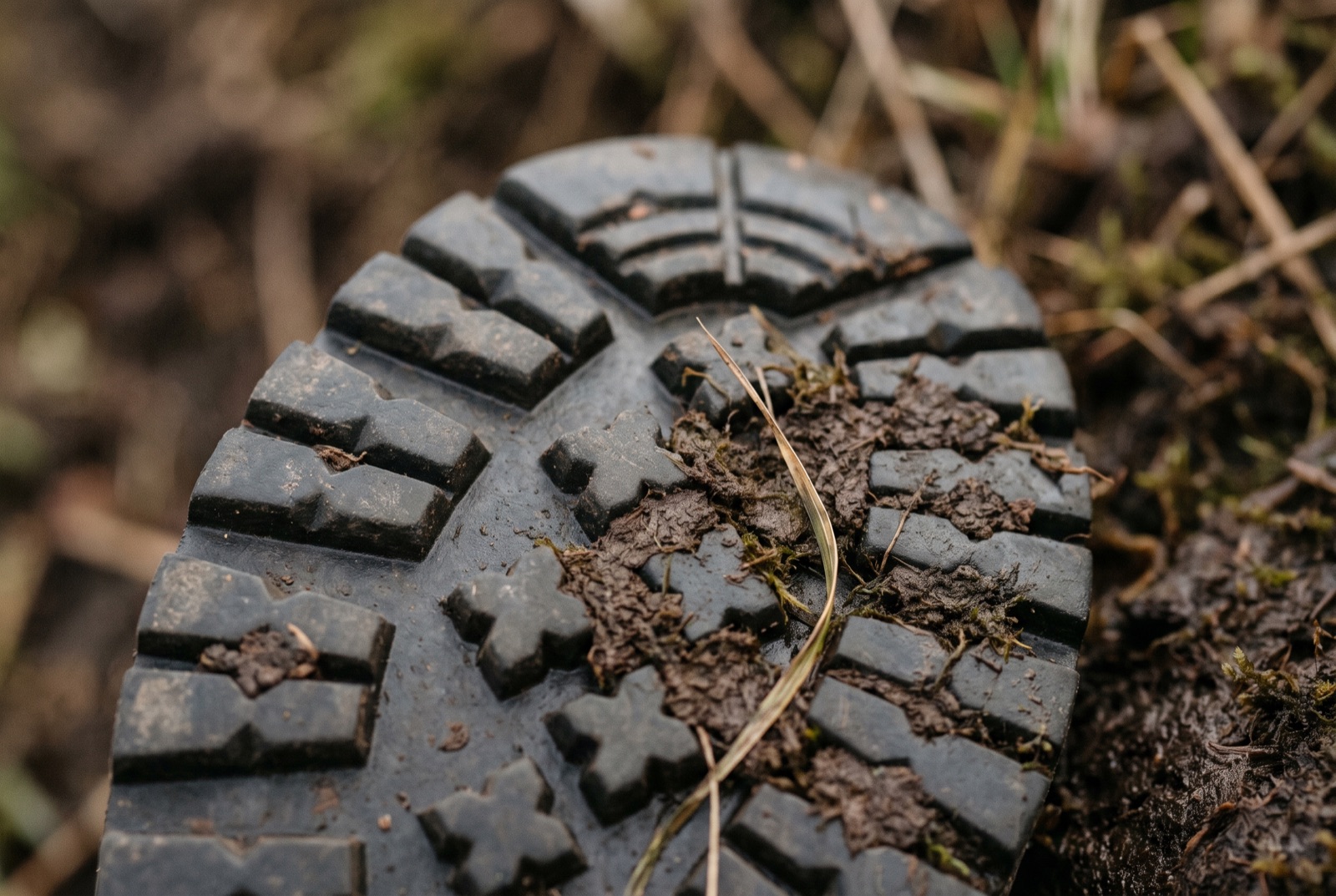
Then the specifically British failure. In sustained rain, in long grass, water does not come through the upper. It comes over the cuff, down the leg, off the hem of your waterproof trousers. A membrane that was very good at keeping water out is just as good at keeping it in, so the boot that kept you dry for two hours now holds a reservoir that will not clear overnight in a tent porch. A non-membrane shoe wets sooner and is walkable again by the following afternoon. Switchback Travel's position across their 2026 round-ups: in most cases, waterproof footwear is not necessary. Even REI's own guidance concedes that a membrane makes a boot significantly less breathable and more expensive, and may be unnecessary away from wet climates and winter.
A 2026 wrinkle makes this worse rather than better. Gore has removed intentionally added PFAS from its membranes and finishes, completing the line with GORE-TEX Pro ePE in 2025, and the industry has moved with it. The environmental case is not in doubt. The consequence is that PFAS-free durable water repellent is not oleophobic — it does not shed oils — so mud, sweat salts and the grease of a summer defeat it sooner. It wets out earlier and needs washing and reproofing more often, not less. The same trade runs through every waterproof you own, and the numbers on the label are less helpful than they look.
None of which makes waterproof footwear wrong. It makes it seasonal. Frosted grass, sub-hour immersion, shoulder-season bog, snow — anywhere a wet foot is a problem rather than an inconvenience is where a membrane earns its weight and its premium.
A waterproof membrane does not make a boot better. It makes it drier for two hours and wetter for two days.
The models worth naming
Four categories, rather than a ranking. Model numbers move faster than articles do — Merrell's line is the Moab 3 and the Moab Speed 2 as of mid-2026, so check the maker's own site rather than assume the model in a review is the one on the shelf.
The low-cut hiker. The Merrell Moab Speed 2 is OutdoorGearLab's best hiking shoe of 2026 and their pick for hot, dry weather: 30% more FloatPro foam than the previous generation, a Vibram TC5+ outsole, a nylon ripstop and TPU upper. The plain Moab 3 low is the conservative version of the same idea. For campsite weeks, coast paths and day hills in anything but genuinely cold weather, this is the category most people should be buying and largely are not.
The light mid. If you want a cuff, take the lightest that will do the job. The Salomon X Ultra 5 Mid GTX at $190 and 1 lb 15.5 oz is a genuine compromise rather than a concession; the HOKA Speedgoat 6 Mid GTX at $180 and 1 lb 6.8 oz is barely heavier than a shoe.
The proper boot. Some trips want one: a heavy pack, loose ground, a week of it. The Salomon Quest 5 GORE-TEX at $240 and 2 lb 9.3 oz and the La Sportiva Ultra Raptor 3 Mid GTX at $219 and 2.33 lb are the two both test houses respect. Walking with a dog shifts this as well — an animal that sets the pace and wants rough ground all day argues for more shoe than your own plans would.
The trail runner. Not a fringe choice. The Altra Lone Peak was the most common shoe on the Pacific Crest Trail in the 2025 Halfway Anywhere survey, the eighth consecutive year, with thru-hikers averaging 4.53 pairs; the highest-rated was the Topo Athletic Pursuit, a zero-drop low-cut runner. Both are non-waterproof, which is the point. CleverHiker's summary is fair: far less stability than boots, but your feet get much less sweaty and dry much, much faster.
The honest counterweight is lifespan. CleverHiker put boots at roughly 1,000 trail miles, shoes at 750 and trail runners at 500. Per mile, the boot is not the extravagance it looks.
How to choose in ninety seconds
Ignore the brand and answer three questions. How heavy is the pack — day sack, or a week on your back? How rough is the ground — path, or trackless? How cold is it? Light load, made ground, above freezing: buy the shoe. Heavy load or loose ground: buy the boot. Frosted or genuinely wintry: buy the membrane and accept what it costs you in July. Most people camping in Britain are in the first case four days out of five and dressed for the second.
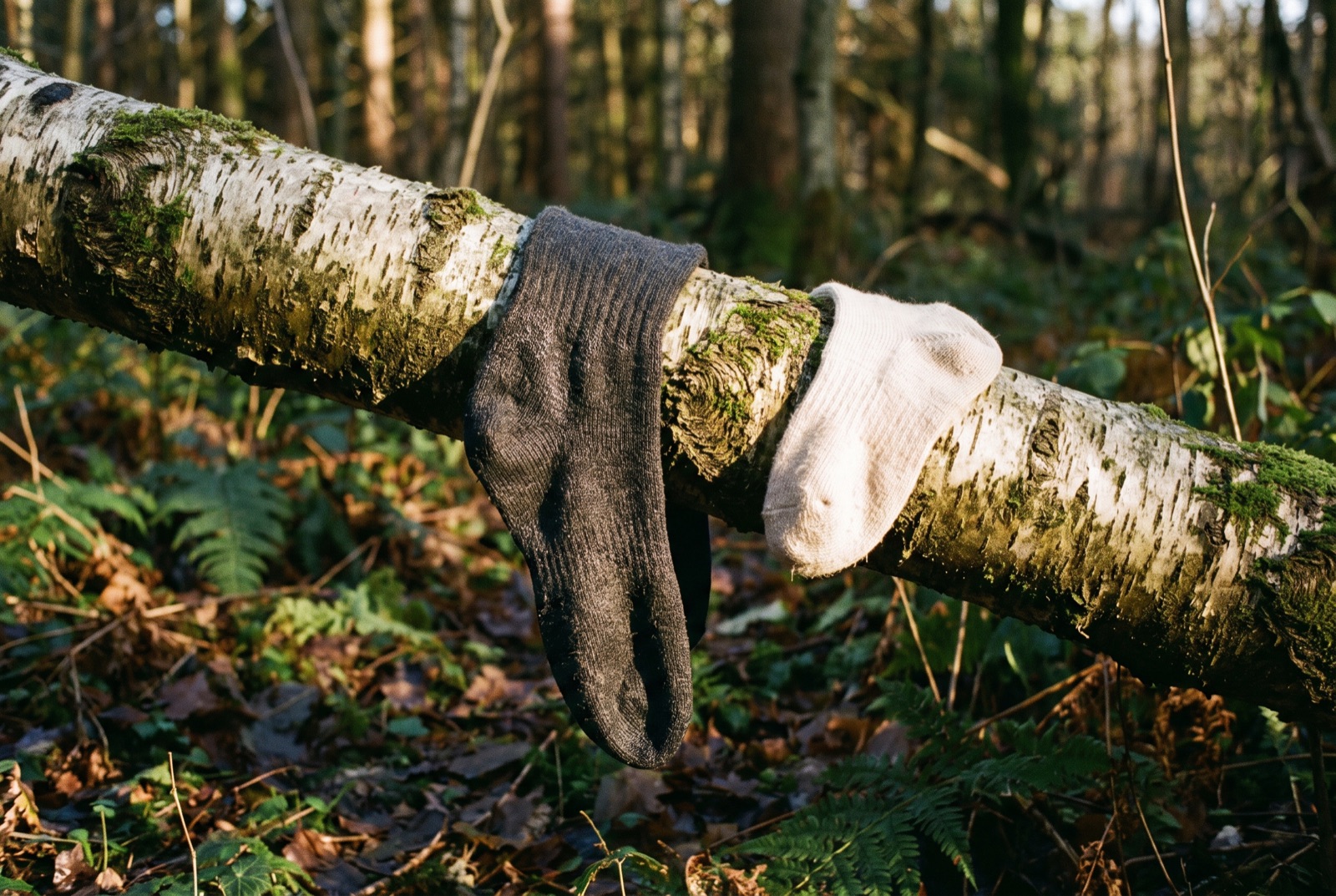
Then the thing that outranks all of it. A spare pair of socks, changed at lunch, does more for wet-weather comfort than any membrane ever has, which is the whole argument of packing for rain in one item. And fit beats every specification on this page. The best-tested boot in the world is worthless in the wrong last, and if your toes touch the front on a steep descent you have the wrong size, whatever the shop said about breaking them in. Try them late in the day, in the socks you will wear, on the sloped board every decent shop keeps by the till.
Then buy one pair and wear them. The second pair of boots is one of the most reliably unused items in any car boot, and belongs on a long list of things that ride around Britain in the dark all summer and come home clean.