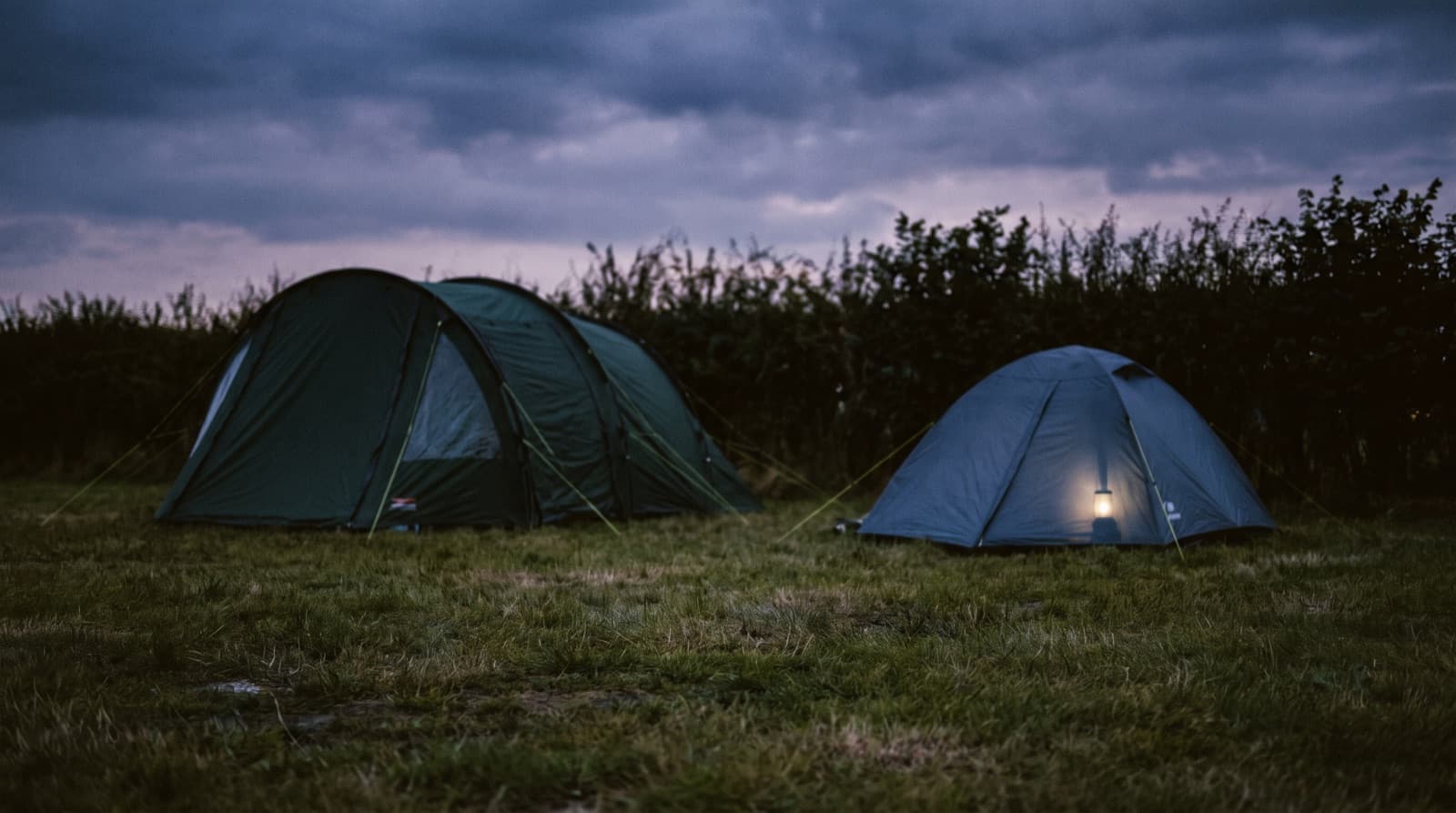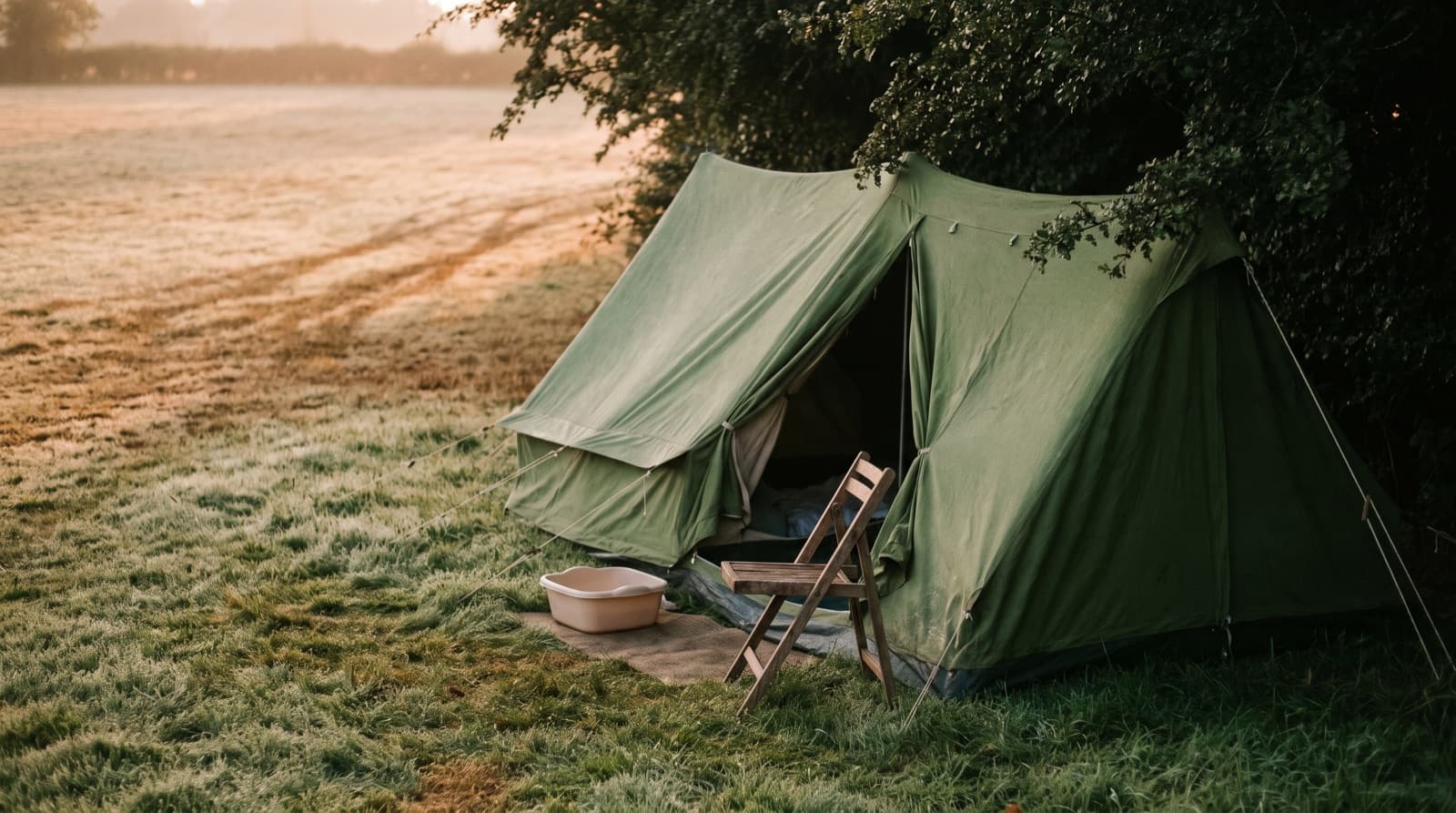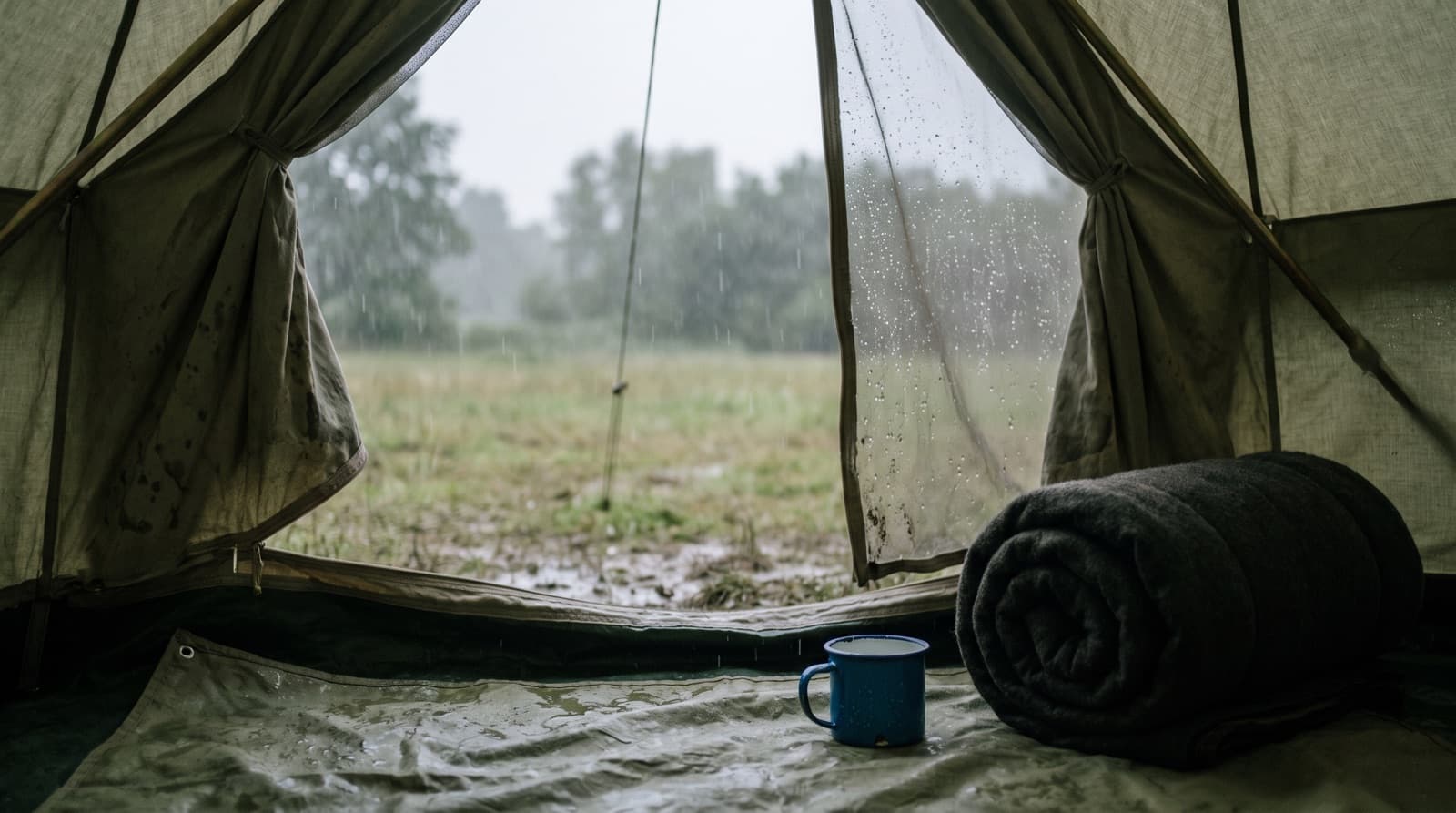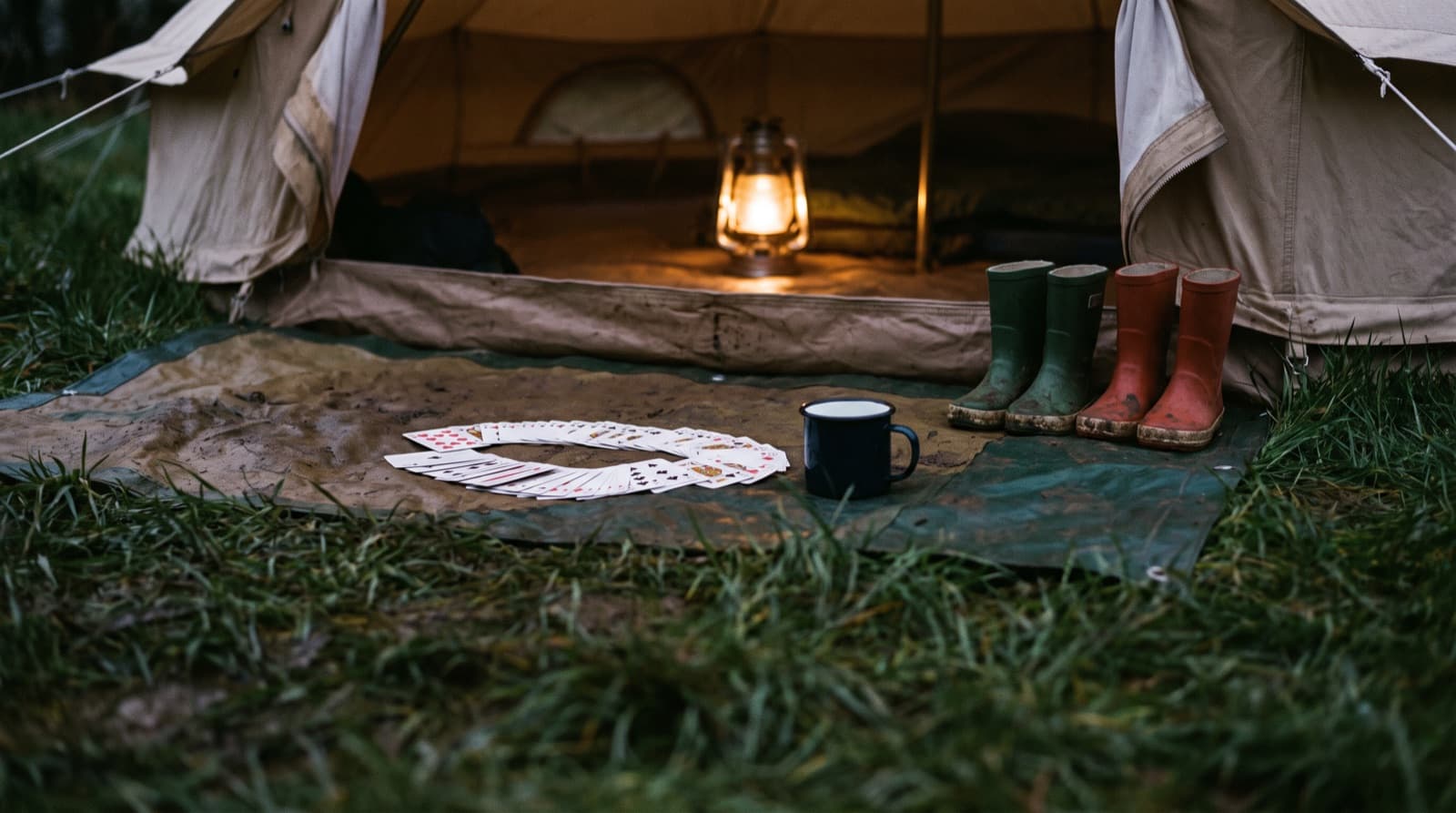
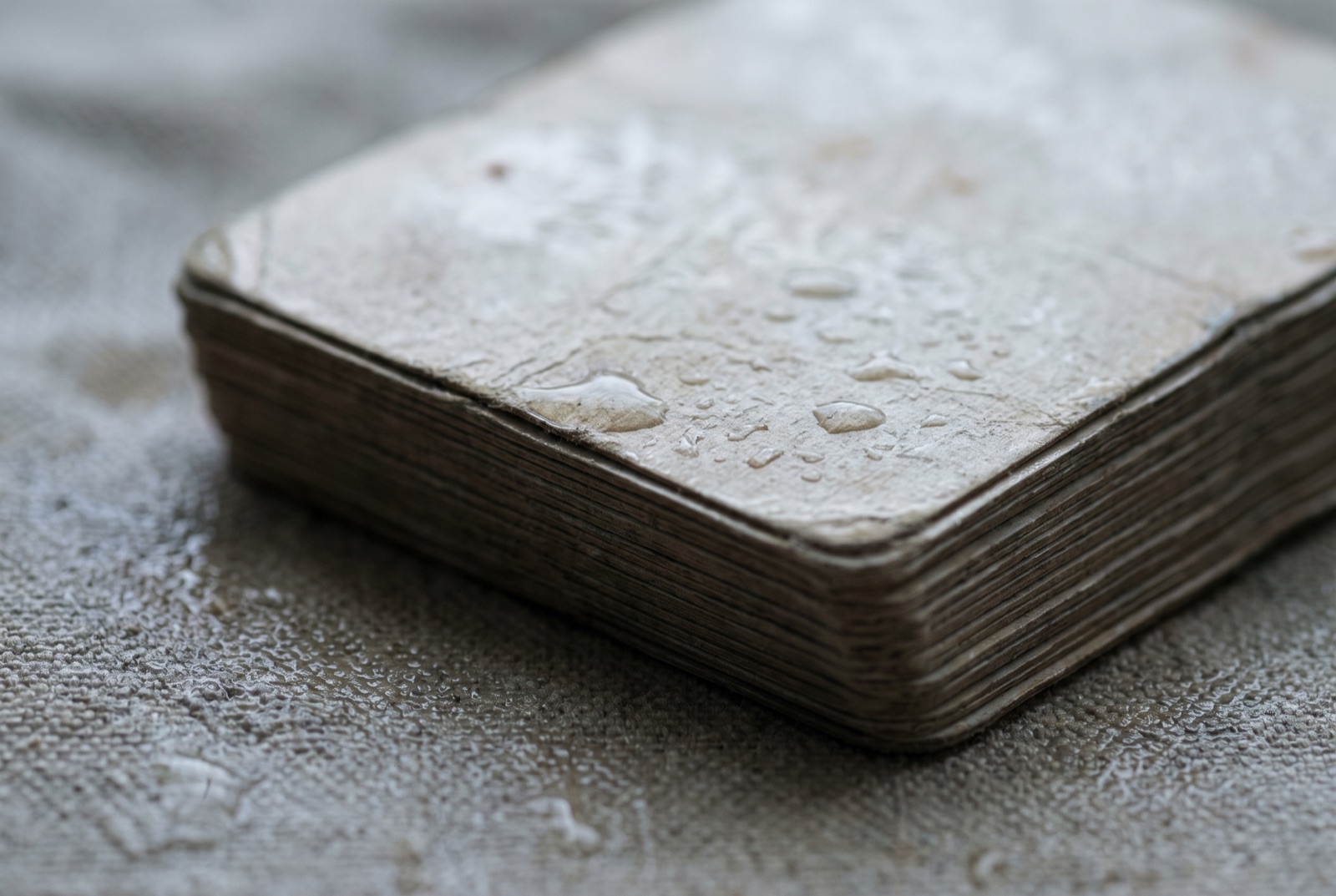
A pack of cards weighs ninety grams and has never once been the reason a trip was ruined. Almost everything else in this category has to earn its place against that benchmark, and most of it does not. The question is not which games are good. It is which games are still good at nine at night, in a tent porch, by torchlight, when it has been raining since two.
The benchmark a deck of cards already sets
Fifty-two cards will carry two players or six, for five minutes or an hour, with no board, no pieces and — if you choose the game carefully — nothing to write on. A replacement deck costs about £3 in any supermarket in Britain, which makes losing one an inconvenience rather than an event. Everything else in the bag is competing with that.
The useful way to sort card games at camp is not by mood but by how many people are sitting down. For a crowd, Cheat and Racing Demon: both are loud, both are fast, and neither requires anybody to be good at anything. For the very young, Beggar-my-neighbour and Pig, which a five-year-old can play unaided and win without being let. For two adults who want the evening to go slowly, Rummy or Cribbage.
The single upgrade worth paying for is a 100% plastic deck. It survives a wet groundsheet, a knocked-over drink and a week of damp hands. Paper-core cards are finished after one soaking — they swell, they stick together, they stop shuffling — and in a country averaging around 159 days a year with 1mm of rain or more, on the Met Office 1991–2020 averages, that is two days in five on which the question arises.
So here is the test the rest of this article applies. Does it need a table. Does it need colour. Does it need a score pad. Does it lose a piece.
The four ways a game fails at camp
It needs a table. Anything with a board, a tableau or a shared play area is out. A tent porch has a sloping, faintly damp floor and no flat surface above knee height. A cabin gives you the one thing a porch cannot — a table that is dry and level — which is why half the games below are quietly cabin games rather than camping games.
It needs colour. Dobble and Uno both lean on fast colour discrimination. That is fine under a lantern and unpleasant under a head torch — and on red-light mode a red card and a black card are the same card.
It needs a score pad. A pencil is the most losable object in camping. Skull King and Qwixx both require running totals, and the pad in the box will be gone by Wednesday. The fix is not willpower; it is a phone note, or a cheap notebook that lives in the game box.
It needs small pieces. Wooden cubes, meeples, spinners, tiny plastic markers: one goes into the grass on the first evening and the game is dead for the rest of the week. Any game where losing one component ends it belongs on the kitchen table.
Games for two
Two-player camping is a genuinely different problem, and it usually has a specific shape: one adult and one child, in the half hour before sleep. It is a slot for a game with a rhythm, not a game with a climax.
Cribbage is the long answer for two adults. The board is small, the pegging gives you something to do with your hands, and the game supplies a reason to sit still for forty minutes — which on the fourth night is the actual point.
The surprise is The Mind, designed by Wolfgang Warsch and published by NSV. Two to four players, ages eight and up, twenty to forty minutes. The deck runs from 1 to 100; each player holds a hand of cards and the group must play every card face up into one ascending pile, without speaking, gesturing or signalling in any way. It was a Spiel des Jahres nominee in 2018, and it is the rare game that works better in bad light, because it is about the length of a pause rather than about reading a face.
Most of the celebrated two-player card games are too fiddly for a porch — they want a laid-out row of cards, a market, a discard area, some architecture. A straightforward Rummy variant beats them when the floor is the table.
Games for six, and games with a five-year-old in them
Dobble, published by Zygomatic, is the best cross-age purchase in the category. Fifty-five cards, fifty symbols in total, eight symbols on each card, and any two cards in the deck share exactly one symbol — which is mathematics rather than coincidence, and is why the game never runs dry. Two to eight players, ages six and up, fifteen minutes, five mini-games, all in a round tin. A five-year-old can beat an adult at it fairly and often, which is the entire argument for it.
Uno scales further and drags harder. A hundred and eight cards, two to ten players, ages seven and up: twenty-five cards in each of four colour suits, plus four Wild and four Wild Draw Four. Set a limit of two rounds out loud before you deal, not after somebody cries. Uno's failure mode is not boredom, it is length.
Bananagrams — 144 letter tiles, one to eight players, ages seven and up, about fifteen minutes in a zipped banana-shaped pouch — has no board and no score pad, which sounds ideal until you remember that every player builds their own grid. It needs a flat surface per person. It is a very good cabin table game and it is not a porch game, and no amount of enthusiasm makes it into one.
For nine-to-twelves, Sushi Go from Gamewright is the step up: two to five players, ages eight and up, roughly fifteen minutes of card drafting — pick one card from your hand, pass the rest on — supplied in a tin. Skull King from Grandpa Beck's Games is the bigger evening: two to eight players, ages eight and up, about thirty minutes of trick-taking in which each player bids the number of tricks they will win before the round is played. It is excellent. It also needs the score pad in the box and one adult who will actually run the bidding, and without both it is not the game for that evening.
A pencil is the most losable object in camping, which is why any game that needs a score pad is really a game that needs a plan.
Dice, which are the best value in the bag
Five dice in an old film canister is the highest ratio of fun to grams in camping, and the reason is that dice games carry their rules in the players rather than in the box.
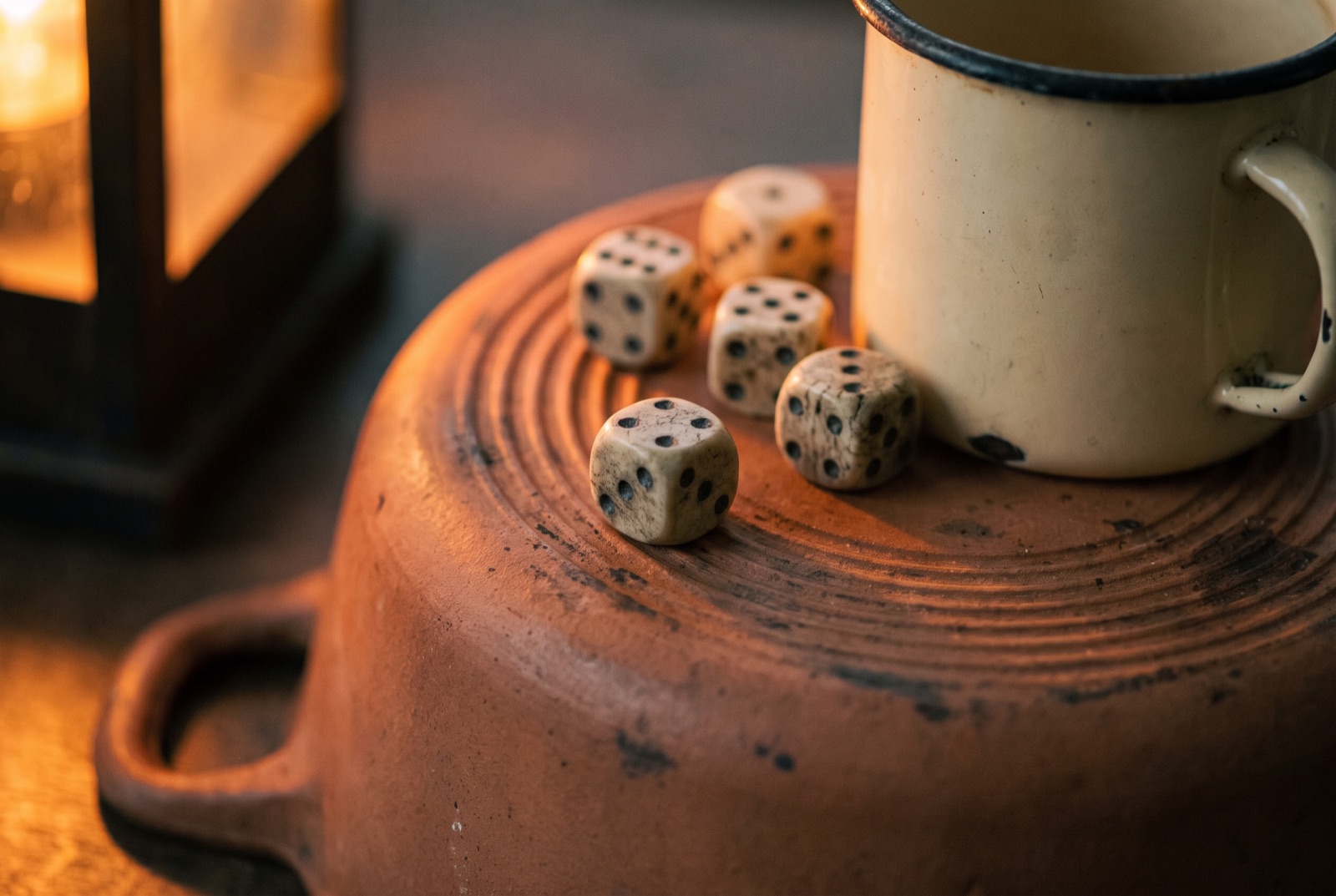
Perudo — also sold as Liar's Dice, and called Dudo where it originates — is the one readers actually adopt, so here it is properly. Two to six players. Everyone gets five dice and something to hide them under: a cup, an enamel mug, or a cupped hand. Everyone shakes, then looks at their own dice without showing anyone else. The first player makes a bid about all the dice on the table, not only their own, so "four threes" means the bidder is claiming there are at least four dice showing a three across every hand in the game. Ones are wild and count as any face you like. Play passes round the circle, and on your turn you must do one of two things: raise the bid, by increasing either the quantity or the face value, or challenge the bid by saying "Dudo". A challenge ends the round immediately. Every cup comes up, the relevant dice are counted, and whoever lost the challenge forfeits one die — the bidder if the bid was short, the challenger if it was good. The player who lost the die starts the next round. Lose all five and you are out; the last player still holding dice wins. Nothing is written down, nothing is read, and it plays perfectly well with the fire as the only light.
Rory's Story Cubes are the other half of the answer, and the better half if there is a child at camp who cannot yet read cards. Nine dice, fifty-four images between them, no reading, no player limit and no timer. The standard method is to roll all nine and tell one story that includes every face-up image, in any order. A four-year-old can do this. So, after ten o'clock, can most adults.
The obvious warning is still worth making: dice roll away, and grass is not a surface. Roll into a saucepan lid, a shoebox lid, a large enamel plate — anything with a rim. A sloping groundsheet is where a set of five dice becomes a set of four.
The pocket kit, and what to leave behind
The whole list: one plastic deck, one Dobble tin, five dice, nine story cubes, a pencil and a folded sheet of paper, and one lantern that stands up on its own. About a litre of space, under 400g, and it covers every combination of people and weather you will get.
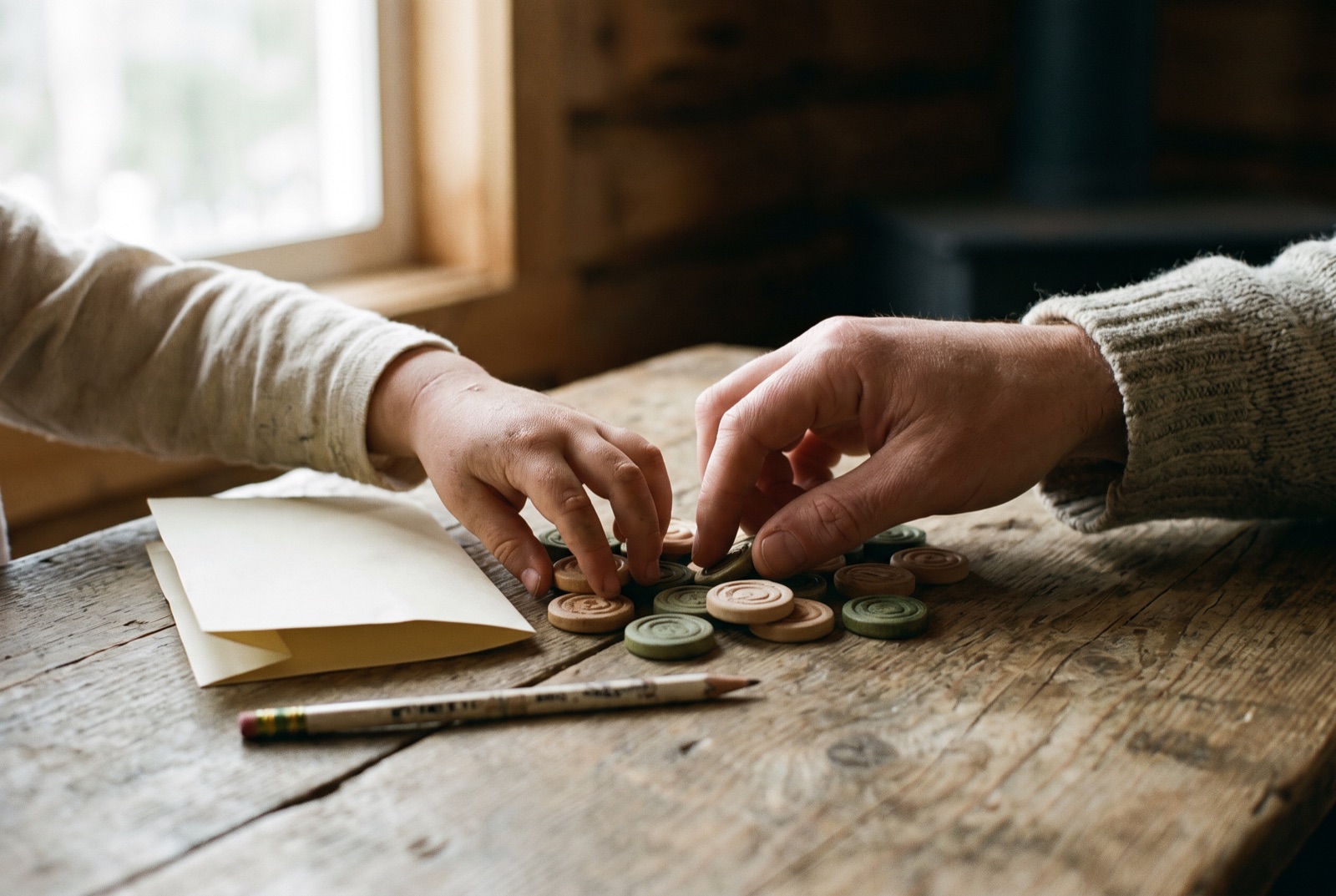
Three things get lost, in this order: pencils, small wooden pieces, and the rules leaflet. The leaflet is the easiest to fix and the one nobody bothers with — photograph every rules sheet before you leave the house, because the day you need it is the day there is no signal. Leave behind anything with a lid that must lie flat, anything with a spinner, and any game where losing one component ends it.
If even that is too much, there is a version of this with nothing in the bag at all: the games that need no box, which is where Kim's Game lives — about fifteen things off the picnic table, uncovered for one minute, then covered while everyone lists what they saw. And the day all of this matters most is the day nobody leaves the tent.
The 2026 camping-trend reporting has around half of campers planning a trip that recreates a childhood camping experience, 60% naming traditional campfire activities and games as a motivator, and 77% saying that just being in nature is enough, without structured programming. All of it is true at once, and together they describe the job exactly: the games are the excuse to sit still in one place for an hour. Nobody's memory of a childhood camping trip is of the rules.