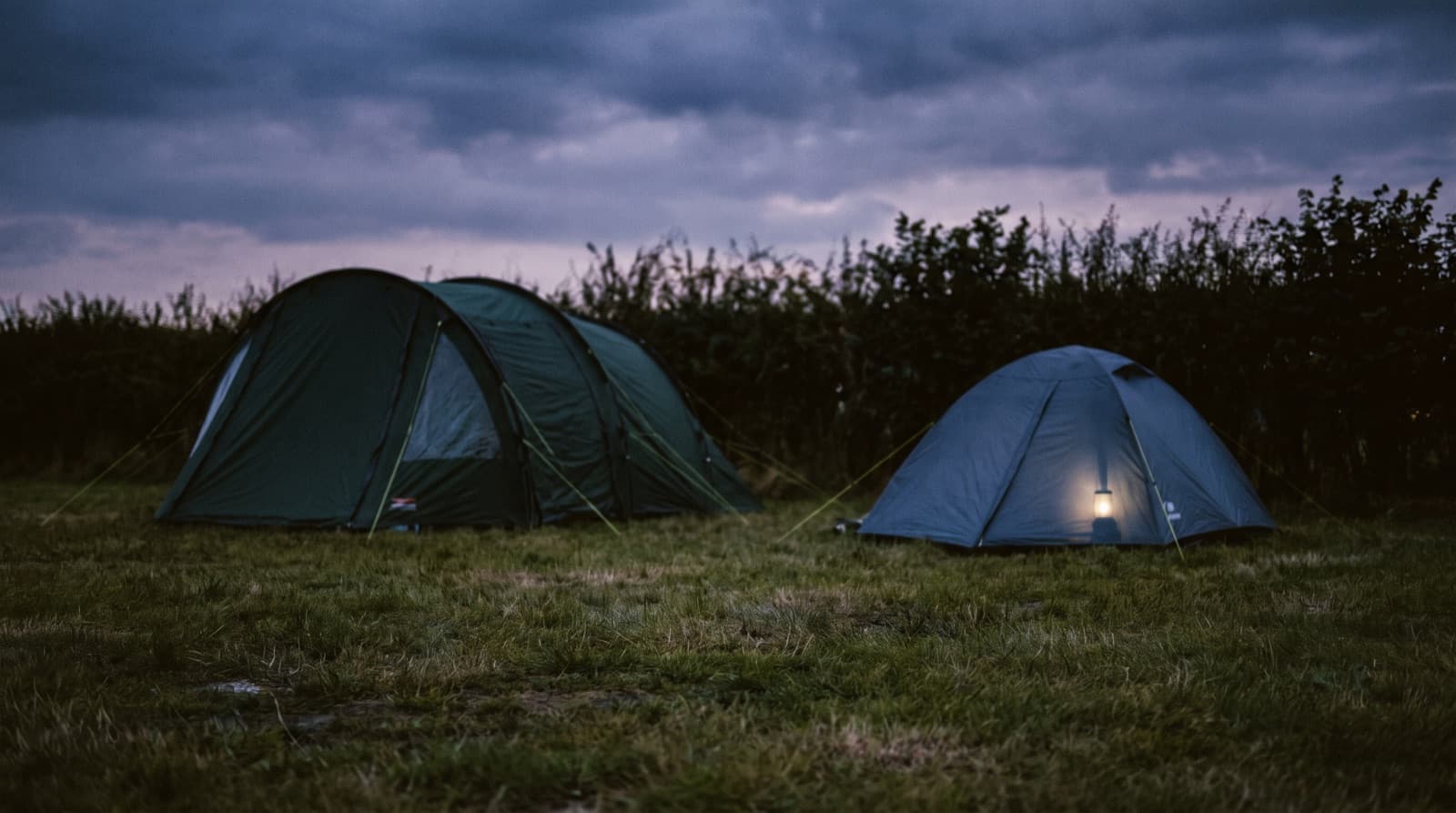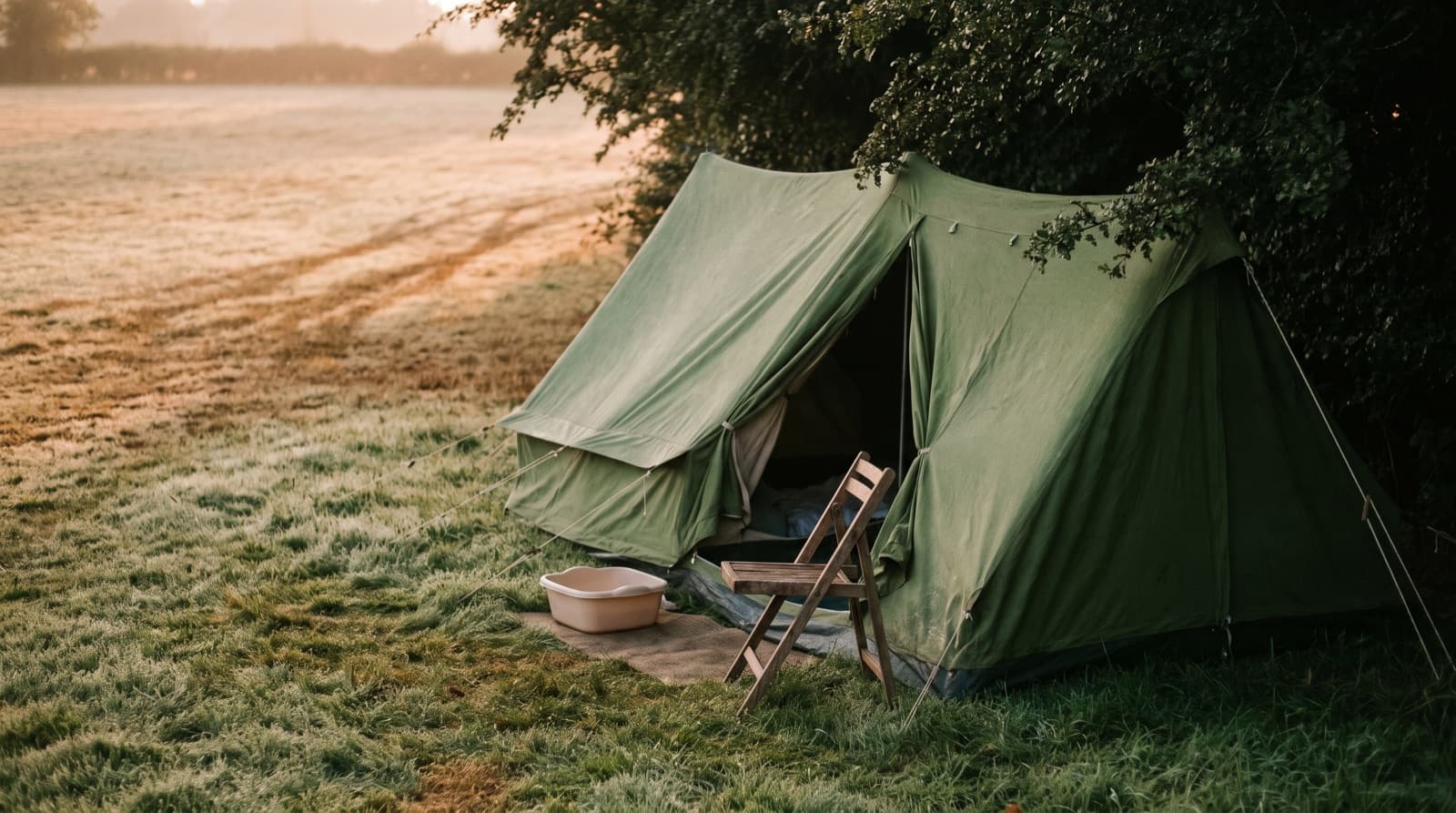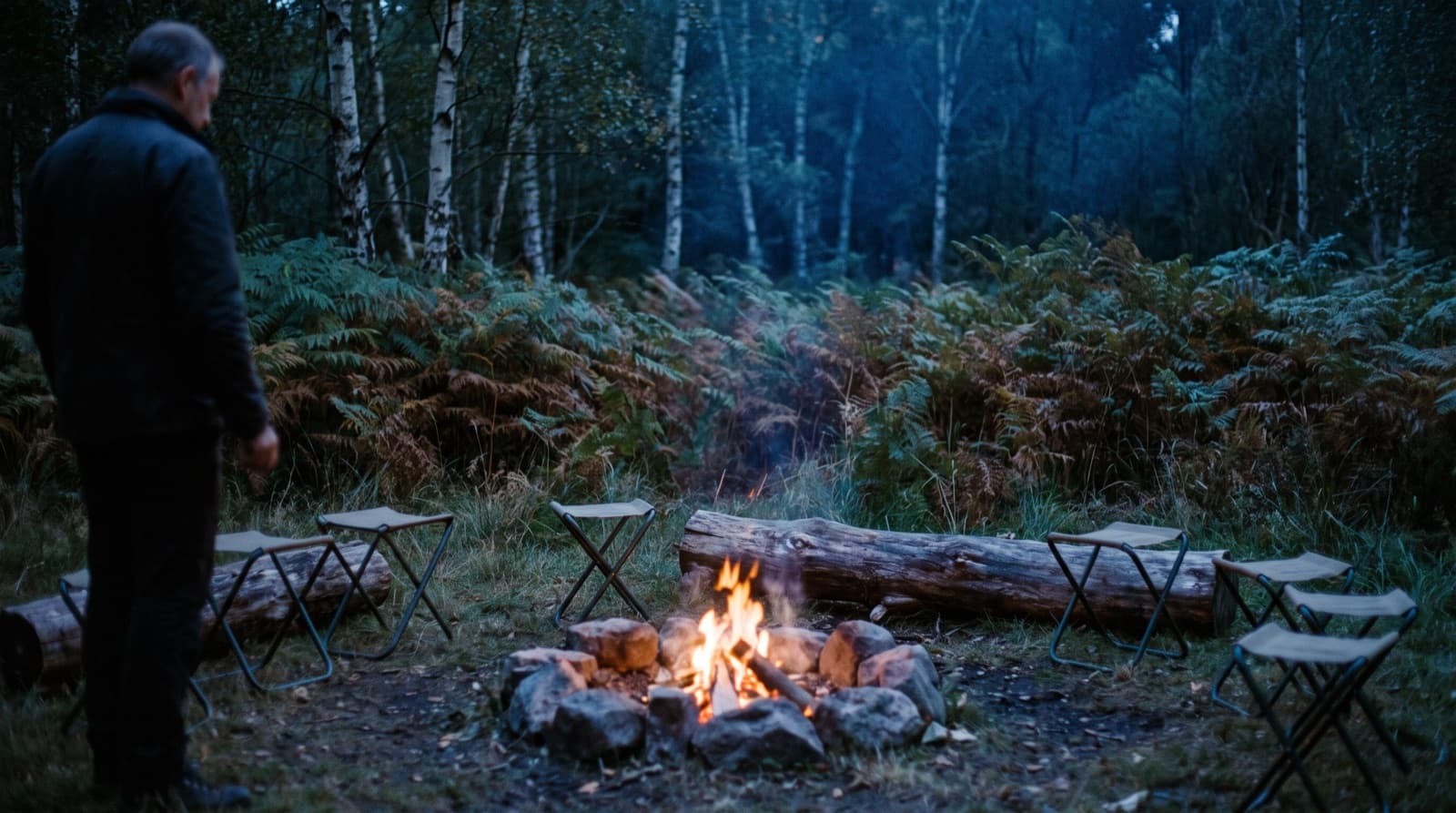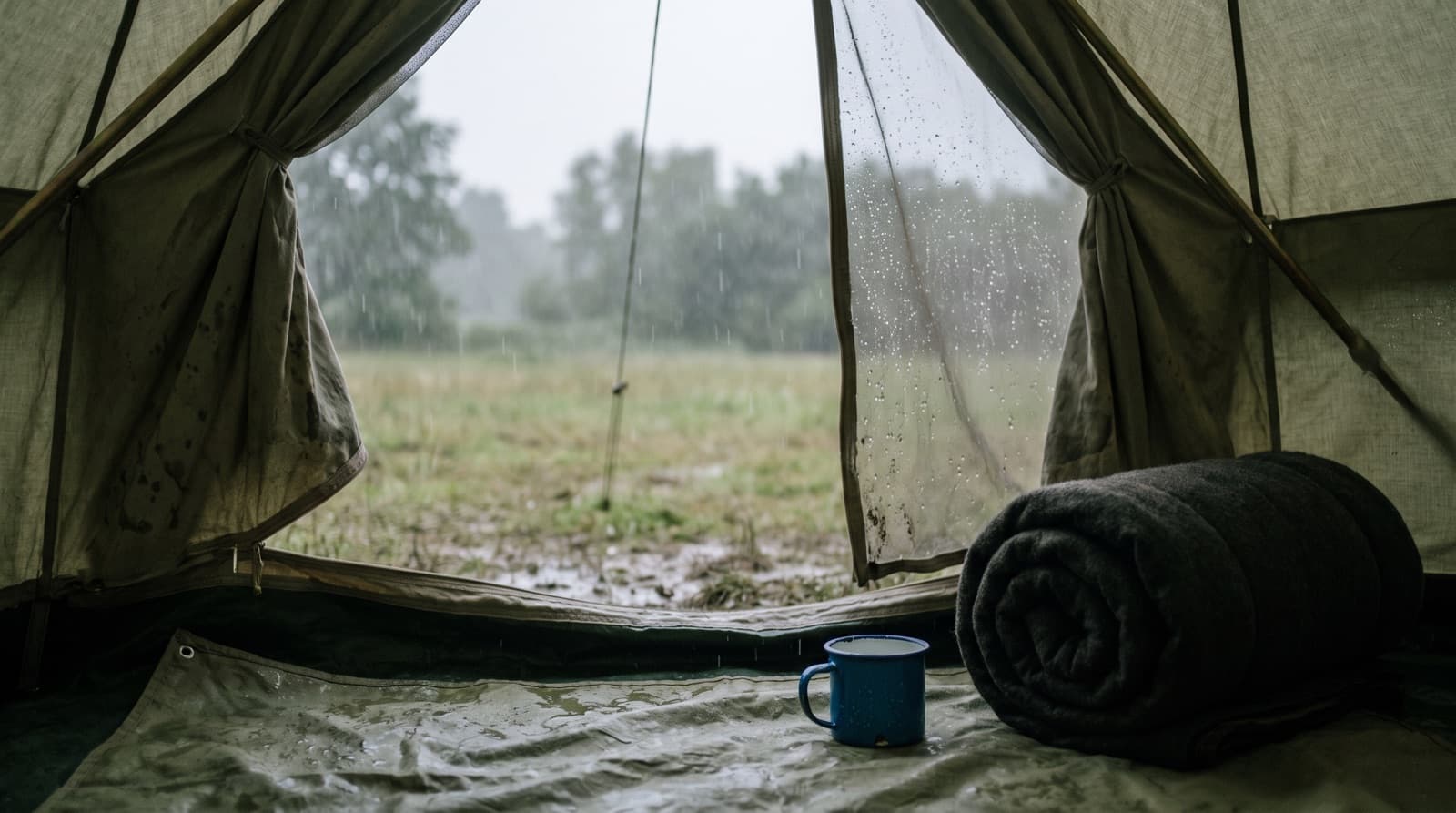
Rain at camp is not a single event, it is a timetable, and it runs to the same schedule every time. The first hour is fine. The second is quite good fun. The third is when someone's socks get wet, and everything after that is downstream of the socks. The useful question on a rained-off day is not what to do — it is what to do when, and the answer is completely different in a tent than it is in a cabin.
The two different days
Most advice collapses the two into one, and that is the mistake. A cabin day is an entertainment problem with a dry floor underneath it. A tent day is a logistics problem in which entertainment is the smaller half.
The tent day is governed by one scarce resource: dry clothing. Every decision is really a decision about the drying rate, and the drying rate in a tent in the rain is approximately zero. The cabin day is governed by a different scarcity — reasons to leave the room. A cabin with a table and a stove will absorb an entire day without anybody noticing. A cabin with one small window, no table and a sofa facing a television will not, and the difference shows up by two o'clock.
Set the frame before the arithmetic starts. The UK averages around 159 days a year with 1mm of rain or more, and about 1,163mm of rainfall, on the Met Office 1991–2020 averages. This is not an unlucky day. It is a two-in-five day, worth planning for in the way you plan the drive — and most of it is decided before you leave the house, which is a packing question rather than a camping one.
The tent day, 06:30 to noon
06:30 — do not get everyone up. In a tent, being up means being dressed, and being dressed at half past six means the day's clothes are damp by ten and you are into the reserve before lunch. Feed something in sleeping bags and buy yourself an hour. Nothing is lost by starting a wet day at half past seven.
07:30 — the porch audit. Before anything to do with children, deal with the tent. Re-tension every guyline that has gone slack overnight; a sagging flysheet collects water in the panels and a taut one sheds it, and standing water on a roof panel eventually finds a seam. Doors want to be turned away from the wind. Above 30mph the Met Office's position is that a tent can be damaged, and at that point the tent is the priority rather than the day's plan — wind is a different article and a more serious one.
08:30 — breakfast, and the one rule with no exceptions. Cooking under cover on a wet morning is where families get hurt. Nothing that burns fuel goes inside a tent, an awning or a caravan: not a stove, not a lit barbecue, and not a barbecue that has been put out. Carbon monoxide is odourless, builds to lethal levels in an enclosed space very quickly, and causes around fifty deaths a year in the UK. A cooling barbecue is still producing it: in 2013 fourteen-year-old Hannah Thomas-Jones died in Shropshire after a used barbecue was left in the tent porch, and three other family members were found unconscious. The symptoms — headache, nausea and vomiting, dizziness, tiredness, confusion, chest pain — read exactly like tiredness or a bug at camp, which is why people go back to sleep instead of outside. Get into fresh air and get urgent medical help.
09:30 to noon — spend the good hours outside. This is the counter-intuitive part and the single most useful thing here. The best thing to do in the rain is to go out in it, deliberately, in full waterproofs, for ninety minutes, and come back to a dry tent. Wet children who are moving are fine. Wet children sitting still are the beginning of every problem in the rest of this article.
The tent day, noon to bedtime
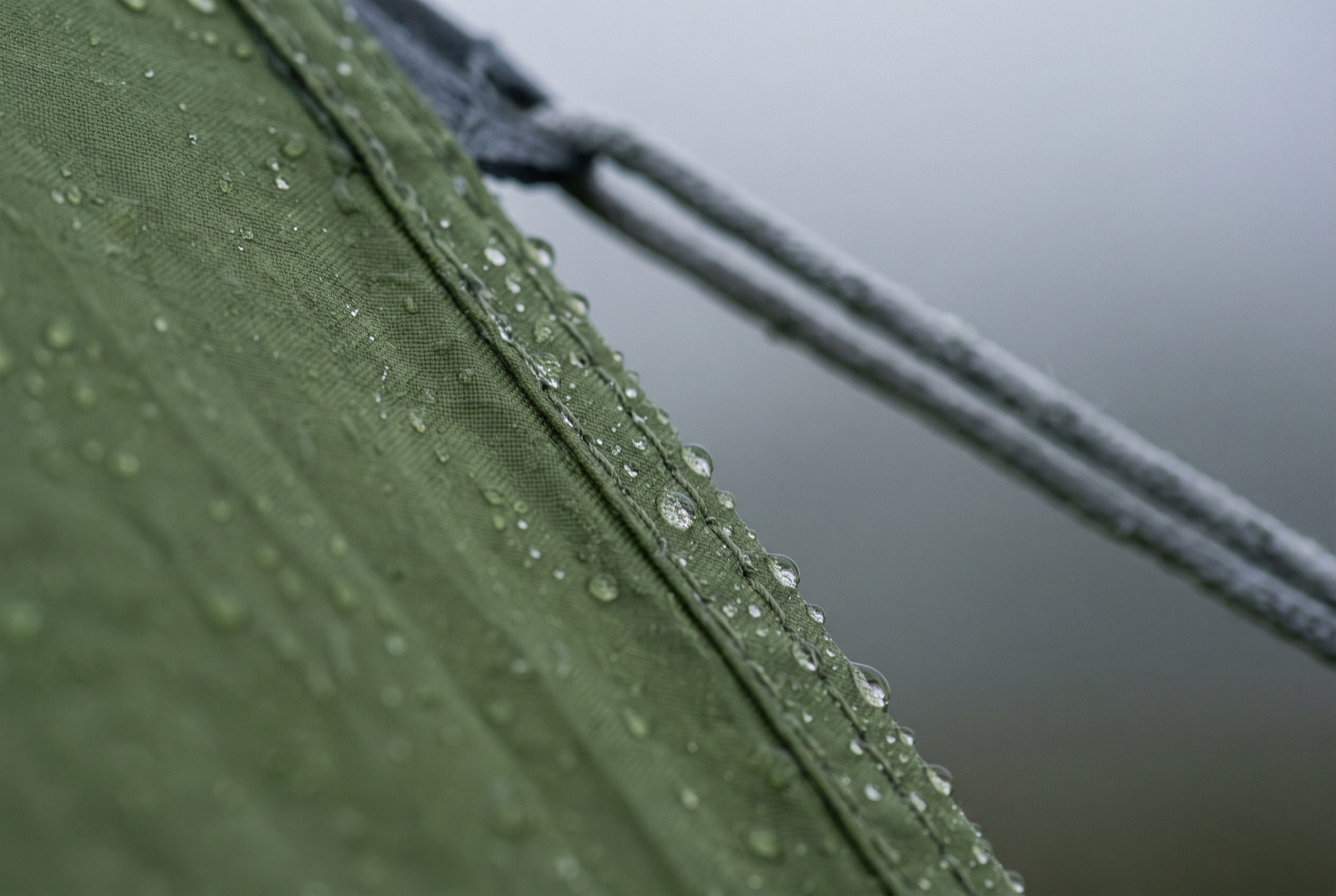
12:00 — the changeover. Full dry change on return, everything, including socks and pants. Wet layers get strung under the porch or, better, bagged and walked to the site's drying room if there is one. Be realistic about what that porch line achieves: nothing dries in a tent in the rain. Internal humidity is already at the ceiling, and the same sealed-flysheet configuration that can put a tent 10–20°F — roughly 6–11°C — above the outside air in sunshine is the one trapping moisture now.
Nor does the electricity rescue you. Campsite hook-ups are typically 10A or 16A, about 2,300W or 3,680W, and some certificated sites supply as little as 5A. That is why the plan to plug in a fan heater and dry everything fails, and why you cannot run a kettle and a heater together without tripping the bollard for the row.
14:00 to 16:00 — the meltdown window. Name it, because naming it is most of the defence. Everyone is tired, lunch has worn off, it is still raining, and bedtime is four hours away. Spend the reserve here, and make it a reserve you packed on purpose: the game nobody has seen yet, the hot chocolate that was hidden, the thing you said no to on Monday. This is the day the pocket games earn their keep, and the day you find out which of them secretly needed a table.
16:00 — the drive to somewhere with a roof. Take this as permission. A leisure centre, a swimming pool, a cinema, a supermarket café: the point is heat, light and a dry floor, not culture. Two hours somewhere warm is worth more than any activity you can run on a groundsheet. The 2026 camping-trend reporting has 77% of campers saying that just being in nature is enough, without structured programming, and the wet Tuesday is the day that claim gets properly tested.
18:00 to bedtime — the reset. Warm food, dry socks, sleeping bags early. The genuine consolation of a wet tent day is that everybody sleeps at eight, including the adults.
The cabin day, hour by hour
07:00 — let it start slowly. The one real luxury of four walls is that nobody has to be dressed. Do not squander it by imposing a schedule at eight because the weather removed the other plan.
09:00 — give each child a job. A real task with a real outcome: the stove laid, the washing-up done properly, bread made, the log basket filled from the store outside. This is the strongest single cabin tactic and it is worth about two hours, because it is not entertainment — it is the child doing something that visibly needed doing.
11:00 — the table slot. Where the games that want a flat, dry surface finally get their moment: Bananagrams, anything with pieces, anything that would vanish into grass in ten minutes. A cabin turns a wet Tuesday from a problem into a quiet one, and the table is most of the reason.
13:00 to 15:00 — go out anyway. A cabin day with no outdoors in it ends worse than a tent day, reliably. An hour in the rain followed by a hot bath resets the whole thing; a hot tub does it faster.
15:00 onwards — the long build. Cook something that takes three hours. Lay, light and feed a fire. Both are activities rather than chores, and both put the good bit at the end of the afternoon, which is where the day is thinnest.
What dries, and what does not
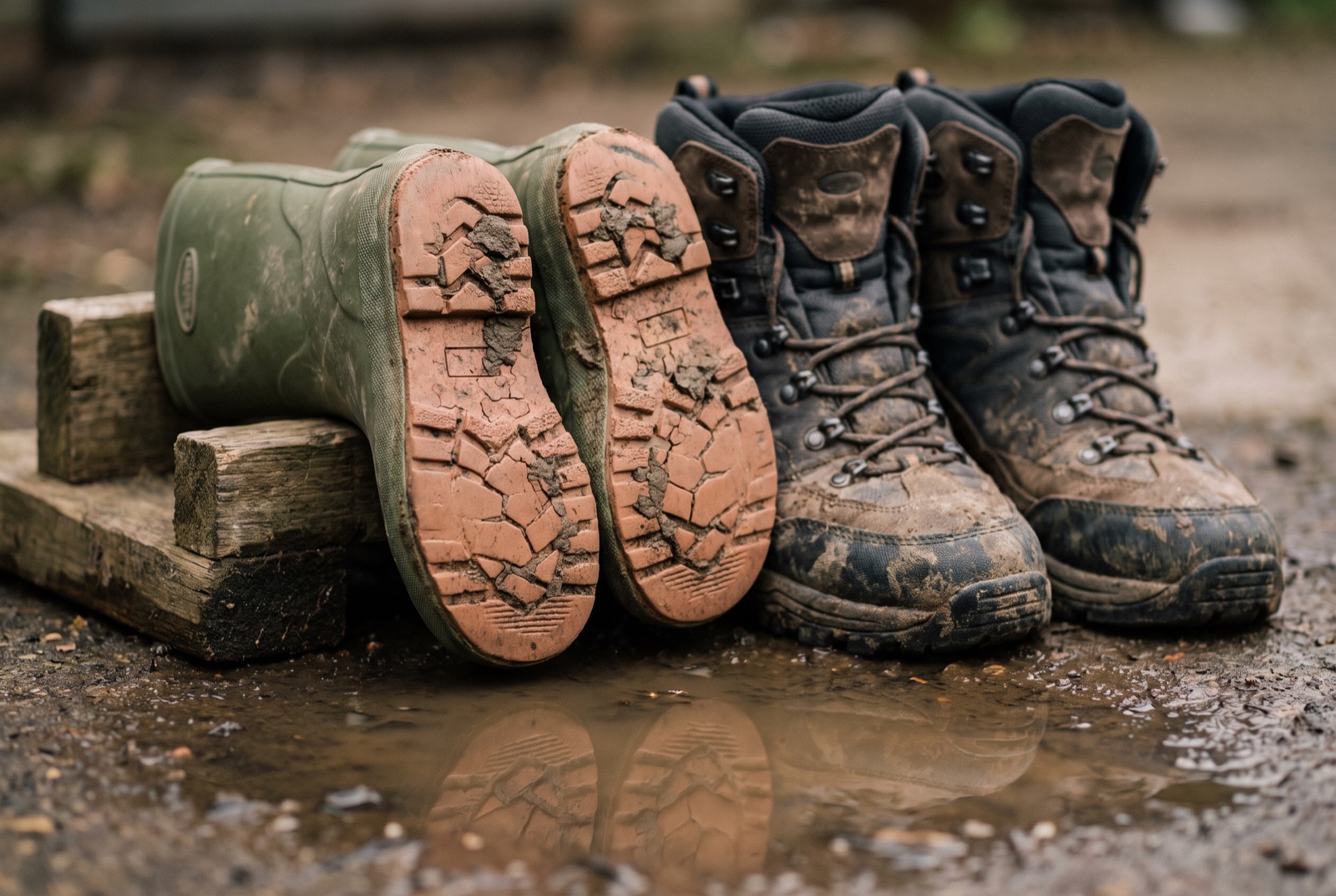
Cotton does not dry. Denim does not dry, and wet jeans on a child are a bad afternoon in slow motion. A soaked pair of trainers is finished for the trip — accept it on the first day rather than carrying them hopefully to the fourth. Synthetic and merino layers dry overnight in a heated cabin and not at all in a tent, whatever you hang them from.
The awning is for storage, not for drying, and under no circumstances for cooking. Two pairs of shoes per child is the highest-value packing decision on a wet trip, ahead of any waterproof, because it is the only thing that makes the second wet day survivable.
The third hour is when someone's socks get wet, and everything after that is downstream of the socks.
Then the part that is not a comfort question. Children lose heat faster than adults, because a small body has more skin per kilogram and less subcutaneous fat, so a wet child cools far faster than a wet adult standing beside them in the same weather. NHS guidance on hypothermia lists shivering, exhaustion, confusion, fumbling hands, slurred speech and drowsiness, and notes that shivering stopping is a sign of worsening rather than improvement. At camp it usually presents as a child gone unusually quiet who cannot work a zip. The response is to get out of the cold and wind, get the wet clothing off, insulate from the ground, rewarm gradually, and seek medical help if there is any doubt.
When to go home, and when not to
The honest test has three parts. Go home if the forecast is wind rather than rain. Go home if the bedding is wet, because there is no recovery from that in a tent. Go home if anyone has been cold for more than an hour without recovering. Stay if it is only rain and everybody is dry — that is a day, not an emergency, and it will read as an adventure by Friday.
The one hazard a wet day genuinely creates is water. Streams and rivers rise fast after rain, and the shallow one at the bottom of the field is a different object by teatime. RoSPA's figures are the ones to hold on to: 84% of open-water child drownings in the UK happen inland, in rivers, lakes and canals rather than at the coast, and 88% of child drownings occurred with no adult supervision present. RoSPA recorded 202 accidental drowning deaths in inland water in the UK in 2025. On a rained-off day the swollen stream is more attractive to children than yesterday's and more dangerous than it looks.
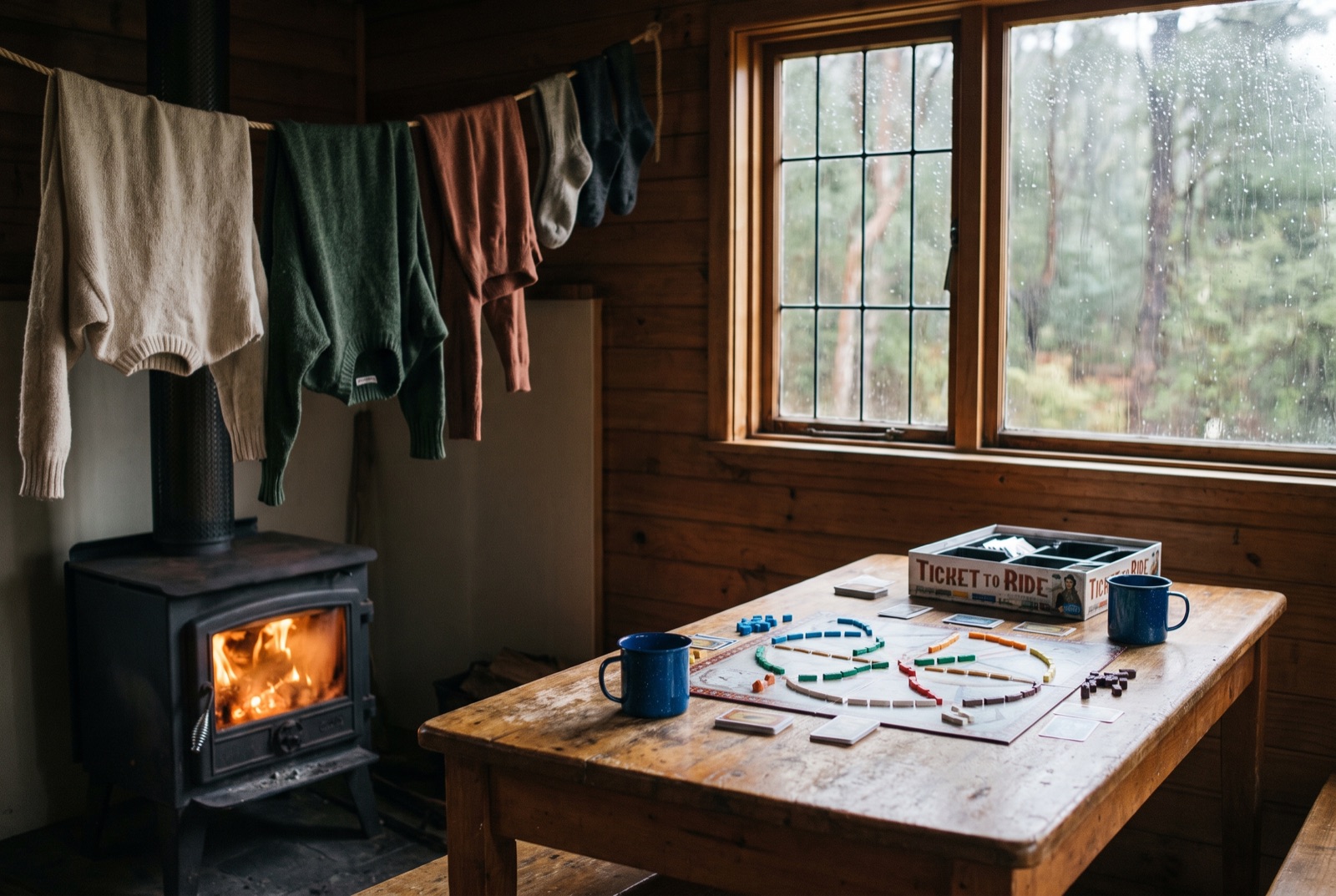
Then the reframe, which is statistical rather than sentimental. The 2026 camping-trend reporting has around half of campers planning a trip that recreates a childhood camping experience — and the childhood trip nobody recreates is the sunny one. It is the one where it rained all Tuesday and they were allowed to go out in it. Once it stops and the fire is possible again, the games that need nothing at all are what the evening is for.