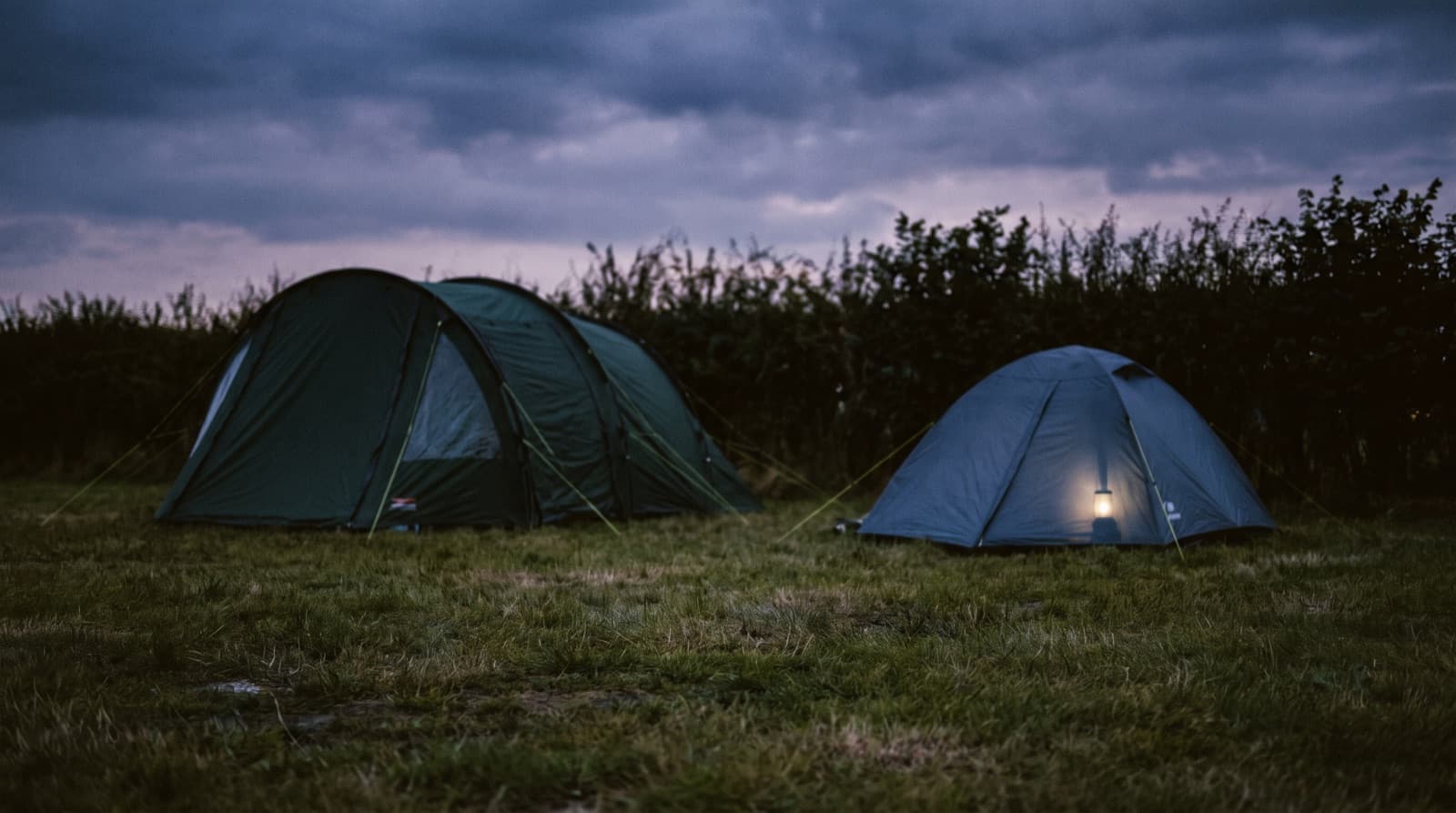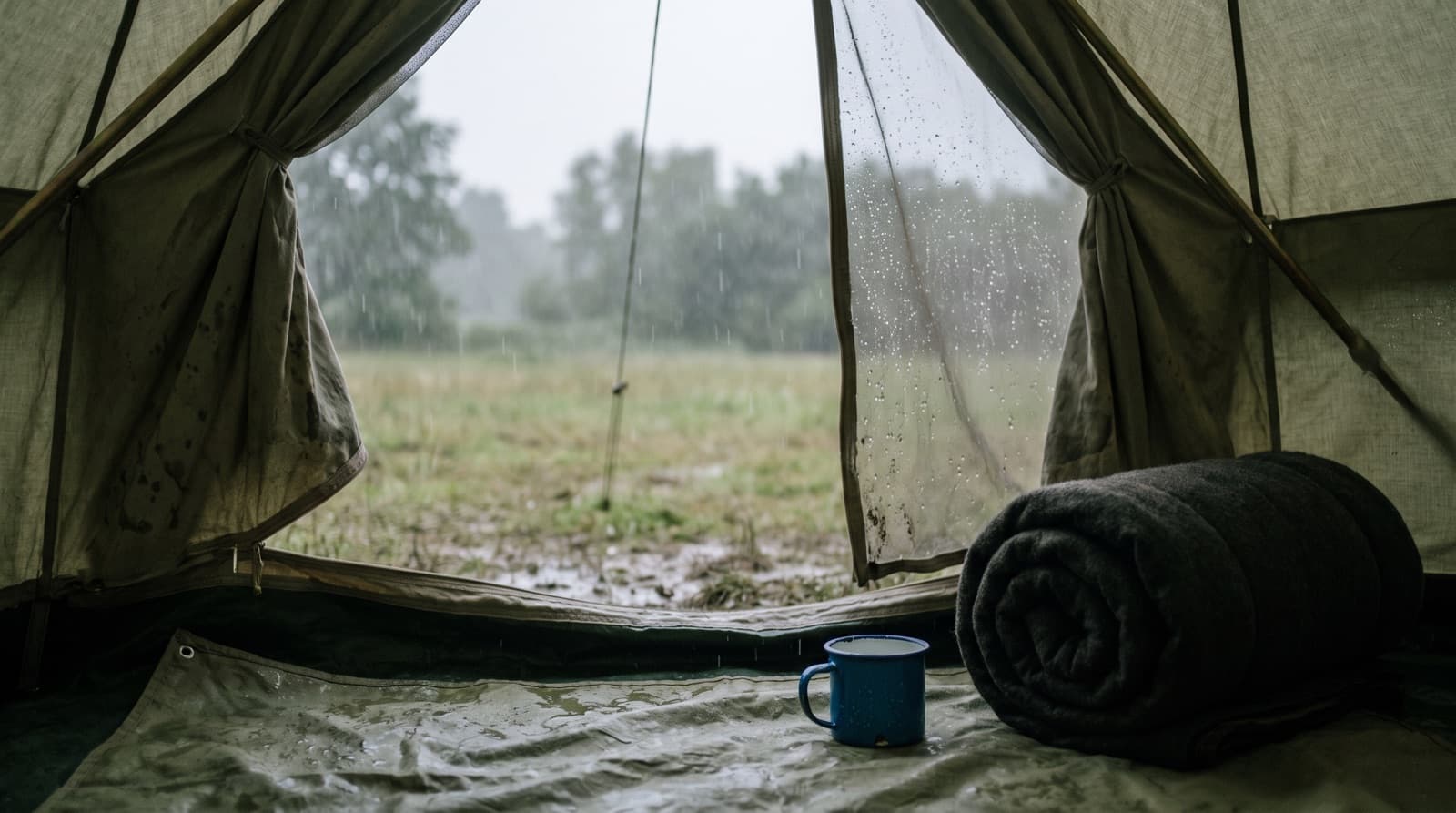
The first thing to be clear about is that the safer-sleep rules do not take a holiday. Everything else here is preference, logistics and opinion; that part is not. The second is that the risk everyone prepares for — the cold — is not usually what catches people out in a British summer, because a tent in sunshine behaves like a greenhouse and a small child cannot get out of one.
Sleep, and the rules that do not bend
For a baby under twelve months the position is settled, and it does not change because you are on a campsite. The Lullaby Trust's guidance is to sleep the baby on their back, on a firm, flat, waterproof mattress, in their own clear sleep space, with nothing loose around them — and the charity is explicit that this applies to every sleep, day and night, including away from home and on holiday.
Travel cots are where that gets misapplied. The mattress is thinner and harder than the one at home, and that is correct rather than a deficiency. The Lullaby Trust's advice is not to put folded blankets or a quilt underneath to soften it, because that makes the sleep surface less firm and raises the risk of overheating or of the baby's face becoming covered.
Then the thing every camping family already owns. An adult sleeping bag is loose bedding. A baby does not go inside one, does not share one, and does not sleep under a duvet or quilt. The answer is light bedding, or a well-fitting baby sleep bag with a TOG suited to the actual temperature — and since the Lullaby Trust notes temperature is difficult to judge, that means owning a thermometer rather than an opinion. Hats are for outdoors: babies do not need them indoors, and a tent at night is indoors.
Draw the line the guidance draws: all of that is under-twelve-months advice. For a two-year-old the risk profile is different, and a child's sleeping bag or a ready-bed becomes entirely reasonable.
Warmth, and the arithmetic of a small body
The physiology is worth understanding rather than memorising, because it tells you where to spend the effort. Heat is generated by body mass and lost through skin. A small child has far more skin per kilogram of body mass than an adult, so infants lose heat much faster per kilogram in the same conditions; they also carry less subcutaneous fat and their thermoregulation is immature. Newborns cannot rely on shivering at all — they lack the skeletal muscle mass — and depend instead on non-shivering thermogenesis from brown fat. None of this makes camping unsafe. It makes guessing unsafe.
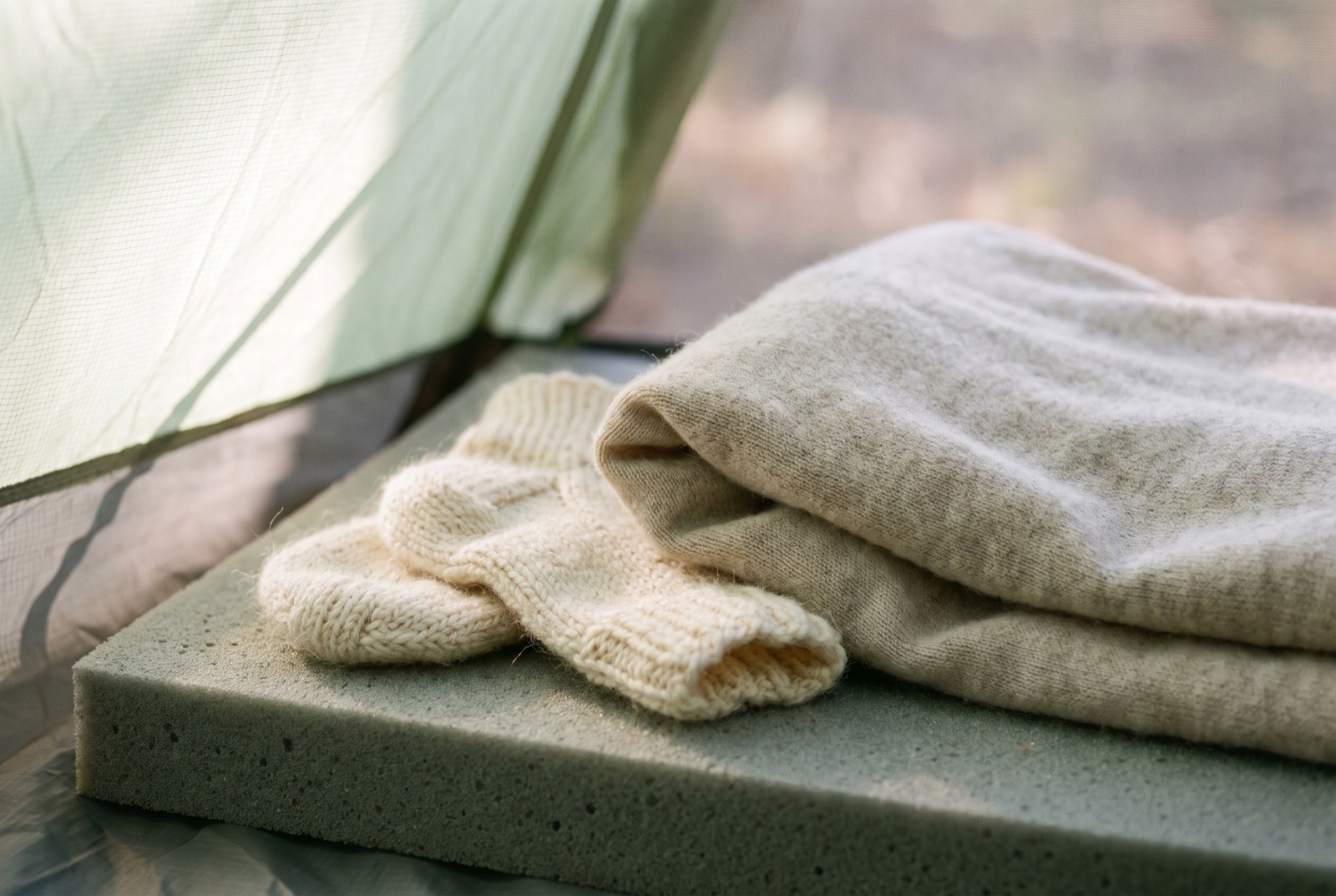
So insulate from below before adding anything on top. Conduction into the ground is the dominant heat loss in a tent, and a foam mat under the cot does more than an extra layer of clothing ever will. It is the principle that governs adult comfort — the reason you are cold at night is nearly always the ground, not the bag — and less forgiving at fourteen months.
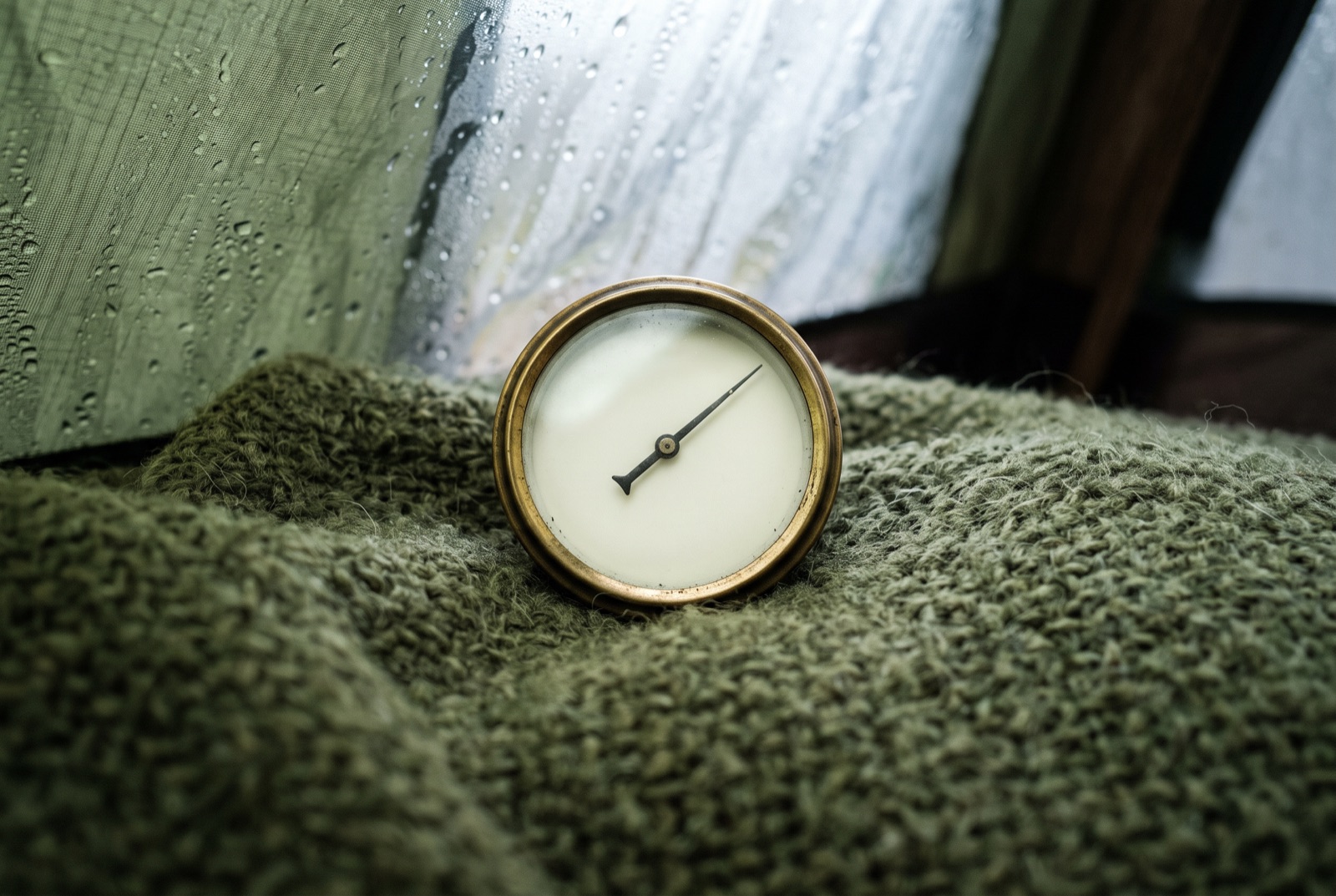
For the range to work to, the Lullaby Trust recommends a room temperature of 16–20°C for a sleeping baby. A cheap dial thermometer is worth more than most of the gear that will be recommended to you, because it turns an argument into a number. To check the child rather than the air, the guidance is to feel the chest or the back of the neck — not the hands and feet, which run cool normally. Hot or sweaty skin means take a layer off.
What you will not find here is a temperature below which camping with a baby is unsafe, because there is no authoritative UK figure and inventing one would be worse than useless. The honest answer depends on the sleep system rather than the forecast.
Overheating, which is the risk that gets under-written
The Lullaby Trust is explicit that the risk of SIDS is higher in babies who get too hot. That is a stronger evidence base than almost anything written about cold, and the opposite of where most camping-with-a-baby advice puts its emphasis.
Now put it next to the fabric. A tent in direct sun can sit 10–20°F — roughly 6–11°C — above the outside air within an hour, and a sealed flysheet in full sun pushes it further. A serious number when the occupant is asleep and cannot leave.
So pitch in shade if there is any, and treat a hedgerow or a single tree as worth choosing a pitch for. Vent properly, or take the flysheet off when it is dry. Do not leave a sleeping child in a tent through the middle of the day — the nap that began at half twelve in acceptable conditions is not in acceptable conditions at two.
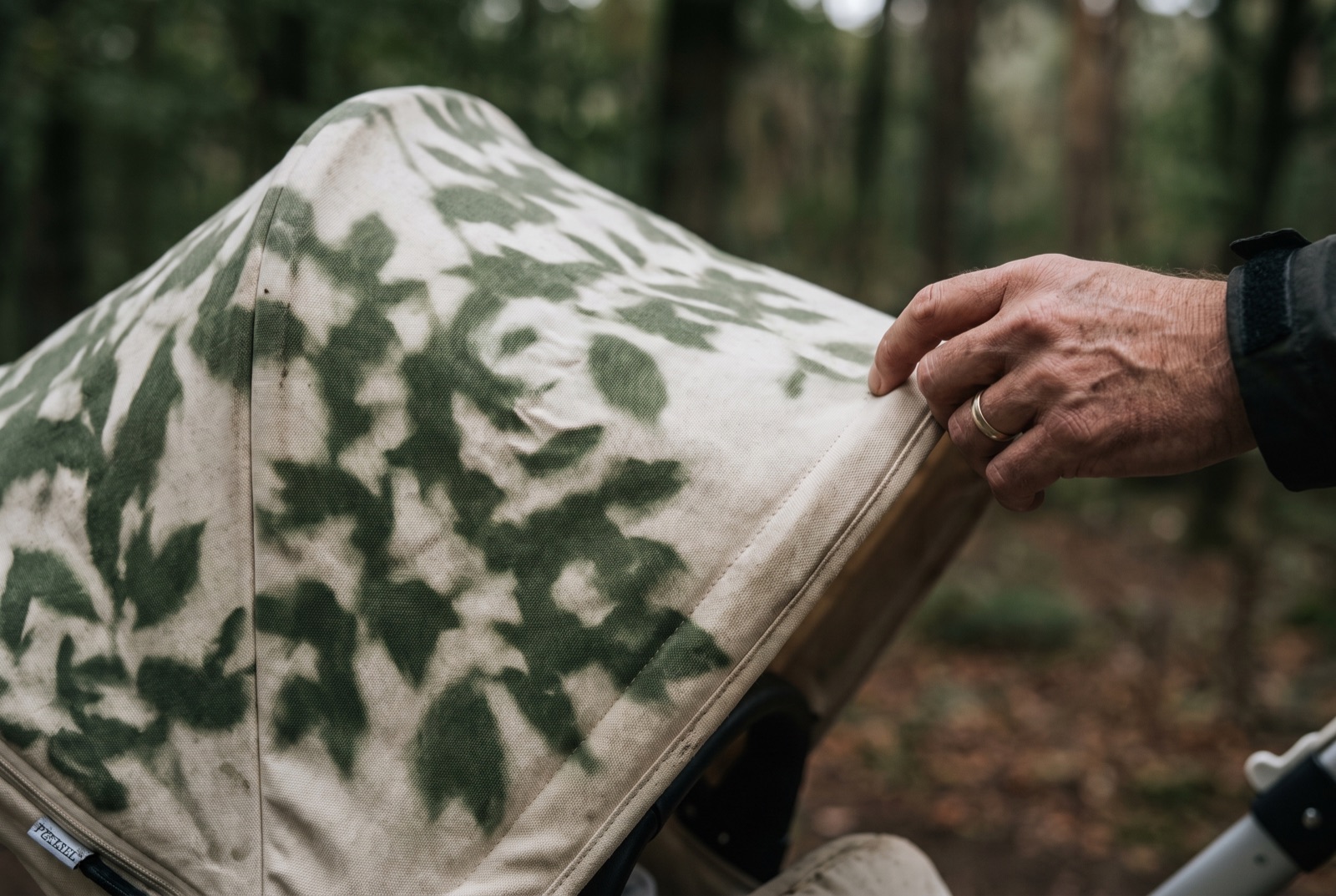
The sun rules are separate and equally firm. NHS guidance is that babies under six months should be kept out of direct sunlight altogether; sunscreen is not recommended below six months, so the answer is shade and clothing rather than a cream. And never drape a blanket over a pram or pushchair to make shade, because it restricts airflow and can cause overheating.
The 05:00 start, and what can be done about it
State the problem numerically, because it is astronomy rather than a parenting failure. In midsummer, sunrise is around 04:45 in London and about 04:30 in Hull, and Inverness gets over eighteen hours of daylight on the solstice. Canvas does very little to stop light, and a pale flysheet glows from an hour before the sun clears the horizon.
Three things help. A blackout inner, or a dark-fabric sleep pod inside the tent. Pitch orientation, which is a decision rather than an accident — an east-facing door on a tent containing a toddler is a choice you will regret at half past four. And an earlier bedtime, because the child wakes at first light regardless of when they went down.
What does not work: anything relying on a later bedtime, and any plan that depends on a two-year-old going back to sleep.
The compensation is real. Five in the morning on a campsite in June is the best hour of the day — low flat light, dew on everything, nobody else up. This is the one age at which you are guaranteed to see it.
Nappies, feeding, and the unglamorous logistics
Nappies go in general waste, not the chemical disposal point, and you will need more bags than you brought. A lidded bin in the car boot solves the smell; the porch does not.
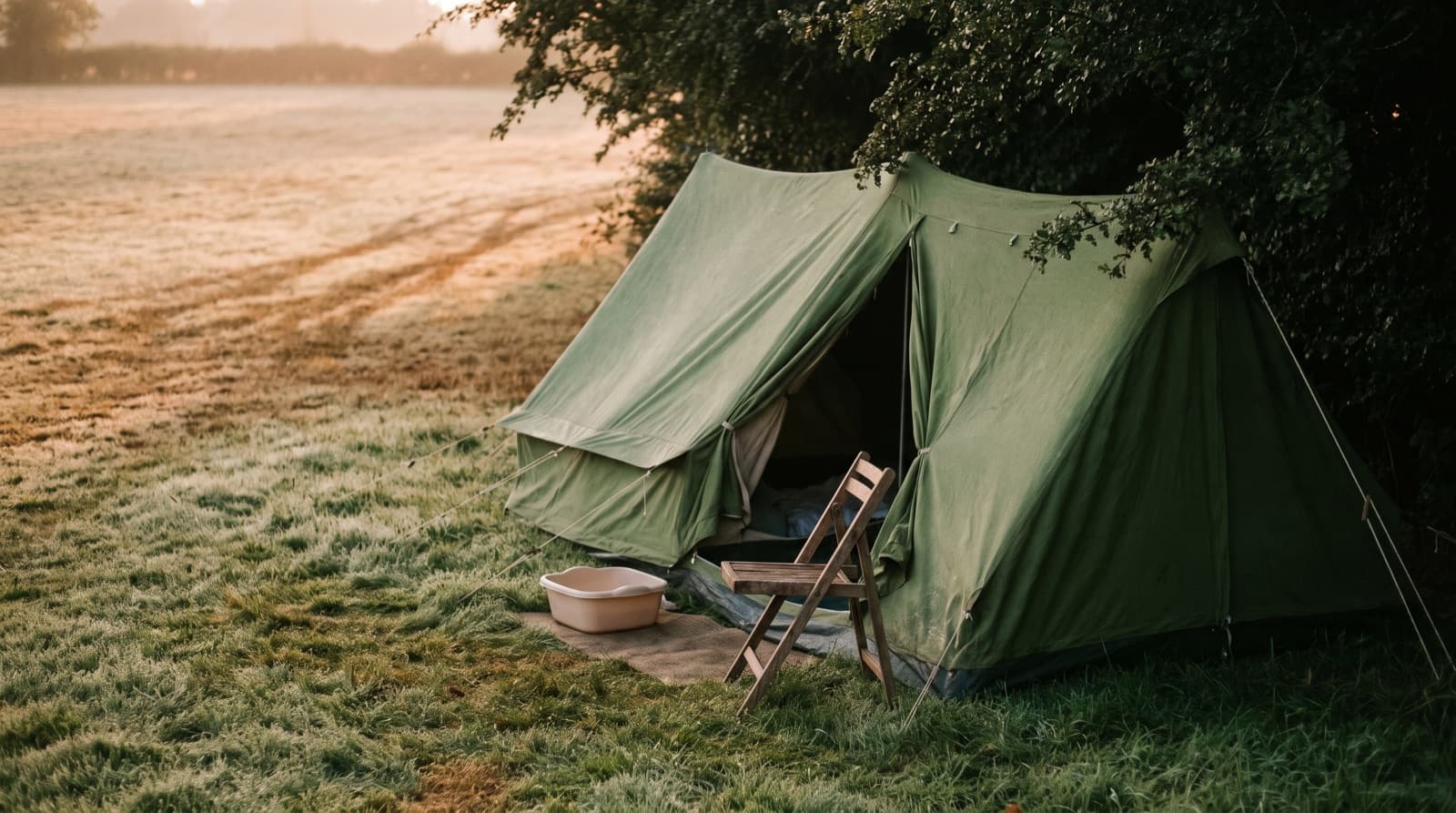
Washing is a cold tap and a plastic washing-up bowl, and a bowl big enough to sit a bottom in is the most useful object you will pack. It doubles as the sink, which is fine as long as it does not do both on the same evening.
Feeding is really a sterilising problem. Cold-water sterilising tablets and a lidded box travel better than anything assuming a microwave, and a flask of boiled water made up in the evening saves lighting a stove at two in the morning — worth avoiding anyway, because nothing that burns fuel goes inside a tent or awning. That includes a barbecue that has been put out: a cooling barbecue still produces carbon monoxide, which builds to lethal levels in an enclosed tent very quickly and causes around fifty deaths a year in the UK.
A two-year-old who will not eat the camp dinner is not a problem to be solved on site. Bring the safe thing they will always eat, and stop negotiating. Nobody has ever won that argument in a field.
The safer-sleep rules do not take a holiday. Everything else in this article is preference; that part is not.
Water, ground, and the things a two-year-old will find
The hazard on most family campsites is not the fire or the road. It is the stream at the bottom of the field. RoSPA's figures are that 84% of open-water child drownings in the UK happen inland — rivers, lakes and canals rather than the sea — and that 88% of child drownings occurred with no adult supervision present. Drowning claims more than fifty children a year in the UK. A rained-on stream is worse than the one you inspected on arrival, which is the overlap with a rained-off day.
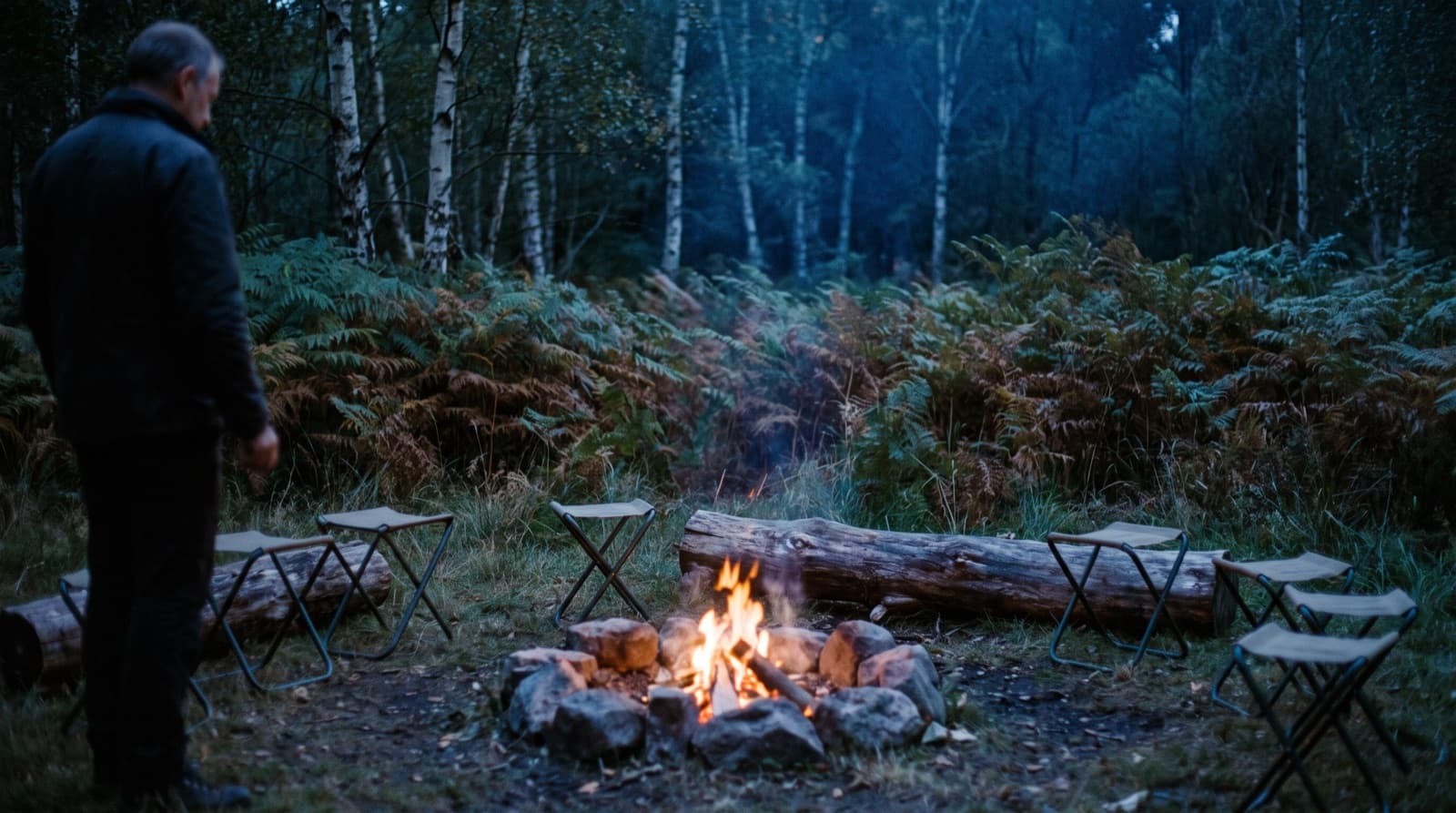
Fire is manageable if it is defined. Keep a proper fire ring, everyone seated, at least a metre back from the flames, and a two-metre boundary for children who are not being closely supervised. At two that boundary has to be physical rather than verbal — a log, a row of bags, an adult sitting on that side. Never leave a fire unattended.
Then the small stuff, which is most of the actual incidents: guylines at toddler face height, tent pegs, other people's stoves cooling on the grass, and the fact that a campsite is a road with cars on it at the hours children are least visible.
The verdict: cabin or tent
Under three, a cabin wins, and it is worth saying so without hedging. The reason is not comfort, it is control. A room with a door that shuts. A temperature that stays where you put it. A firm, flat surface designed to be slept on. A tap, and a bath at the end of a cold day. At this age the argument for four walls is control rather than luxury, and Log House Holidays is the shape of thing that works: a proper cabin, a bath, and the outdoors starting at the door.
The cases where a tent is still right are specific: an older sibling who wants it and will get most of the value, a site you already know, warm settled weather, and two nights rather than five. There is also a middle option nobody names often enough — a cabin or lodge on a site that also takes tents, so the rest of the family gets the campsite and the youngest gets a room with a door.
Be sceptical of the cheerful framing. KOA's 2026 report found 35% of adults saying camping is the easiest travel option with children, and 35% citing it as the most affordable. Both are plausible. Neither is a claim about babies, and the gap between "with children" and "with a fourteen-month-old" is the subject of this article.
So lower the ambition and keep the habit. Two nights forty minutes from home beats a week in Snowdonia this year, on every measure that matters at three in the morning. The child will remember neither, which is rather the point: the habit of going survives a short easy trip far better than a long hard one.