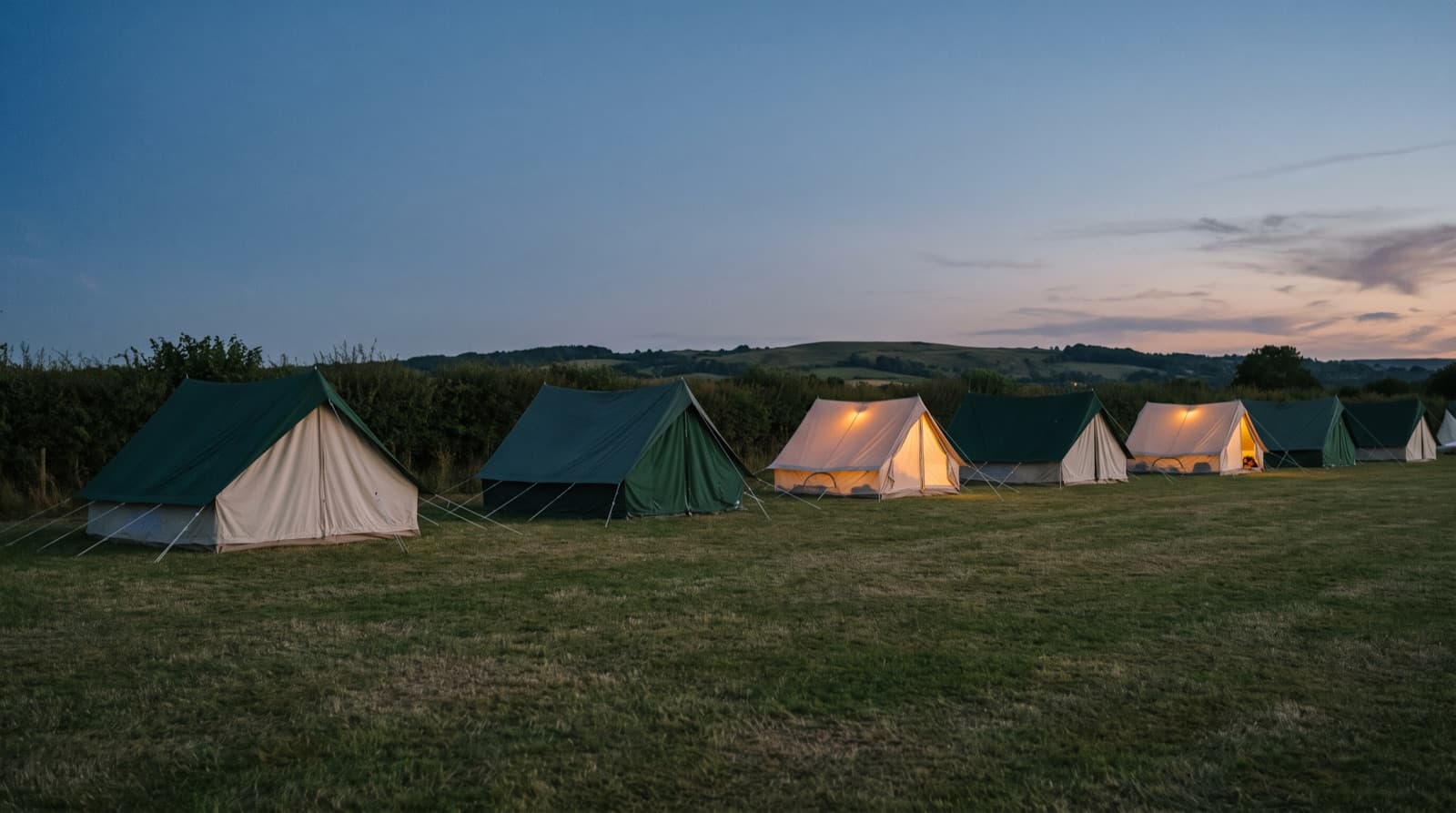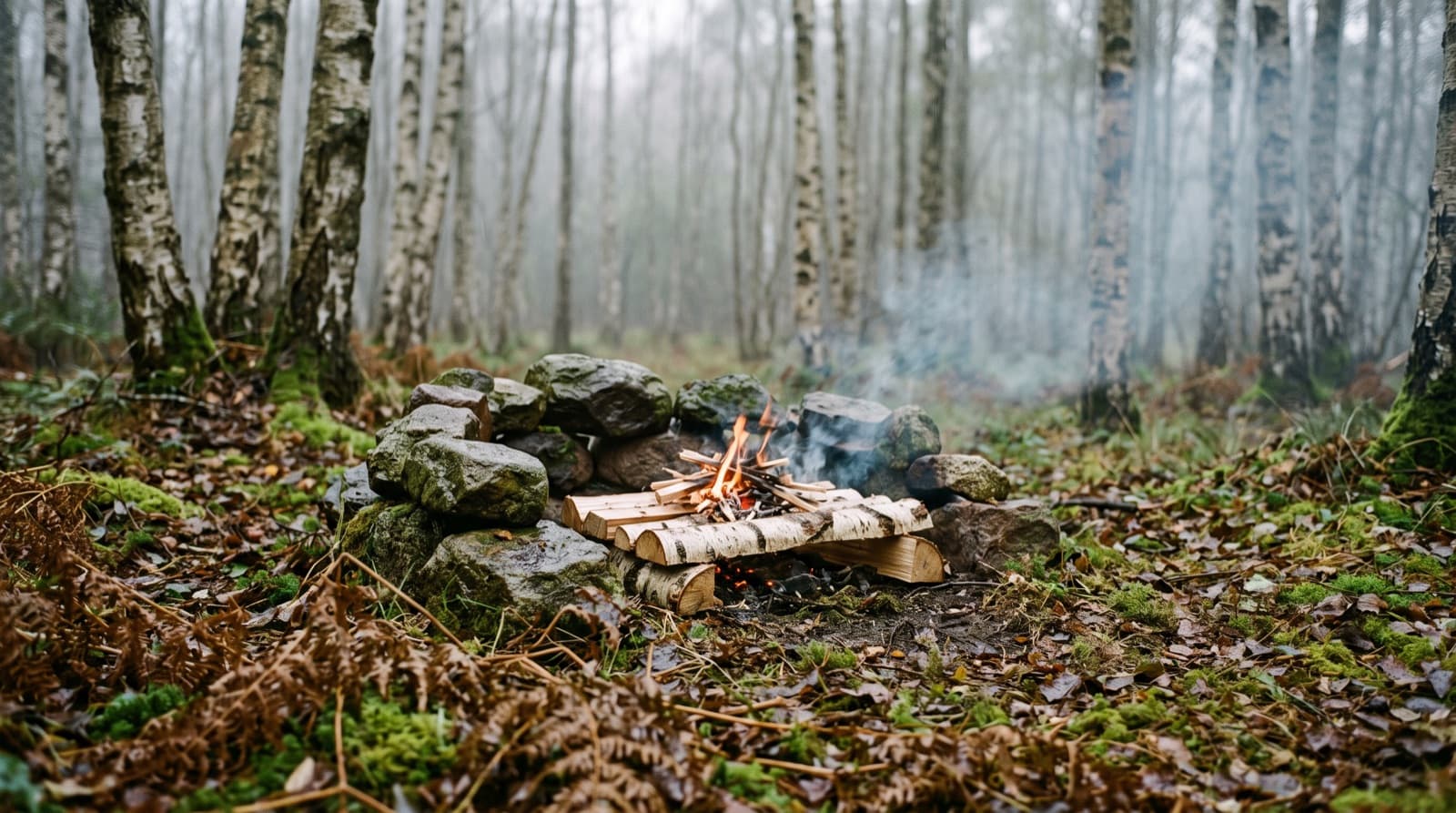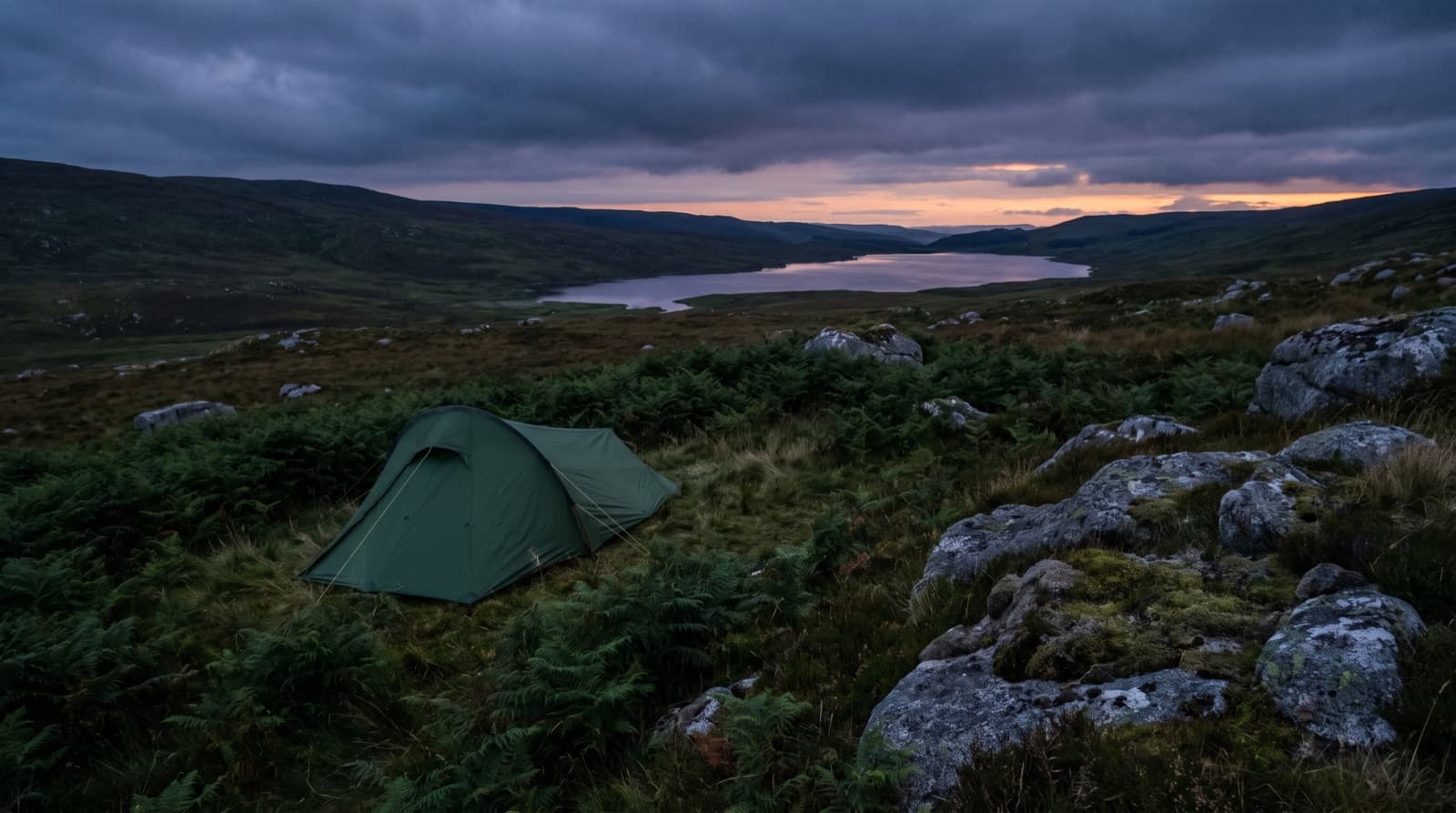
There are two questions hiding inside "can I wild camp here?", and almost nobody separates them. The first is whether you have a right — something written down, that survives a landowner objecting. The second is whether you will be left alone, which is a different thing entirely and depends on the season, the county and how visible your tent is at eight in the morning. In most of Europe the answer to the first is no and the answer to the second is usually, and the gap between those two answers is where every argument about wild camping actually happens.
What follows is a summary written for travellers, checked against the sources it cites in July 2026. It is not legal advice. National rules in every country here are routinely overridden by regional law, national park regulations and municipal byelaws, any of which can be narrower than the national position and none of which will be on the first page of search results. The only reliable check is the land manager for the place you are going to: the park authority, the estate, the commune, the kommune. Where this piece and a sign on a gate disagree, the sign wins.
A right, or a tolerance
A statutory right of access that includes camping exists in four places in this article: Scotland, the Dartmoor Commons, Norway and Sweden. In each case it is written into law, exercisable without asking, and a landowner who objects does not remove it. Everywhere else in Europe camping needs the consent of whoever owns the land, and the practice survives on discretion — of a farmer, a ranger, a mayor, or a police officer who has decided it is not worth their evening.
That is the first axis. The second is the vehicle, and it matters more, because it is the one people get wrong. No right-to-roam law in Europe covers a motorhome. Not one. The Nordic right of access is a right of people on foot with a tent, and always has been; Scotland's is the same. A campervan parked overnight in a Highland passing place or on a Norwegian headland is not exercising a right — it is parking, governed by traffic law and the landowner's patience. That misreading is behind most of the recent tightening in Portugal, Italy and Lofoten.
Right or tolerance; on foot or on wheels. Keep both in mind and the continent becomes legible.
Britain is two countries for this purpose
Scotland has a statutory right. The Land Reform (Scotland) Act 2003 created rights of responsible access over most land and inland water, and the Scottish Outdoor Access Code applies them to camping. The Code's definition is narrow and specific: wild camping is lightweight, done in small numbers, and for no more than two or three nights in any one place, leaving no trace behind.
The most consequential sentence in this section is the next one. Access rights do not extend to camping in a campervan or a motorhome. That needs the landowner's permission, in Scotland exactly as it does in Surrey. The right is yours on foot, with a tent, and it stops at the door of a vehicle.
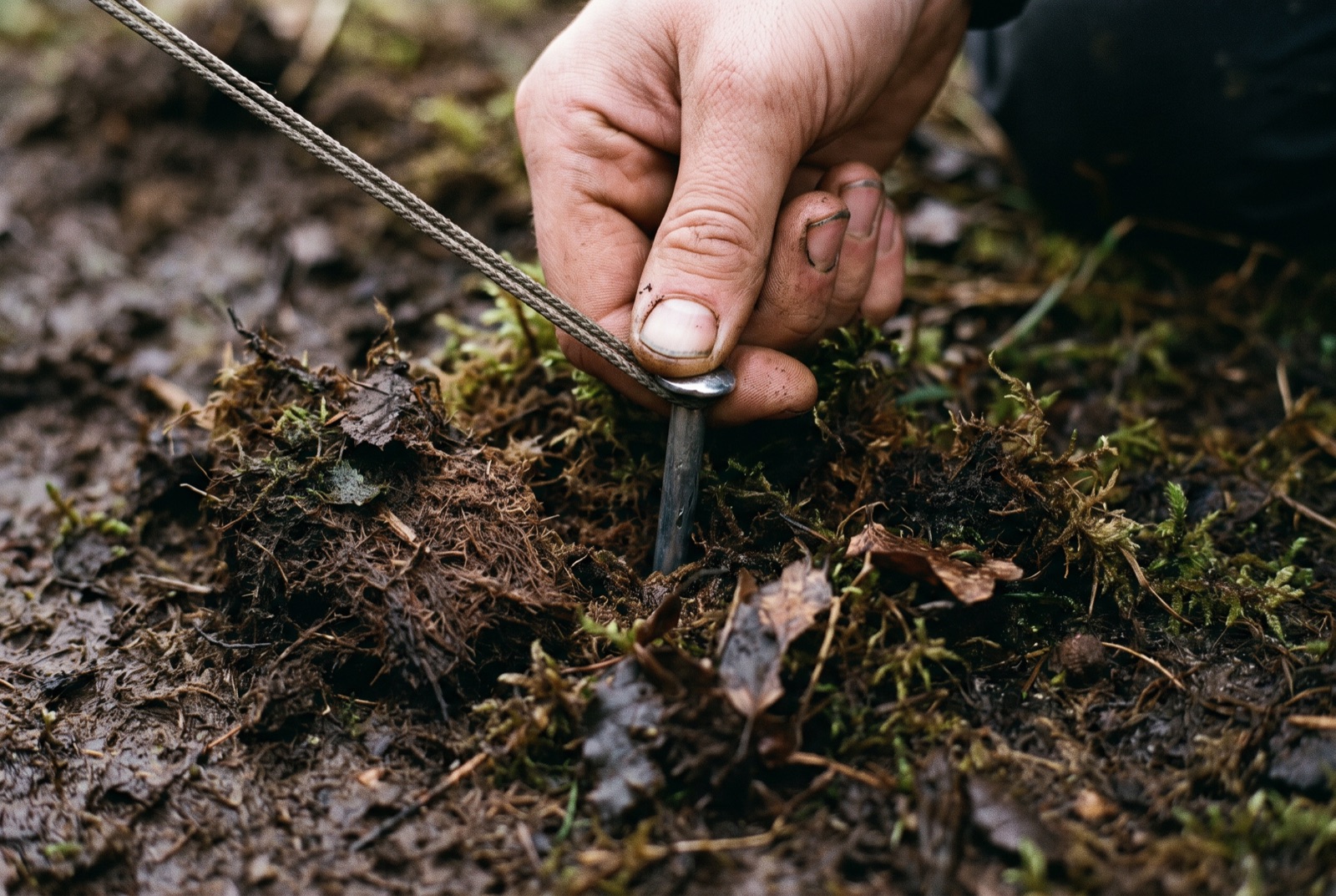
England and Wales are a different legal country. The Countryside and Rights of Way Act 2000 gave a right of access over registered open country and common land, then explicitly took camping out of it: Schedule 2, paragraph 1(1) lists camping among the activities that put a person outside the right of access, alongside lighting a fire and driving a vehicle. A tent on access land in England or Wales therefore needs the landowner's consent, and without it you are trespassing. Trespass is civil rather than criminal and the realistic consequence is being asked to leave — but "mild" is not the same as "allowed", and the distinction gets sharp the moment somebody objects.
The convention of arriving at dusk and leaving at dawn is worth naming for what it is: the etiquette of a tolerated practice, not a legal position, and no defence to anything. It works by minimising the chance of anyone caring, which is a different mechanism from permission. Where a hill is busy and the pitching poor, the pragmatic answer under Ben Nevis is usually the site in the glen — a bed, a shower and a legal position, for less than the fine.
Dartmoor and Loch Lomond: an exception, and a byelaw
Dartmoor shows how thin the English position is everywhere else. On 21 May 2025 the Supreme Court unanimously dismissed the appeal in Darwall v Dartmoor National Park Authority, holding that section 10(1) of the Dartmoor Commons Act 1985 confers a public right to camp on the Dartmoor Commons; Lord Stephens treated the Act's phrase "open-air recreation" as open-ended and unqualified, and therefore as covering the pitching of a tent.
Read the scope narrowly, because that is how it was decided: one Act, for one area, creating nothing general. It makes Dartmoor the only place in England where you may camp on open country without asking — and only on the commons, not the whole national park, a distinction the Authority publishes as a map. Its code of conduct sets the conditions: kit that fits in a backpack you can carry, and no more than six people together. Check the current map before you go.
Loch Lomond and the Trossachs runs the mechanism in the other direction. Camping Management Zones cover less than 4% of the national park — strips of lochshore on West and East Loch Lomond, the Trossachs West, and North Loch Earn — and operate from 1 March to 30 September. Inside a zone in season you need a permit or a booked campsite; outside the zones, or between October and February, the ordinary Scottish access rights apply unchanged, which is the part most summaries omit.
The price is a small lesson in checking twice. In July 2026 the park authority's permit page gave £4.50 per tent or motorhome per night, bookable up to four weeks ahead, with motorhome permits valid 19:00 to 10:00; the byelaws page still said £4.30. Take the number from the page you are buying from, on the day. Non-compliance can be reported to the Procurator Fiscal, with a fine of up to £500 on conviction. A byelaw converts a tolerated activity into a criminal one within a line drawn on a map, and nothing about the ground on either side of that line looks any different. The byelaws are under review and could change for 2027, so check the authority's own site rather than this one.
The permission countries: Ireland, France, Italy, Spain, Portugal
The common thread across all five is that there is no right to roam, camping needs consent, and everything interesting is in the exceptions.
Ireland has no general public right of access to private land, and camping requires the landowner's permission. Part IIA of the Criminal Justice (Public Order) Act 1994, inserted by the Housing (Miscellaneous Provisions) Act 2002, creates offences of trespass and empowers the Gardaí to direct people to leave. The exception is Wicklow Mountains National Park, which permits wilderness camping under a published code: at least 500 metres from any road capable of carrying a vehicle and at least 500 metres from a building, moving the tent after every second night, no campfires anywhere in the park, and no camping at all at Glendalough.
France frames it permissively and then fences it. Article R111-32 of the Code de l'urbanisme provides that camping is freely practised, outside the right-of-way of public roads, with the agreement of the person who has the use of the land, subject to the owner's objection. Article R111-33 prohibits isolated camping on the sea shore, in sites inscrits and classified sites, and within a 200-metre radius of drinking-water abstraction points. Note what is not there: the current text contains no 500-metre-from-a-historic-monument rule. That figure comes from a repealed version of the code and is still repeated across dozens of camping blogs. Article R111-34 lets a local plan or a mayoral order ban camping outside developed sites, which is how a commune closes a beach.
The French national parks run their own regimes, and they are the model for how continental Europe handles this. In the Écrins, bivouac is permitted only between 19:00 and 09:00, more than one hour's walk from the park boundary or from any road access or car park inside it, in a small tent you cannot stand up in, for a single night; ground fires are banned and gas stoves tolerated, with a 500-metre exclusion around the Muzelle and Lauvitel lakes. In the Vanoise it runs 1 June to 30 September, 19:00 to 08:00, only immediately beside certain staffed refuges, and must be booked with the refuge.
Italy has no national answer, because tourism and camping fall to the regions under the Constitution. Trentino-Alto Adige allows bivouac for a maximum of 24 hours; Valle d'Aosta permits alpine bivouac above 2,500 metres between dusk and dawn; Piemonte allows 48 hours in one place with 24 hours' notice to the mayor; Liguria, Puglia and Sardegna ban free camping outside authorised sites altogether. National parks are governed by Law 394/1991 and each park's own regulation, most of which prohibit free camping. Fines are set regionally and vary too widely to quote a single figure honestly — assume there is one.
Spain turns on a distinction between parking and camping. A vehicle is parked, not camped, when all its wheels are on the ground, no stabilising legs or levelling blocks are in use, and nothing projects beyond the vehicle's perimeter — no table, no chairs, no awning. Deploy any of those on the public highway and it becomes acampada indebida. Camping proper is regulated by the autonomous communities, so it varies by region. The Picos de Europa is the worked example: free camping is prohibited in the national park, and bivouac permitted only above 1,600 metres, with the tent pitched no earlier than one hour before sunset and struck within one hour of sunrise, and not within 500 metres of a staffed refuge that has places free. The park is administered by three autonomous communities and the detail differs between them.
Portugal changed its law twice in two years. Decreto-Lei 102-B/2020 inserted article 50.º-A into the Código da Estrada, and Lei 66/2021, published in the Diário da República on 24 August 2021, defines an overnight stay as a motorhome remaining occupied between 22:00 and 07:00, caps it at 48 hours in the same municipality, and prohibits it entirely in Natura 2000 areas, protected areas and zones covered by coastal management plans. Wild camping in a tent outside authorised sites is likewise prohibited, and specifically so in those protected areas.
Norway and Sweden: the right you have, and the one you think you have
Norway's right is in the statute rather than the tourist board's summary, and the statute is more precise. Friluftsloven §9 provides that a tent may not be pitched closer than 150 metres from an inhabited house or cabin, and may not remain more than two nights in one place without the owner's consent — except in high mountain terrain, or far from habitation, where the stay causes no significant damage or inconvenience. The right applies on utmark, uncultivated land, not on innmark: farmyards, fields, meadows, cultivated ground. And it applies to people, not vehicles — you may not drive or park on uncultivated land, and no reading of allemannsretten has ever let a motorhome sit on a headland for a week.
Sweden's allemansrätten is drawn similarly. The right of public access allows two to three tents for a night or two; a larger party with more tents needs the landowner's permission. And the Swedish Environmental Protection Agency states the vehicle position about as plainly as a public body can: the right of public access does not extend to motor vehicles, so do not park motorhomes, caravans or cars with roof tents out in nature, and off-road driving is illegal. Rest stops generally allow 24 hours — check the signs, which are the operative rule.
Fire is where visitors to both countries come unstuck. Norway prohibits open fires in or near woodland from 15 April to 15 September, with exceptions only where the fire risk is plainly low or where there is an approved fire site. Sweden's equivalent is the local eldningsförbud, which is not seasonal but appears at short notice from the county administrative board in dry weather, and is the one most visitors never think to look up. A fire changes the calculation everywhere — most of the sites in Britain where you can legally light one are here, and the list is shorter than you would hope.
Protected areas override the general right in both countries. In Swedish national parks and nature reserves the right of public access does not apply in full: camping may be limited to one night, restricted to designated spots, or banned altogether, and knowing the local rule is the visitor's responsibility.
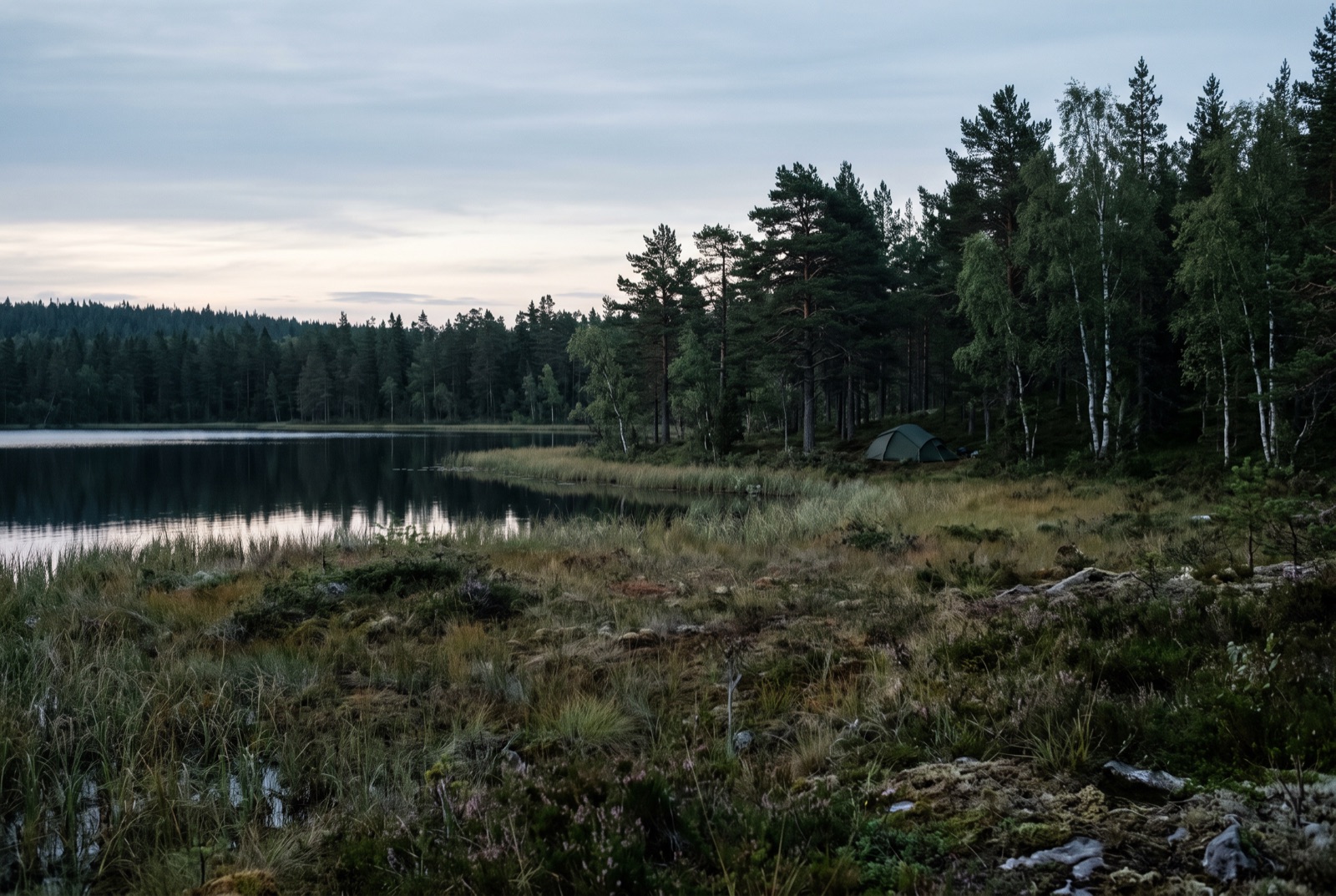
Where enforcement is real
A right survives somebody objecting to it. A tolerance is only ever the absence of an objection so far.
Portugal is the clearest case of a tolerance ending. Fine bands under the 2021 law run from €120 to €600 in Natura 2000 areas, protected areas and coastal-plan zones, with lower bands elsewhere — but the numbers that make the point are the enforcement's. An ICNF operation across 13 protected areas and 25 municipalities, using 50 wardens and carrying out 89 inspections, produced 46 penalty notices: 40 for motorhome overnighting in improper locations, and 6 for wild camping. Half the inspections ended in a ticket, in a country the internet describes as relaxed.
Italy's sharp end is Sardinia. At Punta Molentis, tents, gazebos and beach umbrellas are banned for most visitors from 6 June to 31 October 2026, with a €10 entry fee, a cap of 70 vehicles and 150 people at once, and on-the-spot fines reported at €100. Sardinia separately fines the removal of sand, shells and pebbles at up to several thousand euro, which surprises people more than the umbrella ban does.
Norway shows a national right overridden locally. The Lofoten outdoor recreation regulation of 2021 restricts tents, shelters and hammocks across seven municipalities and bans overnighting outright in named places — Reinebringen and Reine from 1 May to 1 October, Haukland year-round — with expulsion and criminal liability for breach.
The generalisable lesson is not comforting. Enforcement concentrates where the pressure is: honeypot beaches, lochsides, trailhead car parks, the viewpoint that appears on every third phone screen. Those are precisely the places most people want to camp, which is why the gap between "wild camping is fine here" and a ranger walking towards you is narrower than the internet suggests.
What to do instead, and what to do anyway
The practical hierarchy is short. Ask the landowner, which works more often than people expect and takes one conversation at a farm door. Use the small, basic, licensed sites that exist in every country here precisely for people who would otherwise be wild camping — a field, a tap, a compost toilet, eight euros. And if you are going high and wild anyway, go higher, later and further from the car park than you think you need to, because every problem in this article is a function of visibility.
The behaviour that keeps a tolerance alive is the same everywhere: one night in a place, out of sight of the road and of any house, no fire unless there is an existing hearth and no ban in force, a stove instead, everything carried out including what was there before you, and the tent down early rather than late. Much of it is the same set of habits that make you a good neighbour on a proper site — arrive quietly, occupy less than you could, leave earlier than you want to. Every country here has those small licensed sites, and ours are here; on a wet Tuesday in October they are frequently the better night.
And to restate the boundary of the piece, because it matters more here than in anything else on this site: this is a traveller's summary, checked in July 2026, not legal advice. Regional law, park regulations and municipal byelaws override the national position routinely and without notice. Ask the land manager for the specific place you are going to, and take the local rule over this one every time.