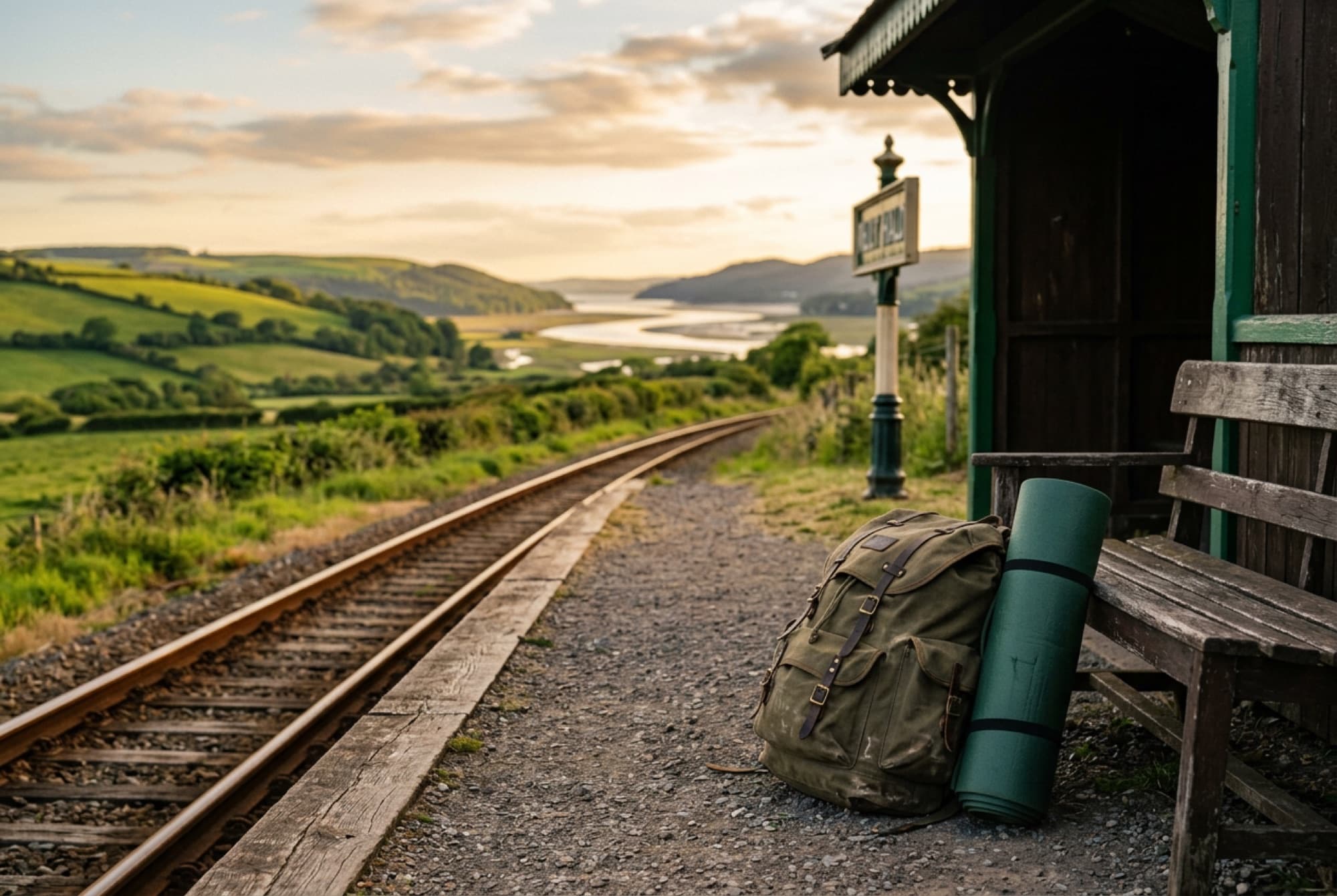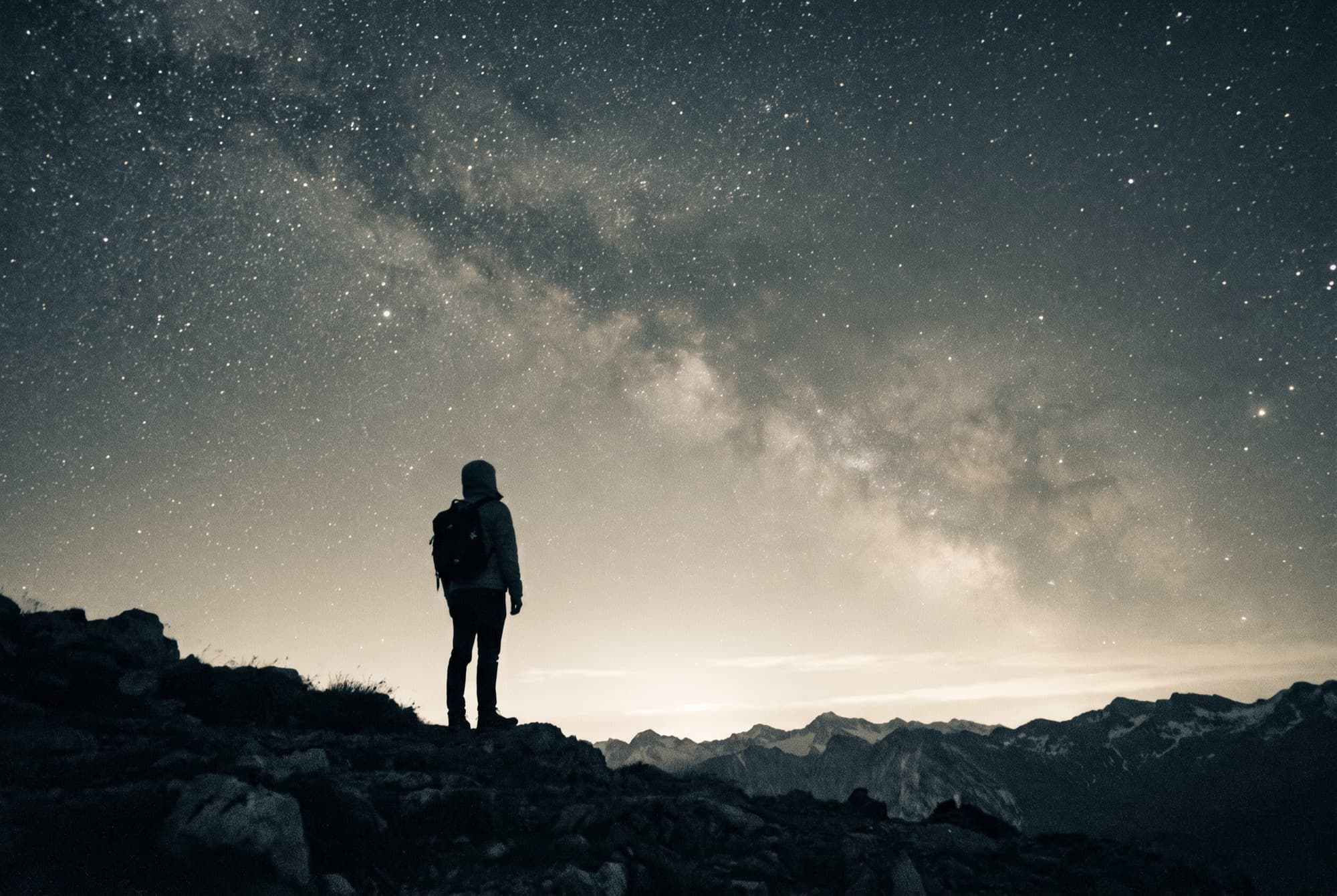
Britain has less true darkness than it did a generation ago, but it has more protected darkness — a distinction that matters if you are planning a night outside. The Isles of Scilly, Eryri and the Brecon Beacons all hold formal dark-sky status, and two of the campsites on our list sit inside those boundaries.
Start with Troytown
Troytown Farm on St Agnes is the extreme case. There are no cars on the island, no street lighting to speak of, and the nearest mainland glow is forty miles away across open water. You arrive by boat, which filters out anyone who was not committed to the idea.
You do not need a telescope. You need forty minutes, no phone, and somewhere the horizon is genuinely black.
That last part is the bit people underestimate. Full dark adaptation takes around half an hour, and one glance at a lit screen resets it. The islanders know this, which is why nobody there will thank you for a torch on full beam.
The easier trips
Graig Wen, on the Mawddach Estuary, is the compromise most people should make. You can drive to it, Cadair Idris blocks a good deal of what little light comes from the north, and the woodland pitches put trees between you and the rest of the site.
The Living Room Treehouses near Machynlleth sit in the same protected region, with the added advantage that there is no wifi — on purpose. If the goal is to actually look up rather than photograph looking up, that constraint does more work than any amount of planning.
Great Langdale is not formally dark-sky, but it is hemmed in by fells on three sides, which does much the same job. Campfires are allowed, which is either the point or a problem depending on how serious you are about night vision.
When to go
Late autumn and winter, unhelpfully. The nights are long enough to see anything worth seeing, and the summer months this far north never get properly dark at all. Mid-August is the exception worth planning around: the Perseids peak, and most of these sites are still open.